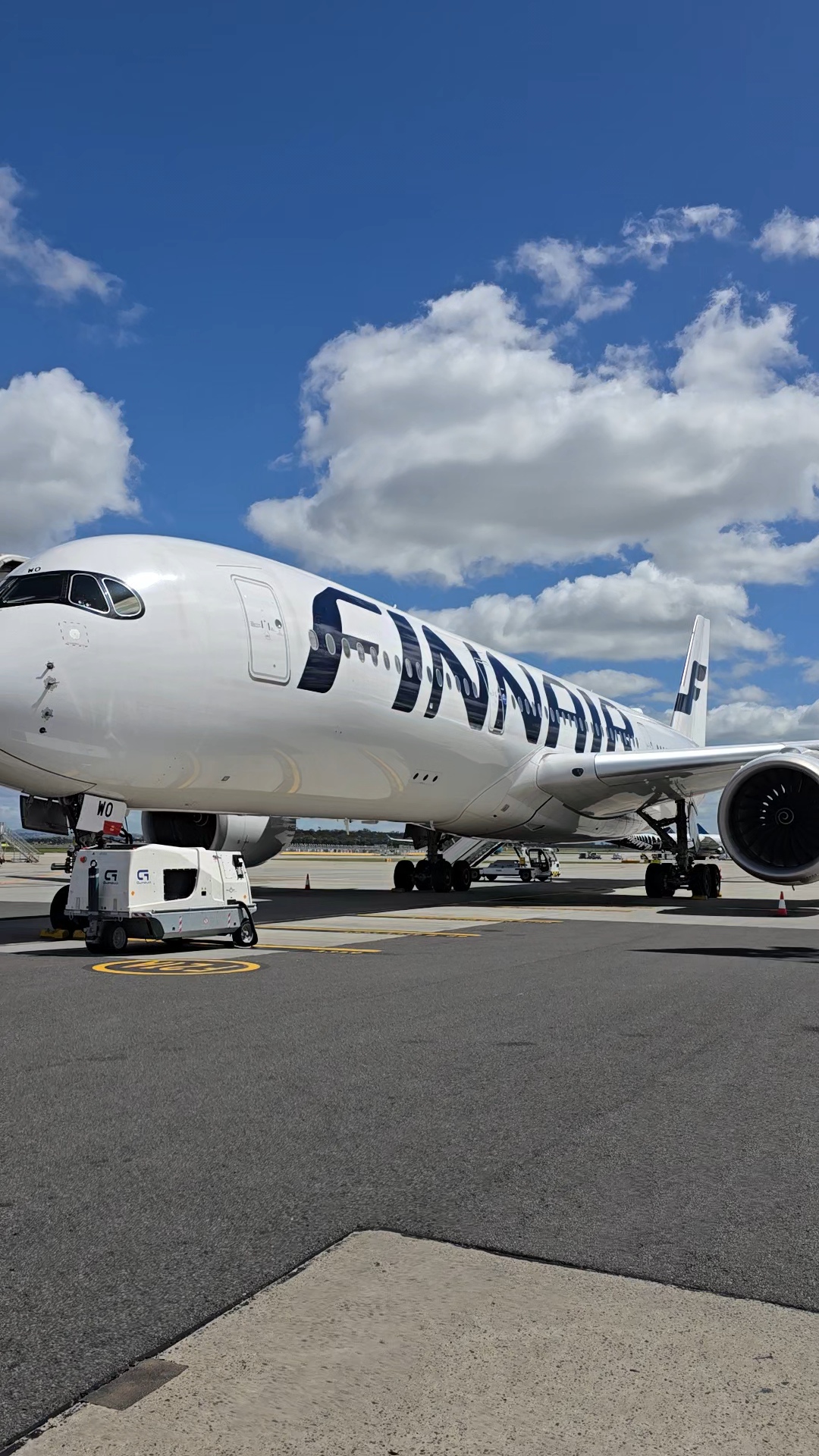
There are moments in this industry that remind you exactly why you love travel. Today was one of them.
This morning, I was invited by Finnair and Melbourne Airport to go airside, past the terminal, past the gates, out onto the tarmac, and step aboard Flight AY145: the first Finnair Airbus A350 to ever touch down in Melbourne. The inaugural service. A genuinely historic moment for Australian aviation, and one I feel enormously privileged to have been part of.
The route: what’s actually changed for Australian travellers
Before I get to the cabin, it’s worth understanding why this service matters, because it really does.
Finnair operates daily between Melbourne and Helsinki via Bangkok, with flights departing Melbourne at 3:40pm and arriving back into Melbourne at 7:15am. The outbound journey runs at approximately 22 hours, the return at 23 hours.
What makes this genuinely significant is that it bypasses the Middle East entirely. For years, Australians flying to Europe have had one real routing option other than Asia: through the Gulf, via Emirates, Etihad or Qatar. Finnair opens a completely different axis, north through Bangkok and Helsinki, connecting us to Scandinavia, the Nordics, the Baltics, Central Europe, and beyond. It’s not just a new airline; it’s a new way to get there.
There’s also a Bangkok angle worth knowing. Finnair holds fifth-freedom rights on the Melbourne–Bangkok leg, which means you can book that sector as a standalone fare, without continuing to Helsinki. For clients who travel regularly to Thailand and want a genuinely premium A350 option on that route, it’s well worth a conversation.
And Melbourne is, as of today, the only Australian city served by a European Union carrier operating its own aircraft and airline code. A meaningful piece of aviation history, right here at home.
Business class: the Collins Aerospace AirLounge
I’ll be honest with you, walking into this cabin, my first word was fresh. I genuinely don’t have a better one.
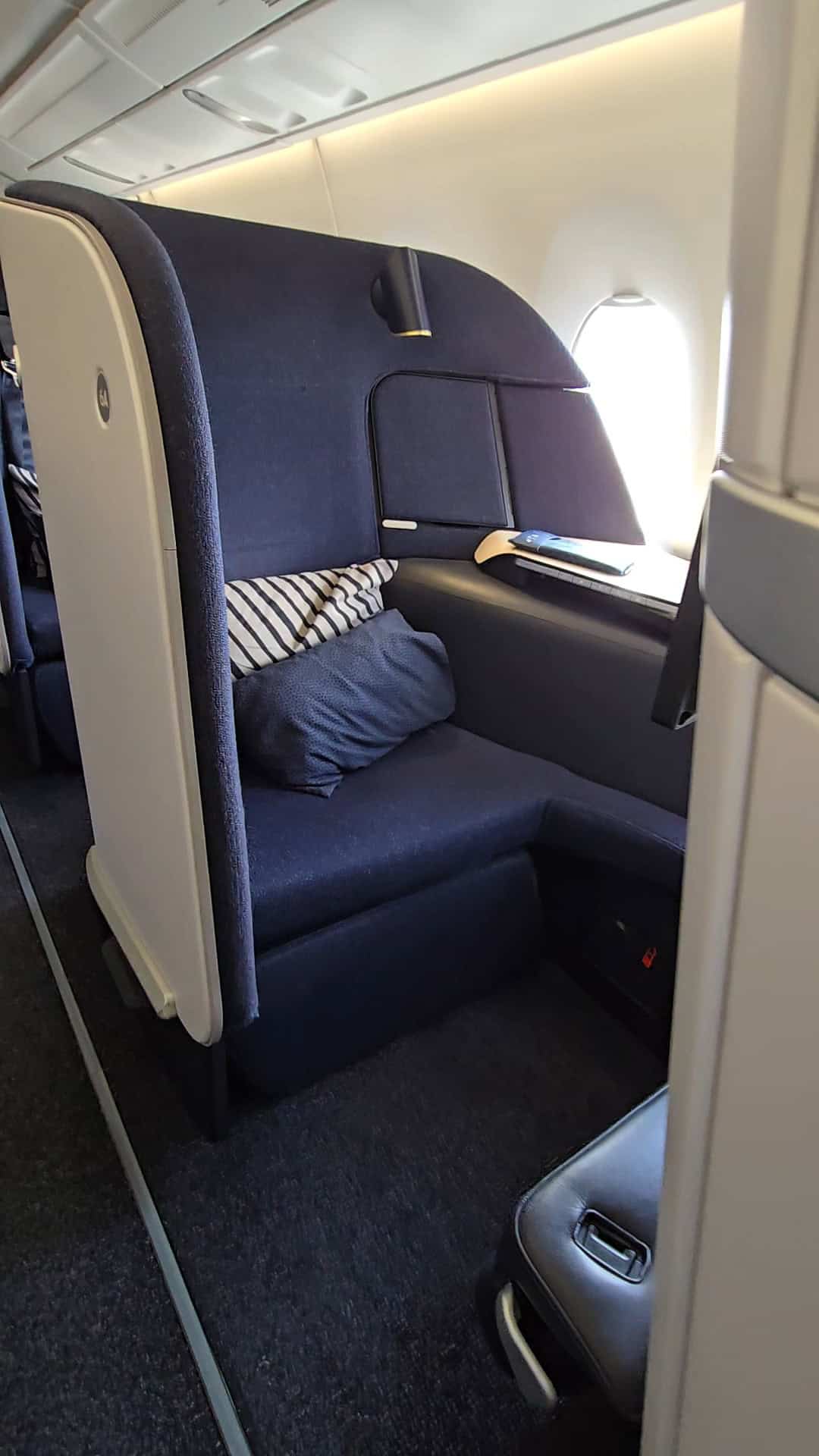
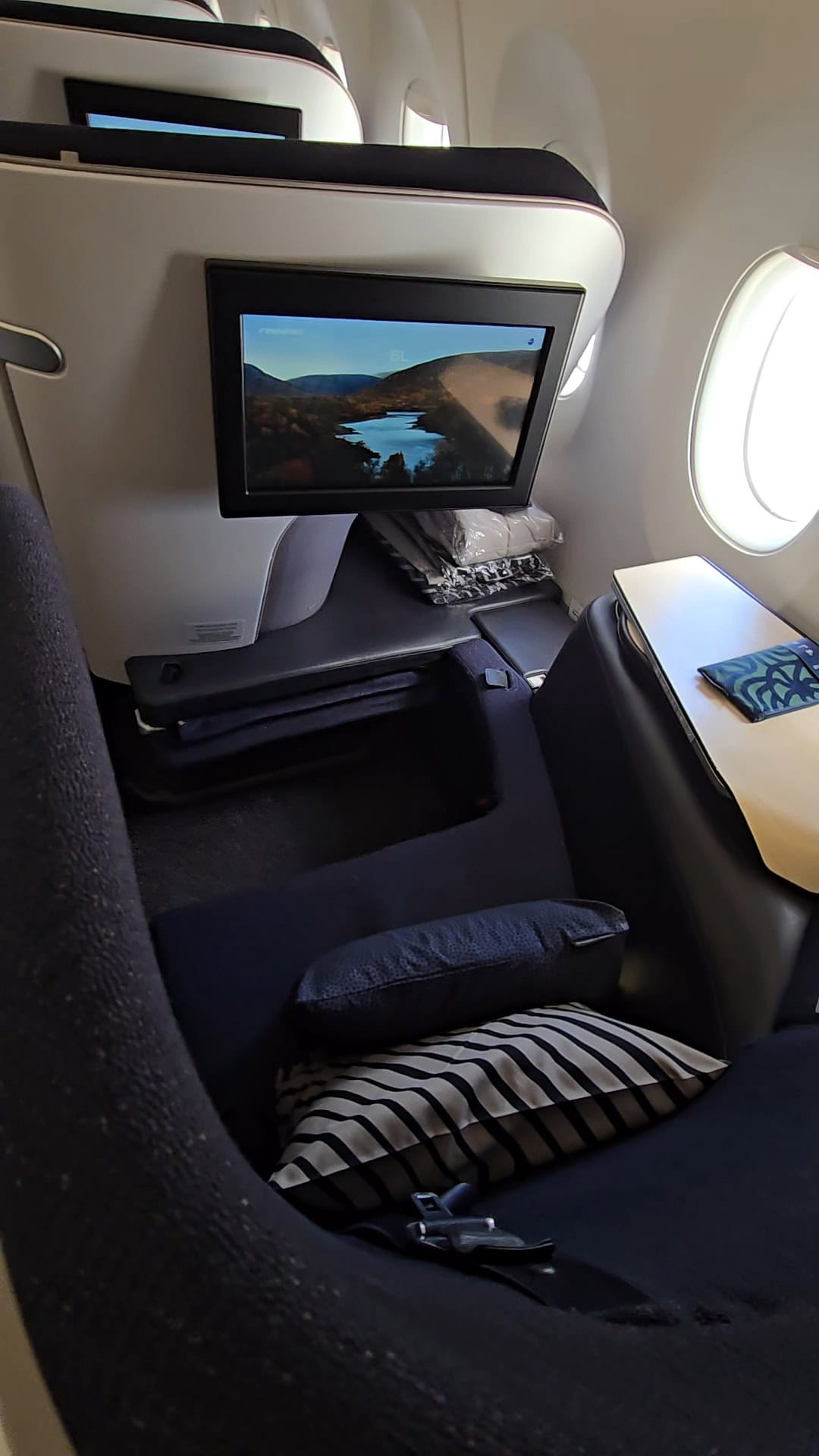
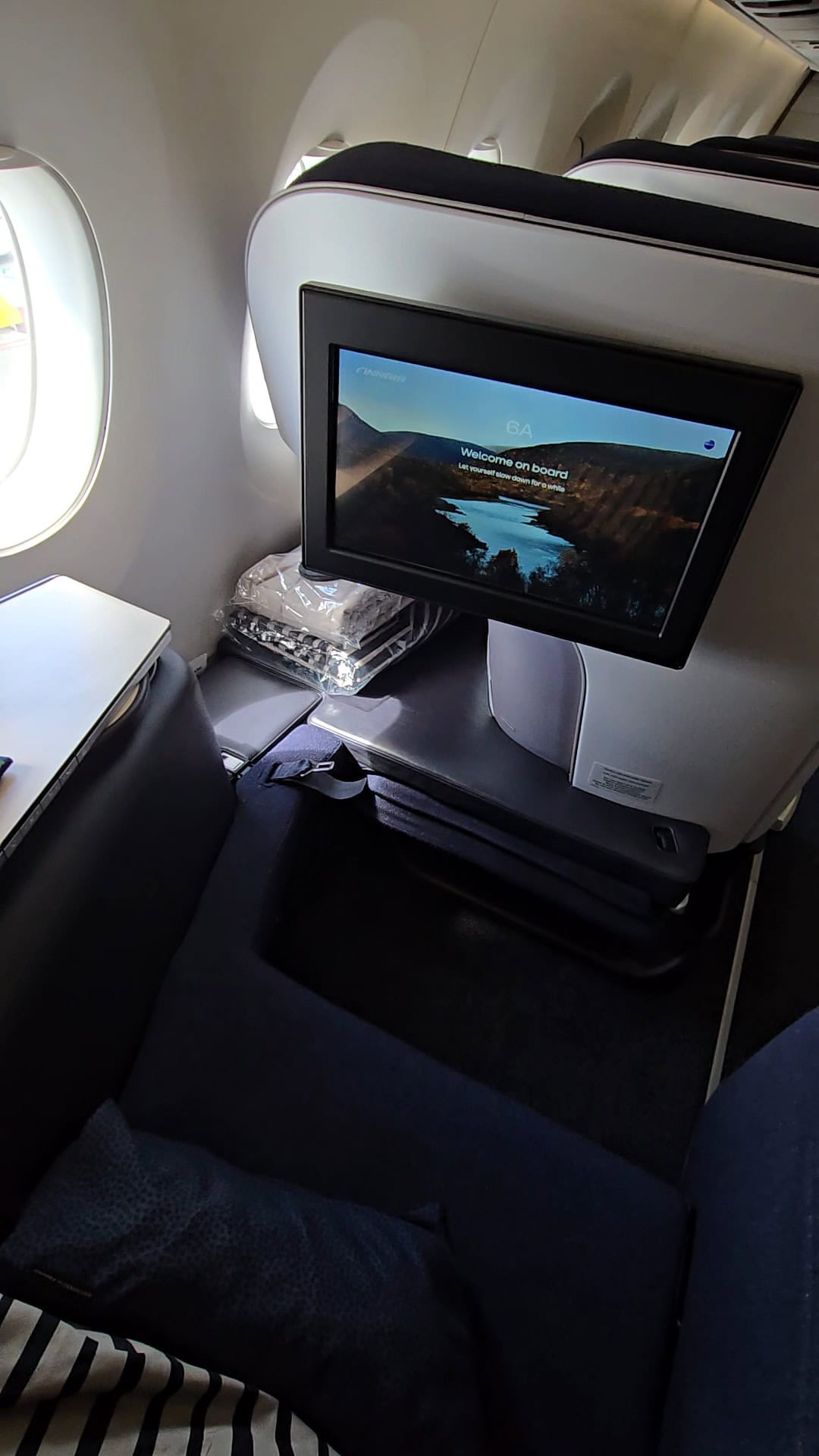
Finnair’s A350 business class uses the Collins Aerospace AirLounge, and Finnair is the launch customer for this product. It does away entirely with the conventional idea of a business class seat. There is no recliner, no seat that converts. Instead, there is a lounge, a wide, curved, genuinely generous space that wraps around you, giving you more lateral width than almost anything else currently flying out of Melbourne.
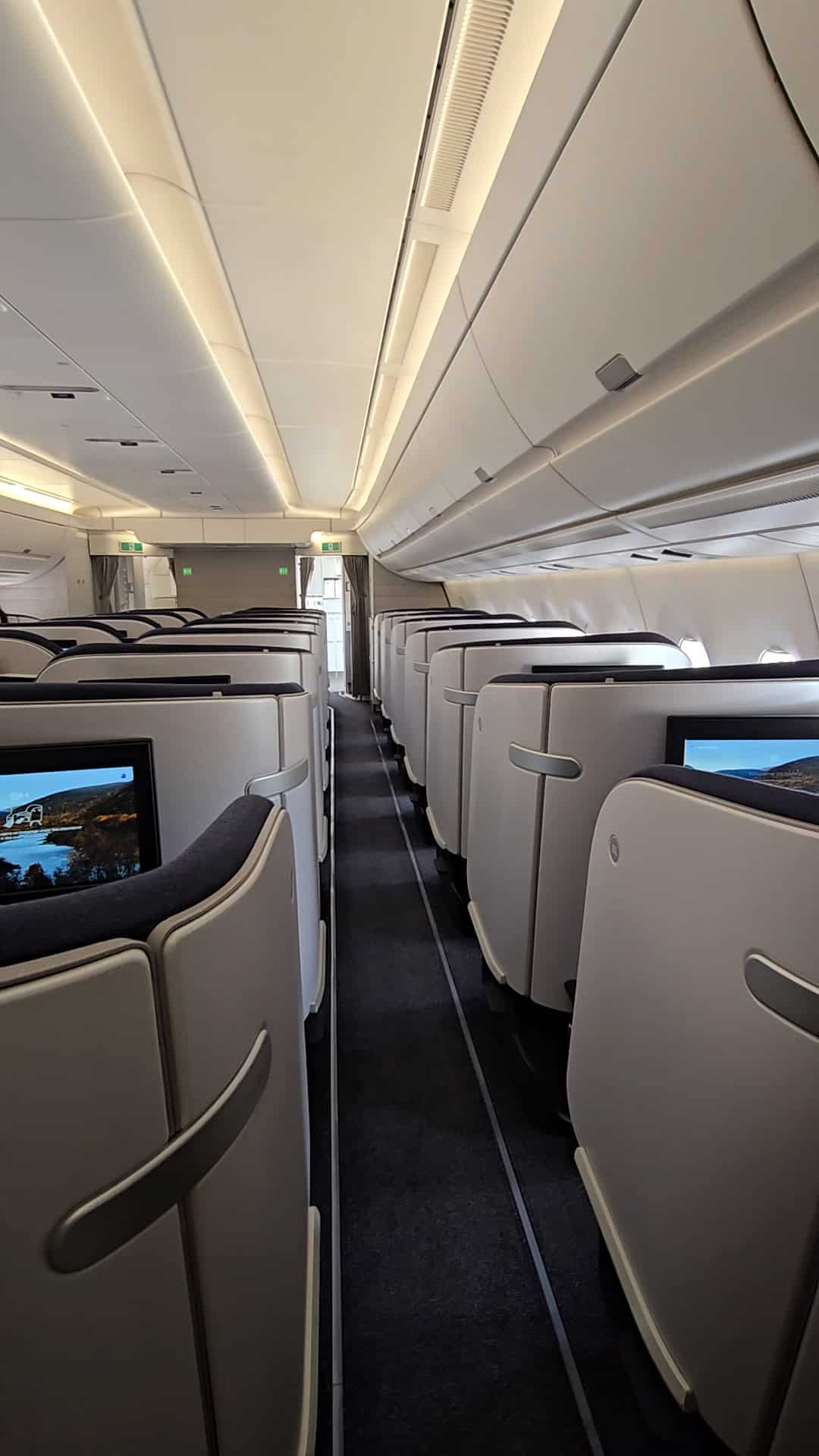
The first thing I noticed walking into the cabin was what wasn’t there: no overhead bins above the central rows. It sounds like a small thing. It isn’t. Without those bins breaking up the ceiling line, combined with the A350’s larger panoramic windows, the light distribution in that cabin is extraordinary. It feels spacious in a way photographs really don’t capture.
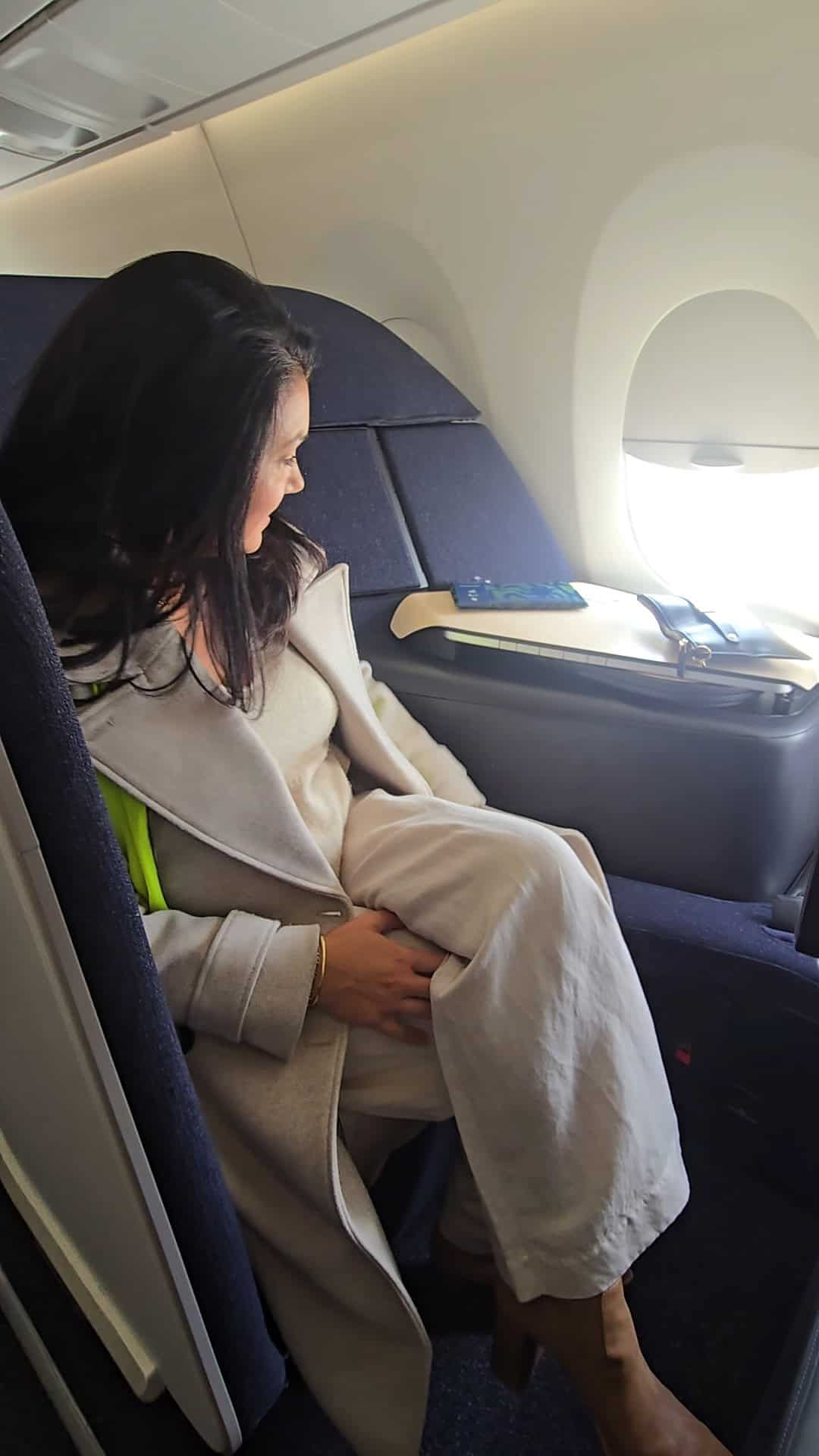
Privacy is achieved through high-back surround shells that wrap around each seat rather than sliding doors. I sat in it, and felt genuinely cocooned without ever feeling enclosed. You don’t find yourself looking for a door you don’t have.
The bed is simple and clever: a middle section folds up from the footwell, your crew will do this for you, and the result is a genuinely flat sleeping surface. The footwell depth surprised me; it’s much deeper than it looks in photos. This is a bed you can actually sleep in.
The IFE screen is 18 inches, large, crisp and responsive, with USB-A, USB-C and wireless charging easily accessible. The remote is a traditional handset rather than a secondary touchscreen. I’ll be honest: I find physical remotes easier to use in the dark. Personal preference.
My honest note on seat selection: I’d steer clients away from Row 1. The proximity to the lavatories on a 22-hour sector is less than ideal. Window positions from Row 2 onwards offer the best combination of calm and privacy.
My take: I book & genuinely recommend this business class, and mean it without reservation. It’s one of the most interesting configurations in the market right now. Because it’s unconventional, it suits confident, adaptable travellers.
Premium economy: the one that made me say “wow” twice
I walked into Premium Economy and my reaction was immediate and completely involuntary. I said “wow” out loud. And then, a few seconds later, “wow” again. I make no apology for that.
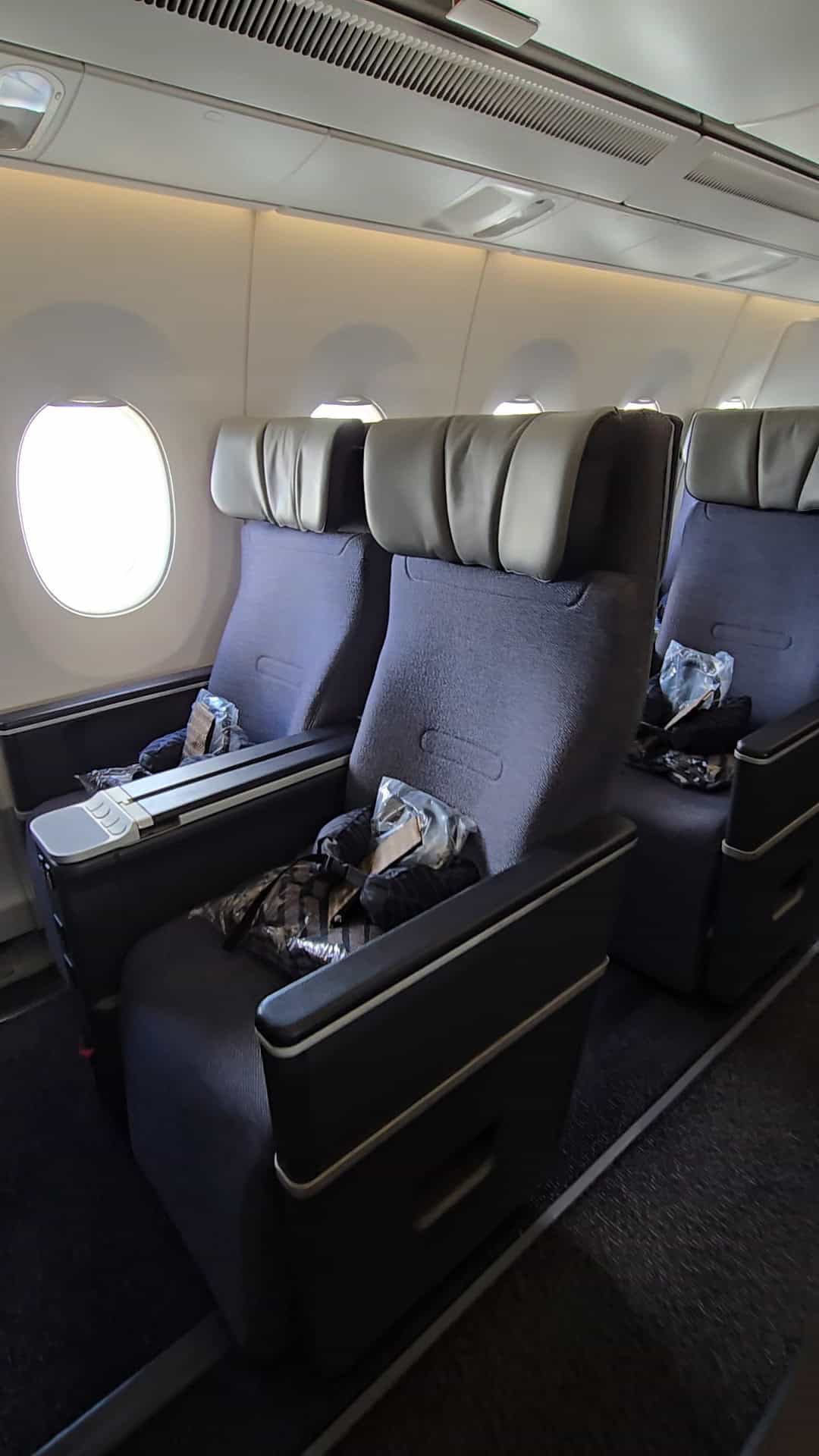
The HAECO Vector Premium seat, customised to Finnair’s specifications, creates a genuinely angled, semi-recumbent sleeping position. The combination of seat recline and a dedicated footrest that rises to meet you produces something that, while not a flat bed, is a credible resting surface for a long-haul sector. Between the recline and the footrest, you can genuinely sleep on this seat.
The screen is 13 inches, seat pitch is a generous 38 inches, and the 2-4-2 layout means window-seat passengers in the pairs have a pleasant, semi-private feel.
I want to be clear here: this is not a bed, and I wouldn’t describe it as one to a client. But on a 22-hour journey from Melbourne, the upgrade from economy to Premium Economy is one of the most genuinely justifiable investments I’ll be recommending. The difference in how you arrive is significant.
My take: This is the cabin I’ll proactively recommend to clients who hesitate at business class pricing but want more than a standard economy experience on a sector of this length. Really well done.
Economy: better than you’re expecting
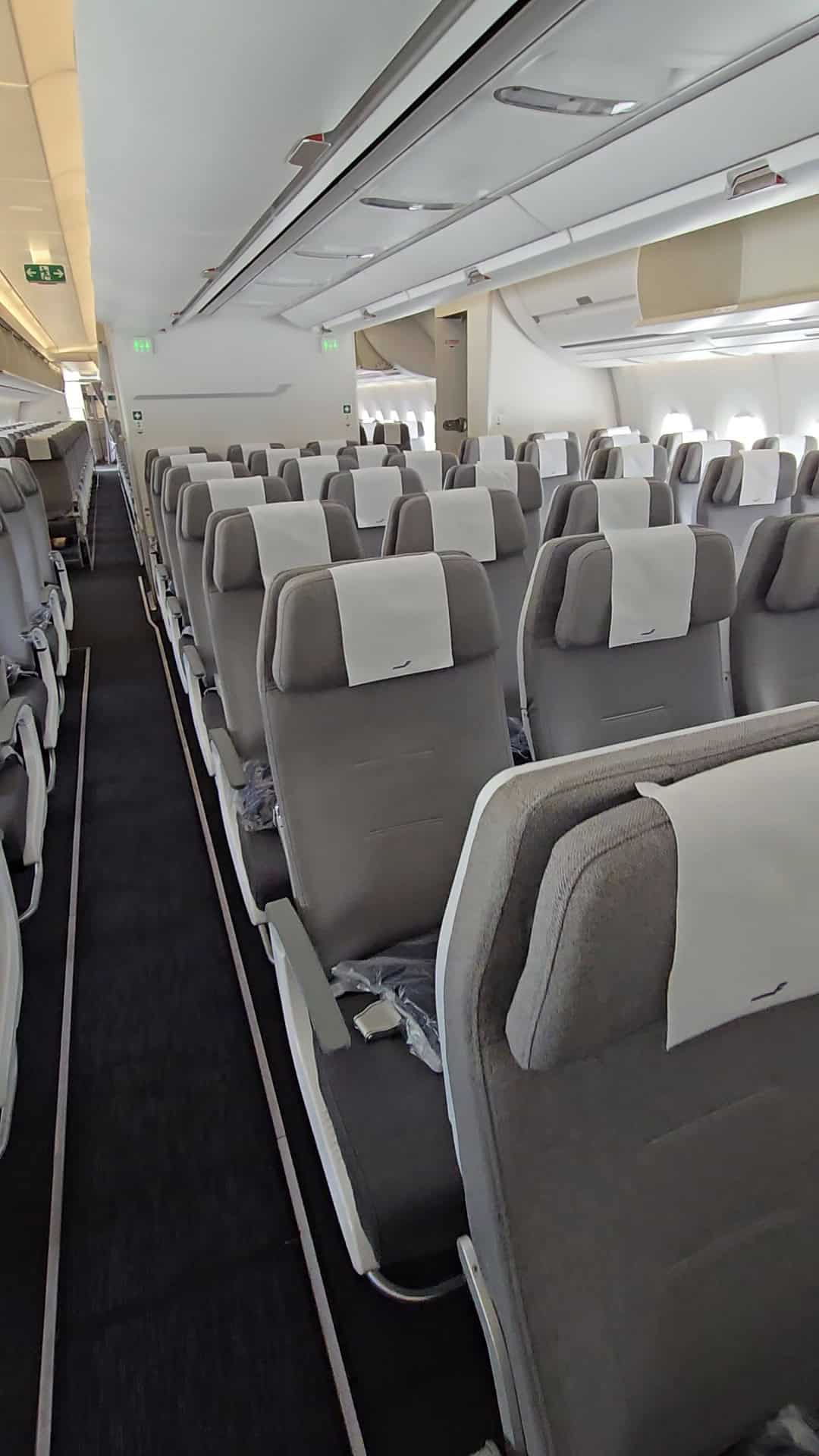
Economy on the Finnair A350 benefits enormously from the aircraft itself. Light grey seats, white interior panels, white overhead bins, the combined effect is genuinely striking. It doesn’t feel like economy. It feels light and open, and I’ll keep using the word fresh because I genuinely cannot find a better one for what this cabin does.
The layout is 3-3-3, with a 31-inch seat pitch and an 11-inch touchscreen at every seat, along with USB power and personal IFE. It’s a well-specified economy product. The A350 also runs a cabin pressure equivalent to around 6,000 feet altitude rather than the 8,000 feet standard on older aircraft, which meaningfully reduces fatigue on a long sector. On a 22-hour journey, you feel the difference.
I’ll always have the Premium Economy conversation with clients before booking economy on a route this long. But where economy is the right answer, Finnair’s offering is genuinely among the better products available on this corridor.
What it means if you hold Qantas Frequent Flyer status
Finnair is a full Oneworld member, so if you hold Qantas Frequent Flyer status, you have a ready-made relationship with this airline from day one. A few things worth knowing:
For Qantas-loyal clients, this isn’t just a new airline, it’s a new way to use the points they’ve already been accumulating. Come and have that conversation with me before you book.
The Nordic numbers: why this route is responding to something real
This service hasn’t appeared in a vacuum. Australian travel to the Nordic region has been growing strongly and consistently, driven by the post-COVID shift in how Australians think about travel. A few figures that tell the story:
Australian visitor overnights across Denmark, Sweden, Norway and Finland reached approximately 575,000 in 2025, up 26% year-on-year (Toolbox Consulting, 2026)
Norway recorded a 40% rise in Australian visitors in 2024–25, driven substantially by the “coolcation” trend, Australians seeking cooler Northern European summers as the Mediterranean becomes increasingly overtouristed
Australians made 11.5 million overseas trips in 2024, back above pre-pandemic levels, with a further 11% increase year-on-year by early 2025 (Roy Morgan)
The analysts describe this as a structural repositioning, not a cyclical rebound. The growth isn’t temporary. And now, with a daily service operating from Melbourne, the last practical barrier to getting there has been removed.
The Northern Lights, Santa’s Village in Finnish Lapland, a summer in Scandinavia, these have always been on Australian bucket lists. What’s changed since COVID is the urgency. The “one day” conversations are becoming “let’s just book it.” I see it every week.
A few practical notes before you book
A couple of things I always pass on when we’re talking about a new service like this:
Helsinki is the gateway, but also a destination. From Finnair’s hub, your clients connect to approximately 90 European destinations. This service is as much about Europe broadly as it is specifically about Finland. For clients who’ve always routed through the Gulf and want a different experience, the northern routing through Helsinki is a genuinely compelling conversation starter.
Bangkok as a standalone sector. Because Finnair holds fifth-freedom rights, Melbourne to Bangkok is bookable as its own trip. Premium A350 product, daily service, entirely separate from the Helsinki journey. Worth knowing.
Aircraft matters, as always. The A350 makes a meaningful difference on a sector of this length, lower cabin pressure, quieter engines, larger windows, and better humidity levels than older wide-body types. On a 22-hour flight, you feel the difference
Why today mattered to me
I want to take a moment here, because this is genuinely the part of my job that fills me up.
Thank you to Finnair and to Melbourne Airport for inviting me to be part of today. These moments, going airside, stepping aboard before passengers do, studying every corner of every cabin, sitting in every seat, understanding what works and for whom, this is how I do my job properly. You can read every review ever written, but until you sit in the AirLounge and feel the width of that footwell and look up at a business class cabin with no overhead bins to understand what that actually does to the space, you don’t really know it.
And I need to know it. Because my clients trust me.
If I had walked off that aircraft today and thought this wasn’t the right product for my clients, I would tell you that. I’ve done it before. Today, I didn’t think that. Today I walked off genuinely excited.
Frequently asked questions
Is Finnair’s A350 a good business class product?
Yes, genuinely. The Collins Aerospace AirLounge is one of the most interesting business class configurations in the market right now, exceptionally wide, with a flat bed created from the footwell rather than a reclining seat. It’s unconventional, and I’d always brief a first-time business class traveller on what to expect. But for the right client, it’s an outstanding product.
Is Premium Economy worth it on Finnair Melbourne to Helsinki?
On a 22-hour sector, yes, absolutely. The HAECO Vector Premium seat offers a genuinely semi-recumbent position with a full footrest, 38 inches of pitch and a 13-inch screen.
Can I fly Finnair just Melbourne to Bangkok, without continuing to Helsinki?
Yes, Finnair holds fifth-freedom rights on the Melbourne–Bangkok sector, meaning you can book it as a standalone fare. It’s a premium A350 product on a daily service, and a very strong option for clients who travel regularly to Thailand and want something different from what’s currently available on that route.
When did Finnair start flying from Melbourne?
Today, 26 October 2026. Flight AY145 was the first Finnair aircraft to ever land in Melbourne, touching down this morning as the inaugural service from Helsinki via Bangkok. From today, the service operates daily and year-round.
What European destinations can I reach via Finnair from Melbourne?
Approximately 90 destinations across Europe through the Helsinki hub, including major cities across Scandinavia, the Baltics, Central Europe, and Western Europe. For clients who want to explore beyond Helsinki, Stockholm, Copenhagen, Tallinn, Prague, Vienna, Berlin, Paris, connecting through Helsinki is a clean, efficient option. I’m always happy to map out the right routing for a specific itinerary.
Planning a trip to the Nordics or Europe? I’d love to help you work out whether Finnair is the right fit for your journey, and if it is, make sure you’re in exactly the right seat.
Jilda Jack
[email protected]
www.travelmanagers.com.au/JildaJack
Signature Travel Luxury Agent
Luxury Cruise Specialist
Disney Accredited Agent
 Peace of mind