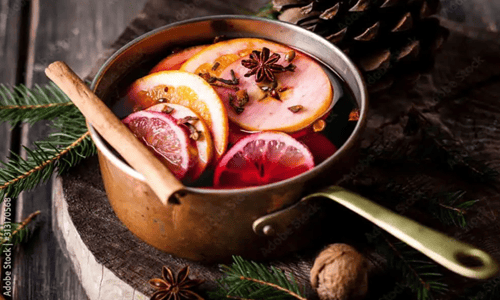
Warm, spiced, and irresistibly festive, this mulled wine recipe is winter in a glass. Red wine gently infused with citrus, cinnamon, cloves, and star anise creates a comforting aroma that fills the room and invites you to slow down and savour the season. Whether you’re hosting friends, winding down after a cold winters day, or simply chasing a little seasonal magic at home, this classic European favourite brings warmth, nostalgia, and a touch of celebration to every sip.
Mulled wine has a long, warming history that stretches back to the ancient world. The Romans are often credited with the earliest versions, heating wine and spicing it with herbs and honey to make it more enjoyable during colder months and to help preserve it on long journeys across Europe. As the Roman Empire expanded, so did the idea, spreading throughout Europe where each region began adding its own twist using local spices, citrus, and sweeteners. By the Middle Ages, spiced wine was well established and became associated with winter feasts and festive gatherings, particularly around Christmas. Here’s what you will need to make yours at home:

Mulled wine is also known as spiced wine.
1 bottle of red wine
1/4 cup of sugar (or maple syrup or honey)
Orange slices
Cloves
Cinnamon sticks
Star anise
optional: A dash of sweet port
Combine wine, maple or sugar and orange and spices to a large saucepan
Simmer very gently and reduce to low
Cover and simmer on low from 15 minutes to 2 hours
Stir in any port as a finishing touch
To serve, strain into your mug or glass and garnish with fresh orange slices and a cinnamon stick
Variations: substitute port for sherry or brandy.
Fruity wines or a Merlot or Cab Sauvignon are often popular for wine.
If you can picture yourself sipping on your mulled wine in a winter wonderland, then chat to your personal travel manager about planning your escape.
This cocktail recipe contains alcohol and is intended for use by adults aged 18 years and over. Please drink responsibly and only if you meet the legal drinking age.
Recipe credit: Leearne Groves



100% Pure New Zealand Specialist
2019 TravelManagers Top New Personal Travel Manager
CLIA Cruise Master
Consultant of the Year - 2019
 Peace of mind