Somewhere between the long train journeys and the chai stops, between the crush of Old Delhi and the silence of the Himalayan foothills, I stopped keeping count of the places I had seen and started noticing how each one made me feel.
That, I have come to realise, is when a journey stops being a checklist and becomes something else entirely.
This particular journey through India did not unfold as a neat list of landmarks. Instead, it revealed itself in layers: in the pulse of a city, in the texture of carved stone, in a shared meal, in the hush that falls when beauty catches you off guard, and finally in the kind of stillness that lets you hear yourself again.
I had visited India before. Even so, this itinerary took me well beyond the version many travellers first imagine. Yes, there were extraordinary hotels, remarkable guides and unforgettable meals. However, there was also something deeper moving beneath it all. This became one of those restorative travel holidays that stayed with me because of how it shifted my energy, not simply because of what I saw.
Delhi was where the rhythm announced itself immediately.
We stayed at The Imperial New Delhi, one of the city’s grand heritage hotels. Opened in 1936, it carries its history lightly, with elegant architecture, museum-worthy artwork and a sense of composure that felt especially welcome after arrival. As a starting point for bespoke travel planning, it offered exactly the right contrast to what waited outside.
Then the city opened up.
Old Delhi was dense, noisy, fragrant and gloriously alive. Rickshaws threaded through the streets, voices rose and fell, and the spice market seemed to colour the air itself. I felt stimulated almost instantly, as though every sense had been switched on at once.

Later, tucked within the old quarter, Haveli Dharampura offered a completely different mood. Lunch there felt intimate and grounded in place, and therefore it gave me a more personal lens on the city than a grand hotel ever could.
That evening, Delhi changed character once more at The Spice Route inside The Imperial. The restaurant took seven years to create, and you can feel that devotion in every carved panel and mural. Before the first course even arrived, I already felt transported. The meal itself was exquisite, yet it was also storytelling through flavour, setting and memory.
Delhi stimulated me. More importantly, it set the tone for a journey that refused to be one thing only.
From Delhi, we boarded the train to Khajuraho, and the mood shifted again.
The Khajuraho Group of Monuments held me for hours. These UNESCO-listed temples, created around 1,000 years ago, are covered in carvings that move between mythology, devotion and scenes of everyday life. The skill in the stone is astonishing. Yet beyond the craftsmanship, I was fascinated by how much movement and feeling had been captured in something so enduring.
Even so, Khajuraho offered more than temples.
Nearby Panna Tiger Reserve introduced another dimension entirely. The reserve’s conservation story is extraordinary, particularly after tigers were reintroduced following the disappearance of the local population in 2009. Therefore, the region brought together ancient civilisation, wildlife and living recovery in a way I had not expected.
Then came one of the great hotel surprises of the journey: The Oberoi Rajgarh Palace. Opened in November 2025 after the restoration of a centuries-old royal palace, it felt both majestic and deeply considered. As always, Oberoi service stood out. It was polished, yes, but never distant.
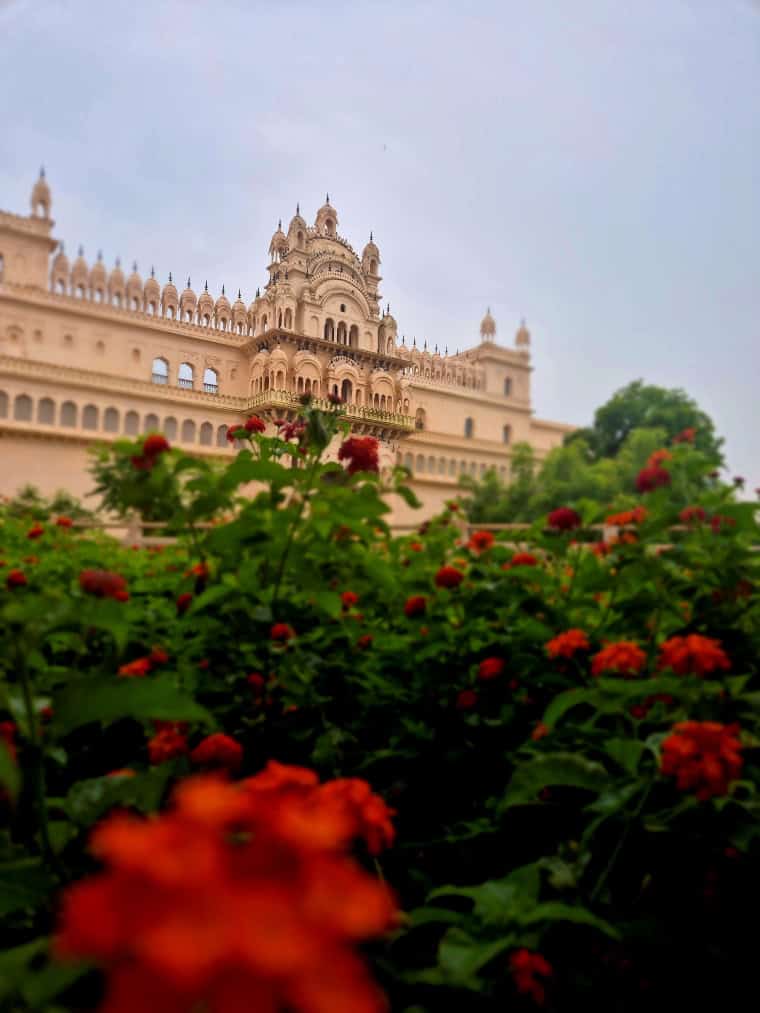
We enjoyed yoga and massages. However, the evening that stayed with me most was a hosted degustation dinner inspired by royal Indian kitchens. Each dish arrived with a story, and each course seemed to build on the last. In that setting, history did not feel fixed behind glass. Instead, it arrived at the table.
Some icons are so photographed that you wonder whether real feeling will survive the familiarity.
Then you arrive.
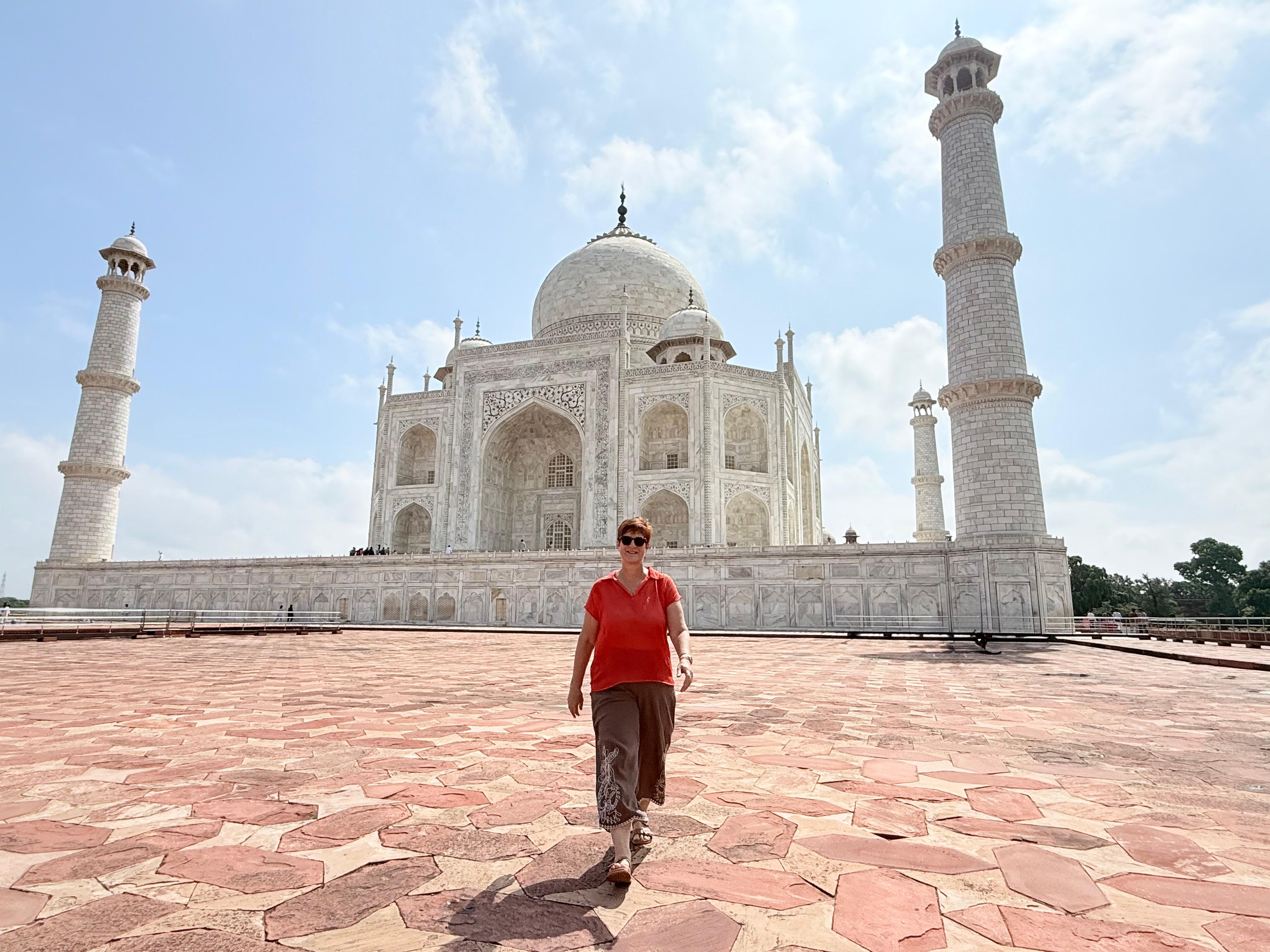
We stayed at The Oberoi Amarvilas, where the Taj Mahal reveals itself from the hotel in a way that feels almost unreal. Seeing it from the balcony was special. Seeing it in person was something else again.

We visited early, before the day thickened with heat and crowds. Built by Shah Jahan in memory of Mumtaz Mahal, the Taj Mahal is, of course, a masterpiece of white marble, balance and intricate inlay. Yet facts alone do not explain why people fall quiet in front of it.
For me, this was the goosebump moment of the journey.
I stood there feeling moved not only by the beauty, but by the tenderness behind it. The scale is impressive, certainly. However, the emotion is what lingers. Some places ask for analysis. The Taj Mahal simply asks you to feel.
Amritsar was the place I had least expected to affect me so deeply.
Close to the Pakistan border, the city introduced us to Sikh history and tradition. Yet more than that, it offered one of the most generous and quietly powerful experiences of the entire journey. We first visited the Golden Temple at night, when its gold seemed to float against the dark sky and shimmer across the water. It was beautiful. Still, the beauty was only part of it.
What I remember most is the atmosphere: calm, open-hearted and deeply peaceful. We entered the temple, moved among worshippers and listened as Sikh traditions were explained with warmth and care. The following day, we returned for a deeper understanding of the complex and witnessed the extraordinary langar.
Volunteers prepare, cook and serve free meals to tens of thousands of people each day, regardless of religion, status or background. Watching that system work with such humility and precision was profoundly moving. Just as importantly, there was no sense of distance between visitor and local. We spoke with families, shared smiles and photographs, and felt genuinely welcomed.

Amritsar humbled me. In many ways, that feeling has stayed the longest.
By the time we reached Hampi, the journey had softened.
The UNESCO-listed remains of the Vijayanagara Empire stretch across one of India’s most evocative historic landscapes. We explored temple complexes and visited an active Hindu temple, which meant the experience was not only archaeological, but also deeply alive in the present.
Our base was Evolve Back Kamalapura Palace, Hampi.

Here, the pace changed. The atmosphere felt spacious, quiet and restorative. After the intensity of Delhi, the emotion of Agra and the spiritual openness of Amritsar, Hampi gave me room to breathe differently. The landscape itself seemed to encourage longer pauses.
For travellers seeking restorative travel holidays, this is where India’s cultural richness can sit beautifully beside wellbeing. Gentle wellness experiences, yoga and unhurried time all belong here naturally. As a wellness travel specialist, I find this balance especially compelling because it shows that meaningful travel does not always need to rush.
Hampi slowed me down. As a result, I began to notice more.
Our final stop was Ananda in the Himalayas, set high above the Ganges Valley near Rishikesh in the misty Himalayan foothills.
If Hampi created space, Ananda took that space and turned it inward. This is why it remains, for me, one of the finest examples of Asia Wellness Travel and one of the standout luxury wellness retreats in Asia can offer.
My stay began with an Ayurvedic consultation, which then shaped my personal programme and even informed the meals prepared for me. Over the following days, I experienced a synchronised four-hand massage, acupuncture, cupping, physiotherapy, facials and an emotional healing session. Alongside that, my days included yoga, meditation, breathing practices, Yoga Nidra and sound healing.

There was intention in every detail, yet there was never pressure. Consequently, I felt my nervous system begin to settle in a very real way. After weeks of movement, conversation and stimulation, I became calm. Three days there gave me more peace and balance than I had expected possible in such a short time.
I also left around two kilograms lighter thanks to the carefully guided nutrition. However, that was never the point. What mattered was the feeling of being rested, clearer and more balanced. For anyone considering bespoke travel planning centred on wellbeing, this is where expert guidance makes all the difference. A personal travel manager in Australia should think not only about routes and room categories, but also about how a journey helps you return to yourself.
Ananda brought me back to myself.
When I look back now, I do not think first about how many places we covered. Instead, I remember what each destination awakened.
That is the India I did not expect to find. Certainly, the familiar Golden Triangle has its place. Yet India is far more expansive than one classic route. It can be exhilarating, tender, spiritual, layered and unexpectedly soothing, sometimes all within the same itinerary.
This is also why I care so much about thoughtful bespoke travel planning. Whether I am designing restorative travel holidays, curating Asia Wellness Travel, or helping clients explore the luxury wellness retreats in Asia this region has become known for, I am always thinking about the emotional shape of the journey. As a wellness travel specialist and personal travel manager Australia travellers can work with one-to-one, I believe the best itineraries are not only well organised. They are well felt.
If this style of travel speaks to you, you may also enjoy my reflections on Slow Down to Level Up, where I explore why restorative travel can be more nourishing than a checklist itinerary.
This journey reinforced something I have believed for a long time.
True luxury in travel is not simply about staying in a beautiful five-star hotel. Sometimes luxury is having someone waiting when your train arrives. It is knowing your luggage will be taken care of. It is having an excellent guide who can explain what you are seeing rather than simply pointing it out.

Most importantly, it is arriving somewhere unfamiliar without having to work out what happens next.
Throughout this journey, the guides, drivers, porters and on-the-ground team made a complex itinerary feel remarkably effortless. Their care allowed me to stay present in the experience rather than focused on logistics.
That, to me, is one of the greatest luxuries in travel: not having to worry.
With considered bespoke travel planning, the details can quietly support you in the background. The route, pacing, accommodation and local connections can all be shaped around the way you want to feel.
As your personal travel manager in Australia, I create journeys with that sense of clarity and care. I work in partnership with you, listening closely before I begin designing. Whether you are considering India, restorative travel holidays or a wider Asia wellness journey, the aim is always the same: to create a holiday that feels beautifully considered and genuinely yours.
If your idea of India begins and ends with the Golden Triangle, perhaps it is time to look a little further.
The India I discovered was not quite the India I expected. It was more layered, more surprising and, ultimately, more restorative.
There were temples and tigers, palaces and unforgettable meals. There were spiritual encounters, moments of community and long stretches of quiet. Most of all, there was the feeling that a journey can change shape as you move through it.
Sometimes travel stimulates you.
Sometimes it humbles you.
And sometimes, if the journey is thoughtfully paced, it brings you back to yourself.
If you would like to explore what India or luxury wellness retreats in Asia could look like for you, I invite you to book a 30-minute Travel Discovery Consultation.
Together, we can begin shaping a journey that offers not only beautiful places, but clarity, care and a deeper sense of ease.


Canada Specialist
Vanuatu Specialist
Prom Peru Specialist
Master of Japan Travel
New Zealand Gold Specialist
Vancouver Specialist
Tassie Specialist
National Geographic Journeys Specialist
 Peace of mind