This follows on from the second blog post.
This trip wasn’t one I booked in the usual way — it came as a sales reward, and the tour itself was the prize. I chose this itinerary because it included Lake Bled, which had been on my list for ages. It was also one of the more premium Back-Roads tours, so it felt like the perfect opportunity to experience something I might not have chosen otherwise. I only had to cover the single supplement. I’d already done the big Italian highlights, so I wasn’t fussed about revisiting them. What appealed to me was the northeast — an area I hadn’t been to before. The timing worked perfectly, too, as I could add another trip straight after (3-hour gap between them)
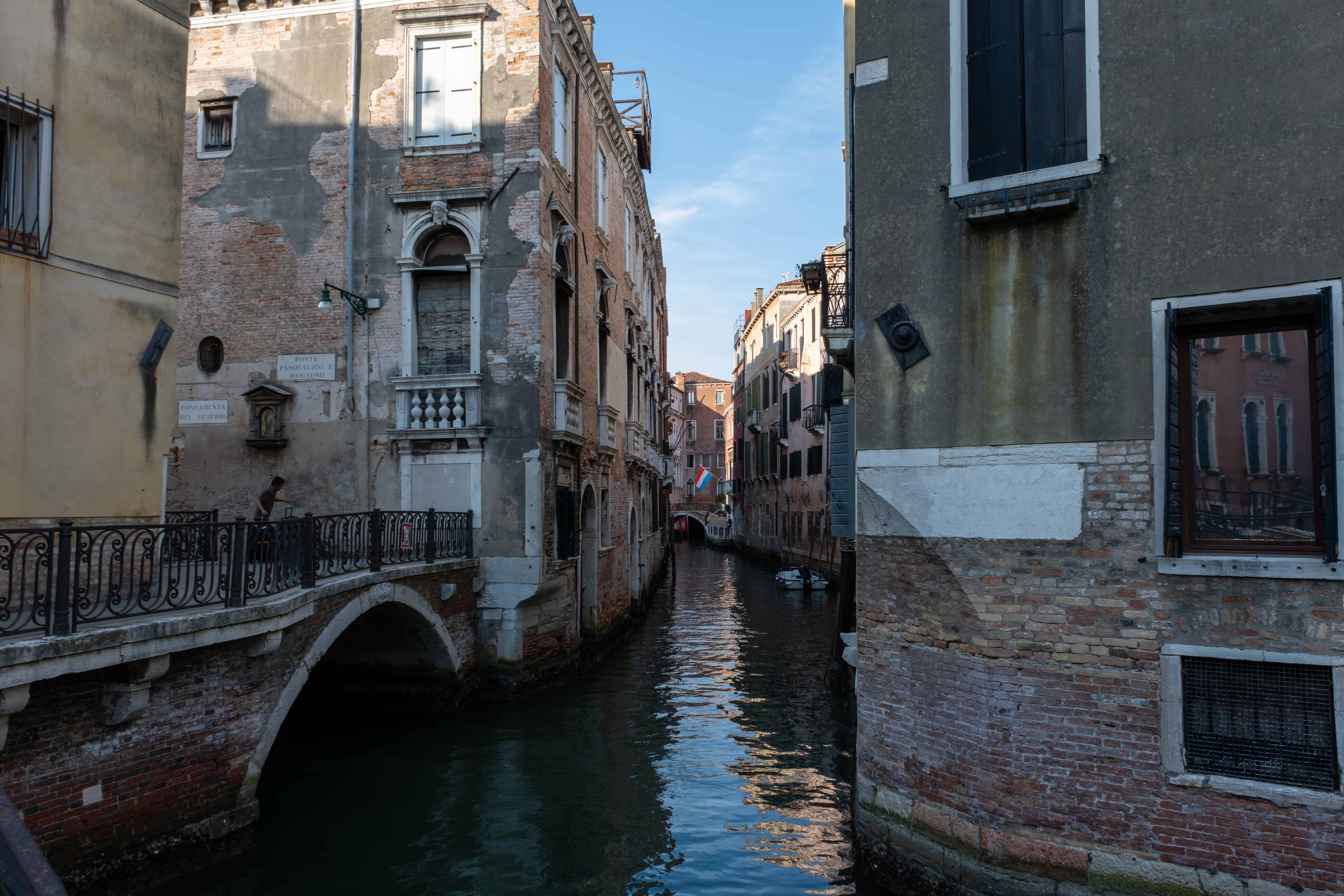
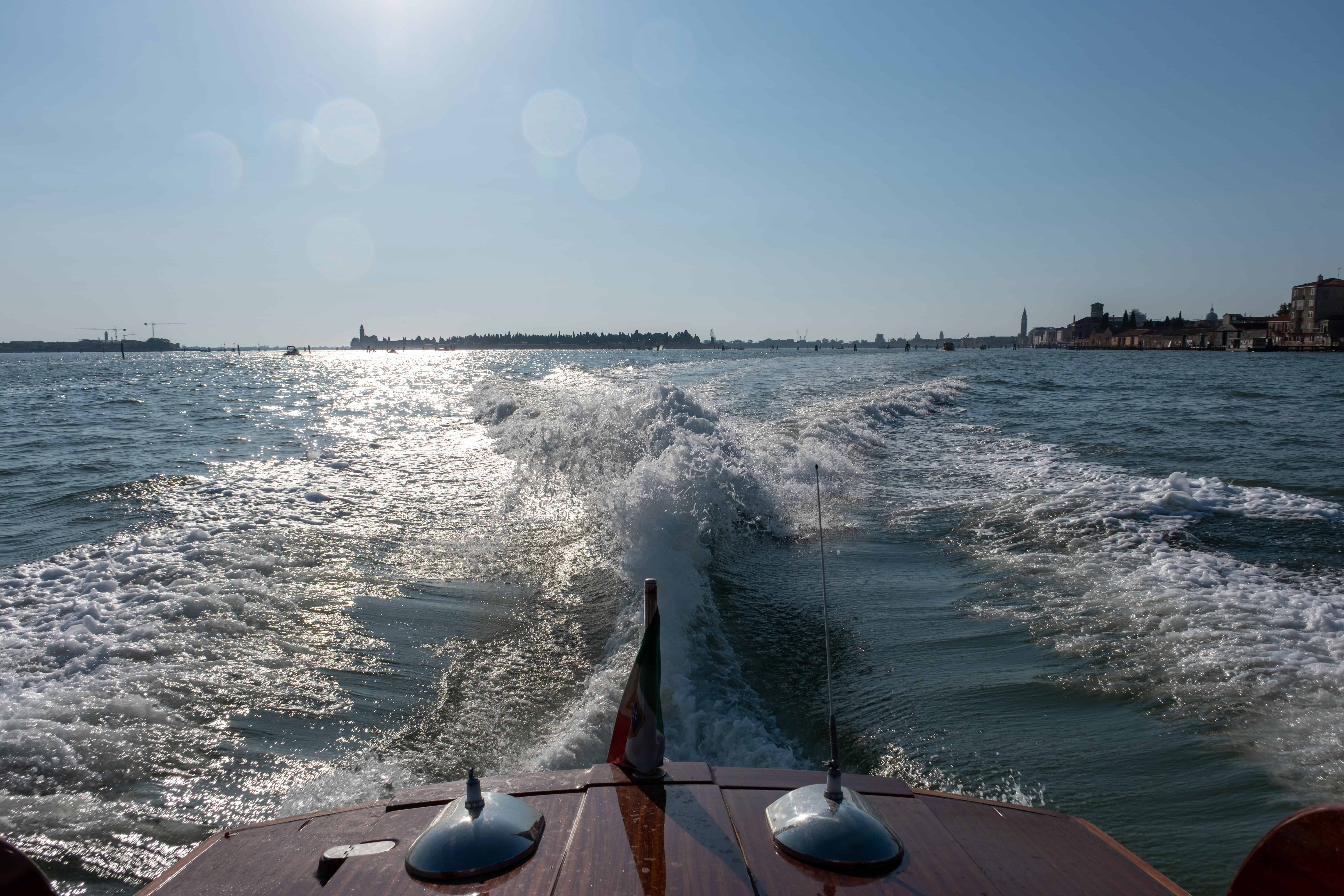
The tour began in Venice, though the city itself wasn’t really part of the itinerary. We spent one night in a hotel that wasn’t quite rundown but could’ve used a little TLC. It did the job but wasn’t memorable. The next morning, a private water taxi (motoscafo) took us across to meet our coach — more about logistics than glamour. Venice was simply the meeting point, the place where the group came together before heading off on the real adventure. Having been there before, I was happy to move straight on.
Venice
Motoscafo
Ponte Vecchio
From the outset, it was clear that our tour guide, Maja, and our driver, Milan, would shape the experience as much as the destinations. Maja was warm, funny, passionate and effortlessly organised — she kept things running smoothly without ever making it feel rigid. Milan seemed more reserved at first, but his dry humour surfaced quickly. By the end of the trip, I’d nicknamed him Milan Schumacher for the way he handled the little 24-seater coach with such precision and calm. They were the perfect team: Maja setting the tone, Milan keeping us rolling.
Our first stop was the town of Maser, where we visited the vineyard at the Villa di Maser. The villa itself was lovely, but at the end of the day, it’s essentially an old house. Lunch was good, and while I don’t drink wine, I’m told the tasting was fine.
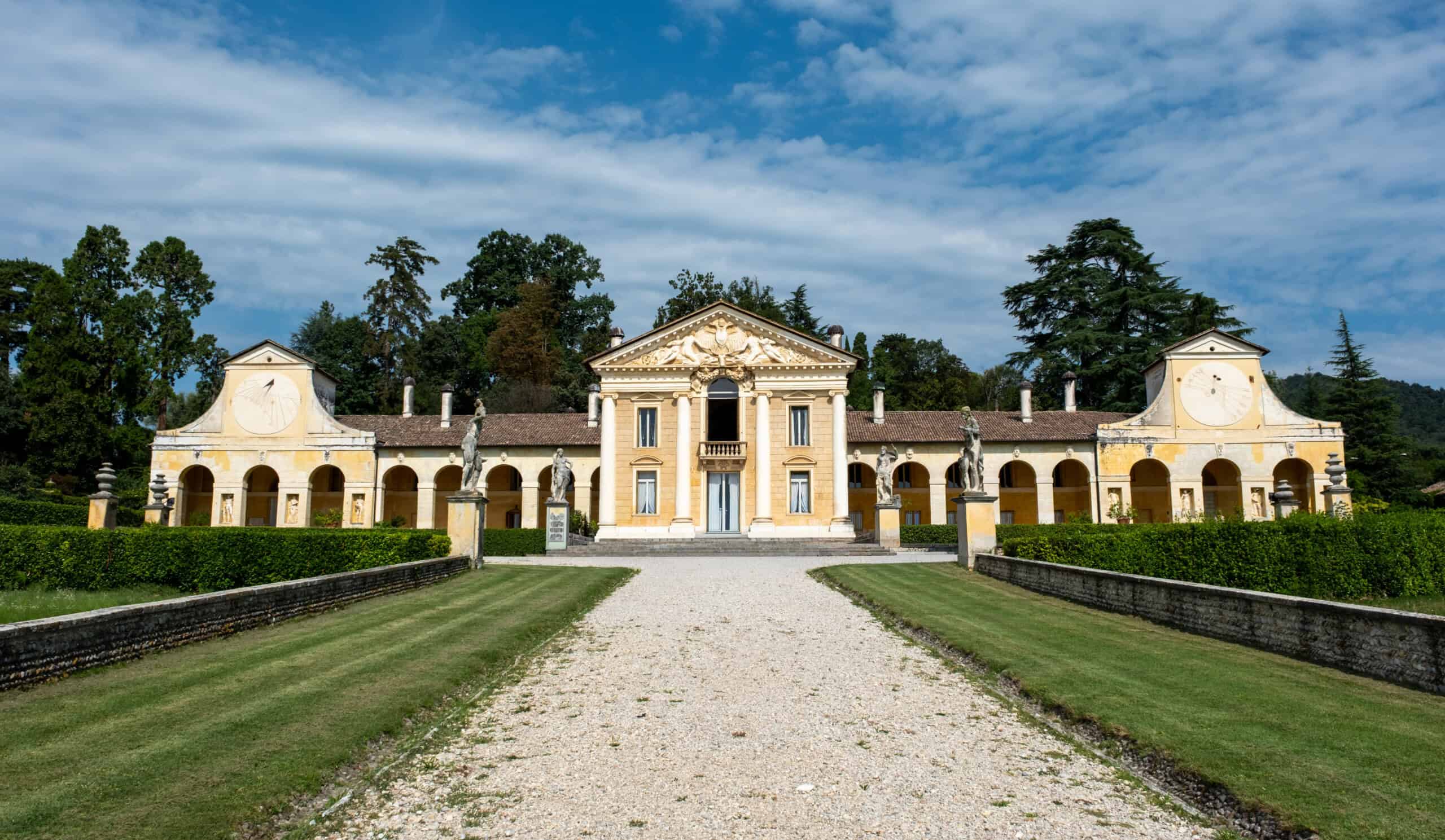
Villa di Maser
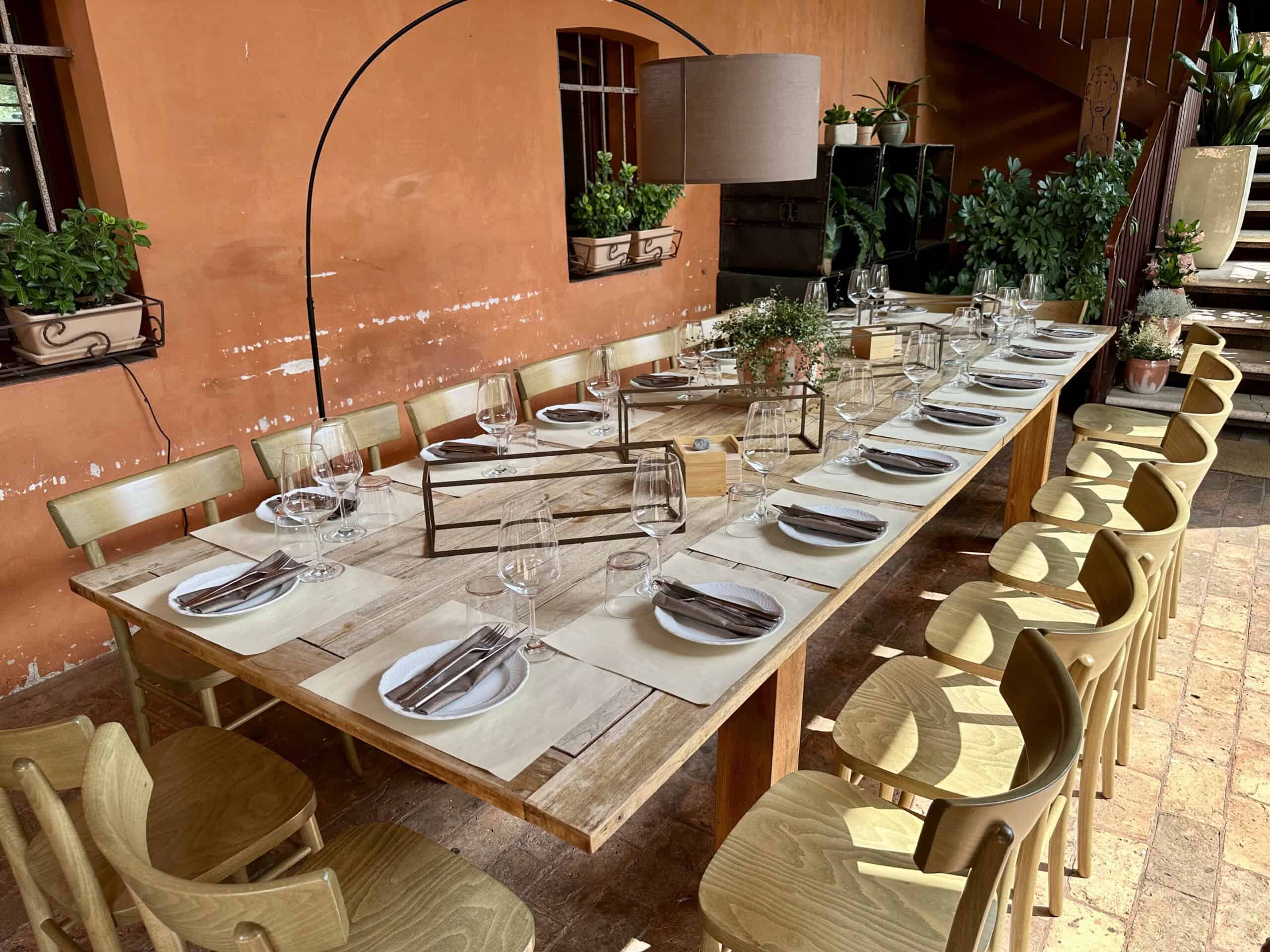
Lunch setting
What stood out more than the villa was the group dynamic beginning to form. There were 17 of us in total: a group of six who already knew each other, two solo travellers (myself and one other lady), and the rest were couples. I quickly realised I was the youngest by at least 20 years, which gave the trip a particular flavour. Still, the atmosphere was friendly, and you could feel the group starting to gel.
After Maser, we continued to Bassano del Grappa. Our first stop was the Hotel Belvedere, where we dropped our bags before heading out. The hotel itself was huge, full of twisting corridors that gave it a sense of history. Dating back to the 15th century, it’s been described as “the history of Bassano” — and with past guests like George Sand, Ernest Hemingway, Robert Browning, and members of the Italian royal family, it’s easy to see why.
Maja led us on a walking tour of the town, and our first stop was Palazzo Sturm, where something unexpected caught my eye: a gleaming, mirror‑steel rhinoceros. This wasn’t some centuries‑old relic but a contemporary sculpture by Taiwanese artist Li‑Jen Shih, installed on the palazzo’s belvedere. It shone in the sunlight, reflecting the square and the sky around it—you could feel the sun’s heat radiating off it. Quirky, modern, and a little unexpected — the kind of detail that makes you stop and stare. It felt like Bassano was quietly reminding us that tradition and modernity can coexist.
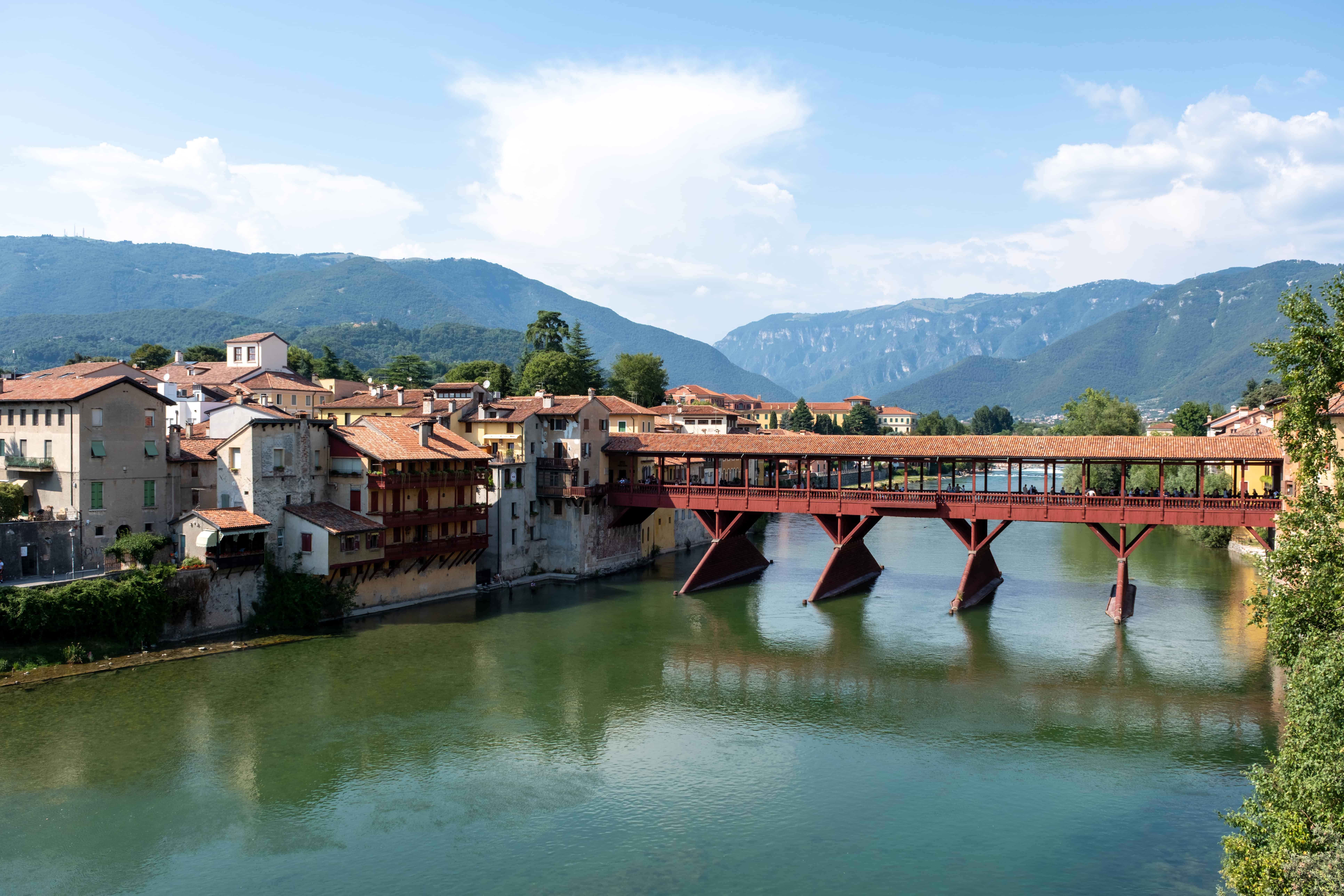
We then headed to the Ponte Vecchio, the covered wooden bridge designed by Palladio. Standing on it, you could feel the history. The Brenta River flowed below, the Dolomites rose in the distance, and the pastel façades of the town shone in the afternoon light. We finished at the Poli Grappa Museum, learning about the town’s signature spirit and tasting a little of it too. It wasn’t really my thing, but the locals treat grappa almost like a badge of honour — you can’t understand Bassano without at least trying it.
Ponte Vecchio
It also happened to be August 15th — Ferragosto, one of Italy’s biggest holidays — so the town had a relaxed, summery feel. Most shops were closed, families were out strolling, and the afternoon heat gave everything a lazy charm. At one point, I stopped at a little gelato counter for a scoop — gelato number two of the trip (the first had been back in Milan, which I’d almost forgotten about). Honestly, have you been to Italia if you haven’t had gelato?
The next morning, we drove through the spectacular Brenta Valley towards Rovereto. Even from the bus, the views were incredible — sheer cliffs, tucked-away villages, and the Dolomites growing larger as we went. Our first stop was Castello di Rovereto, a medieval fortress turned museum with artefacts and personal stories from the Great War. From there, we visited the Campana dei Caduti — the Bell of the Fallen. Cast from cannons donated by nations after WWI, it tolls every evening in memory of the fallen from every country that fought. Standing there with the mountains behind us was a quiet, moving moment.
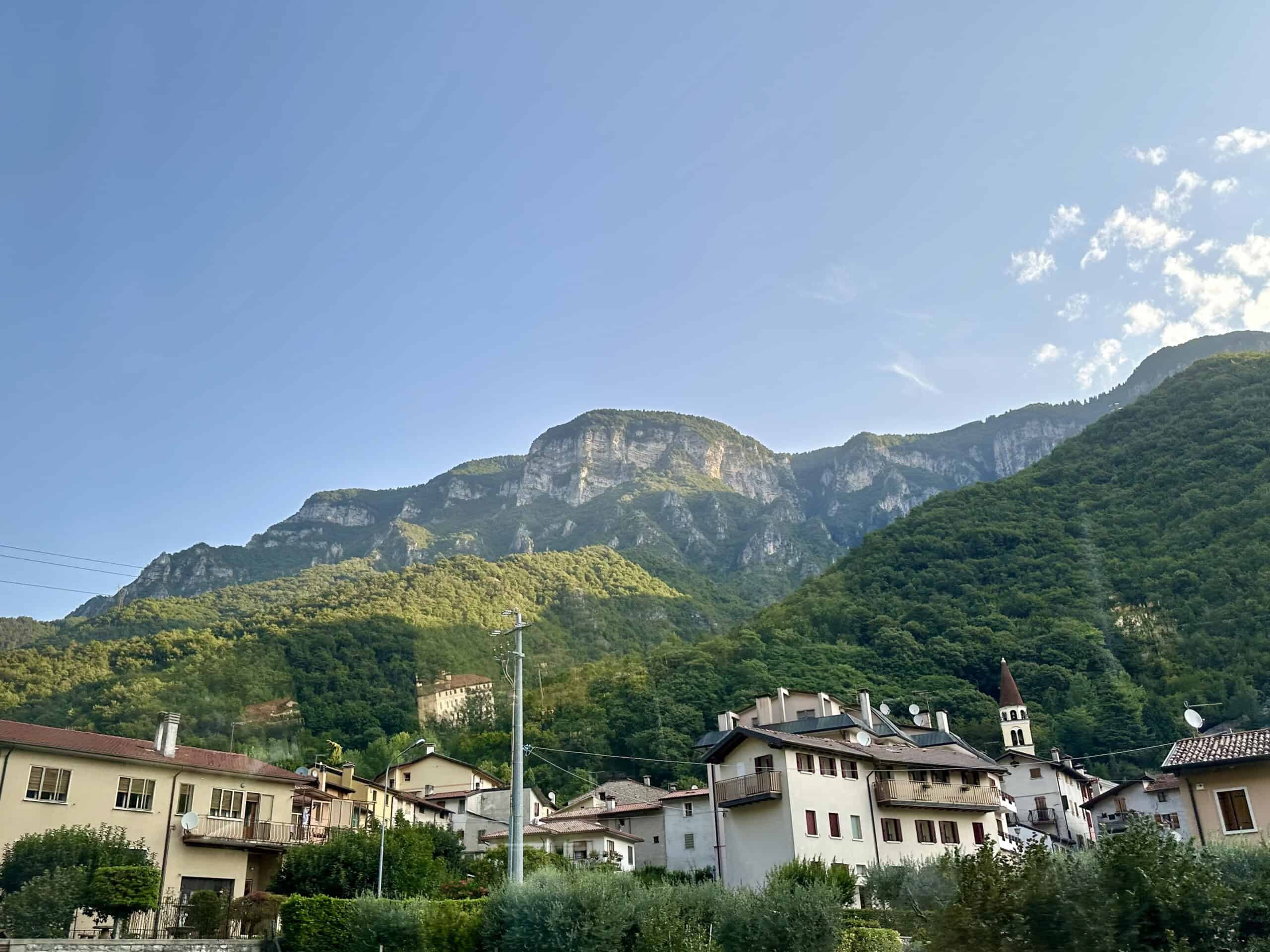
Brenta Valley 1
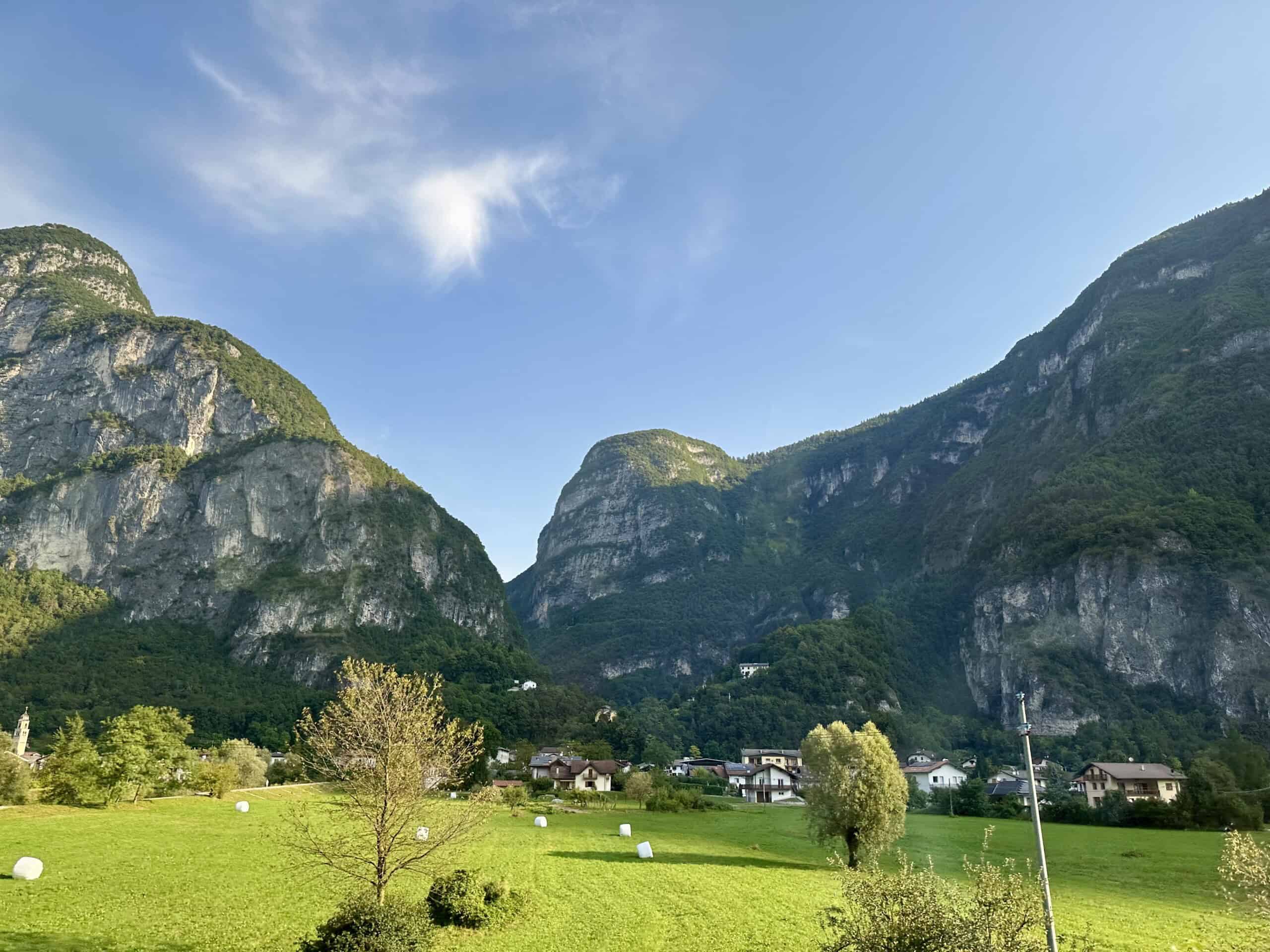
Brenta Valley 2
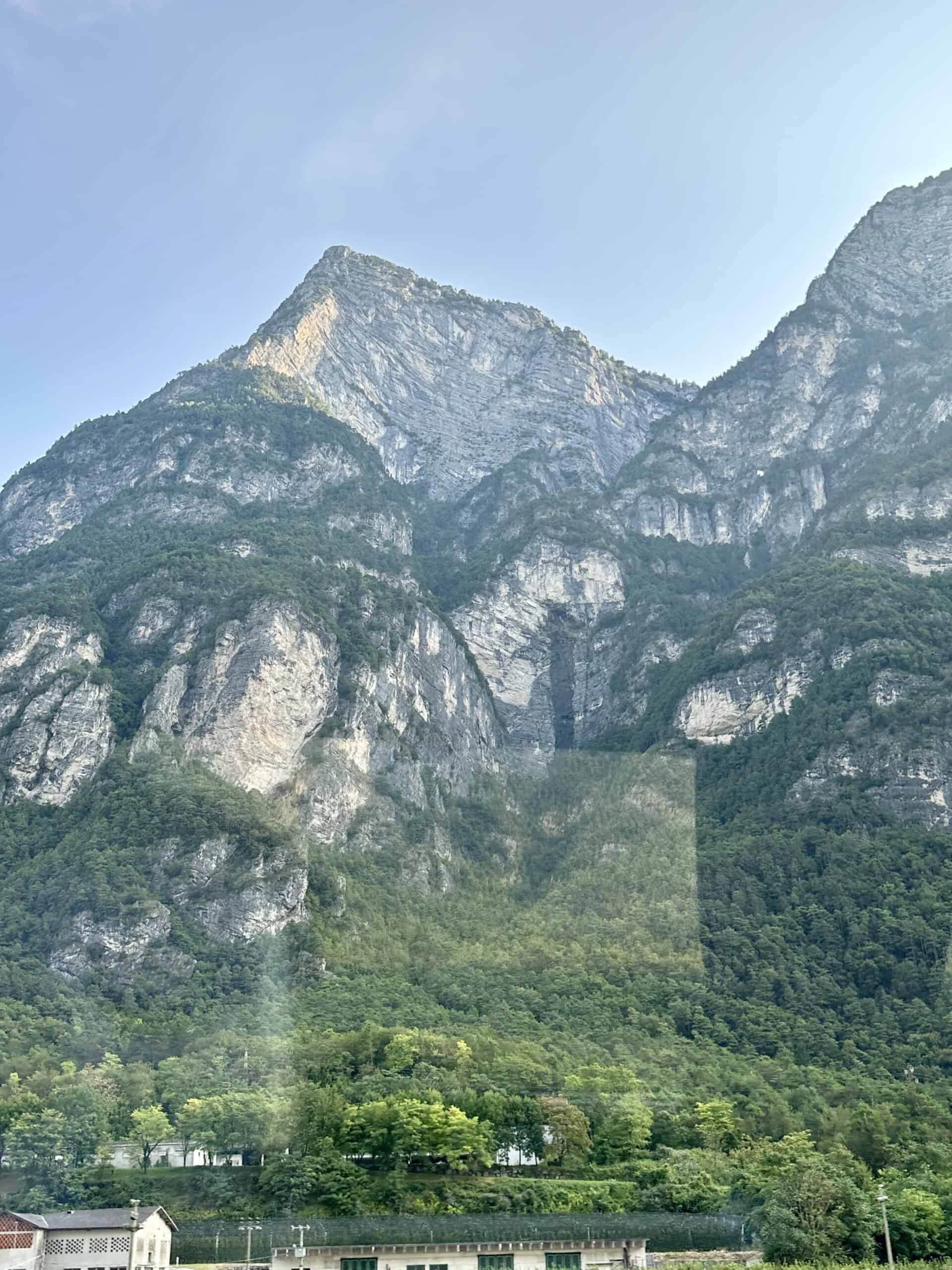
Brenta Valley 3
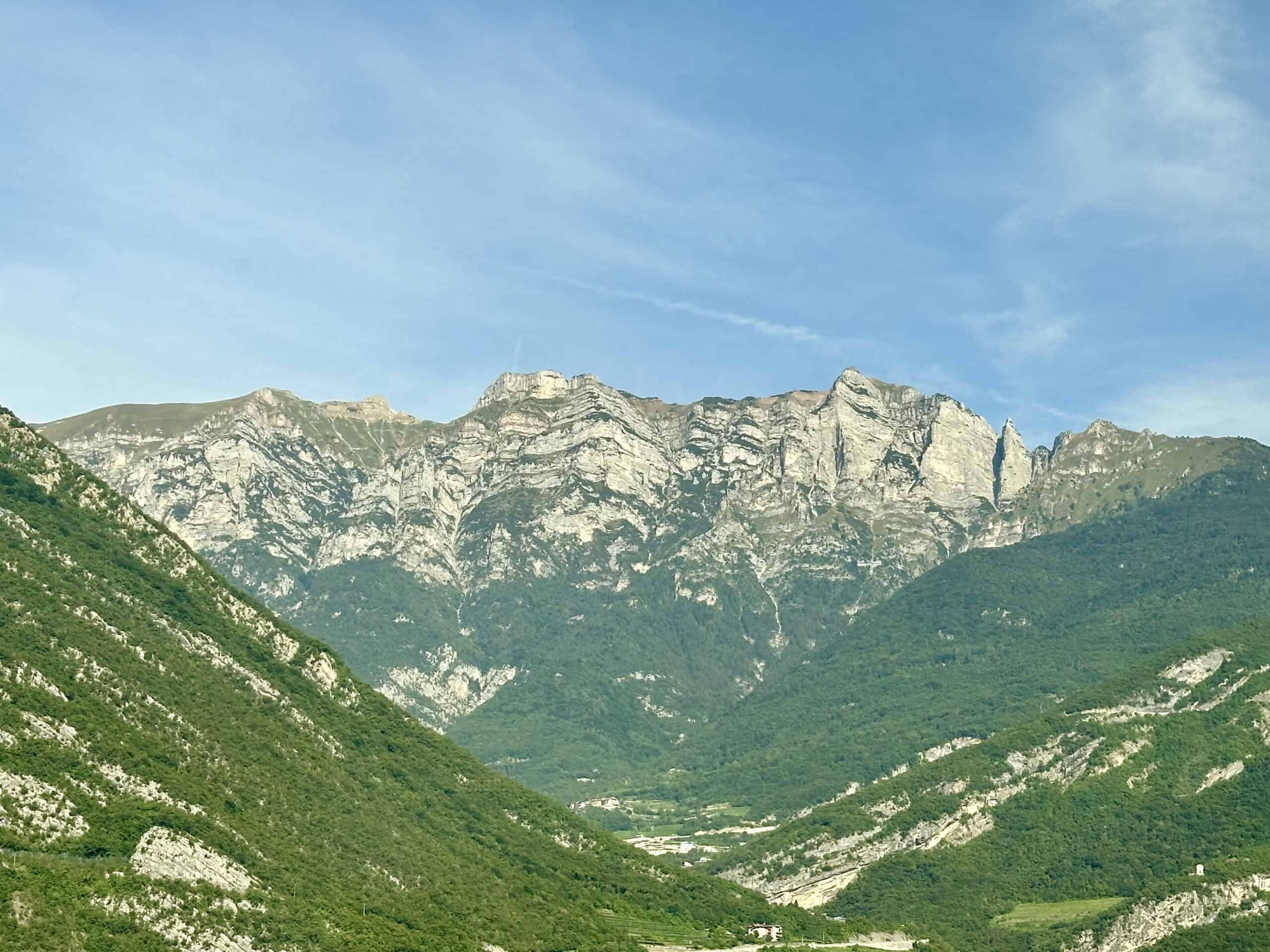
Brent Valley 4
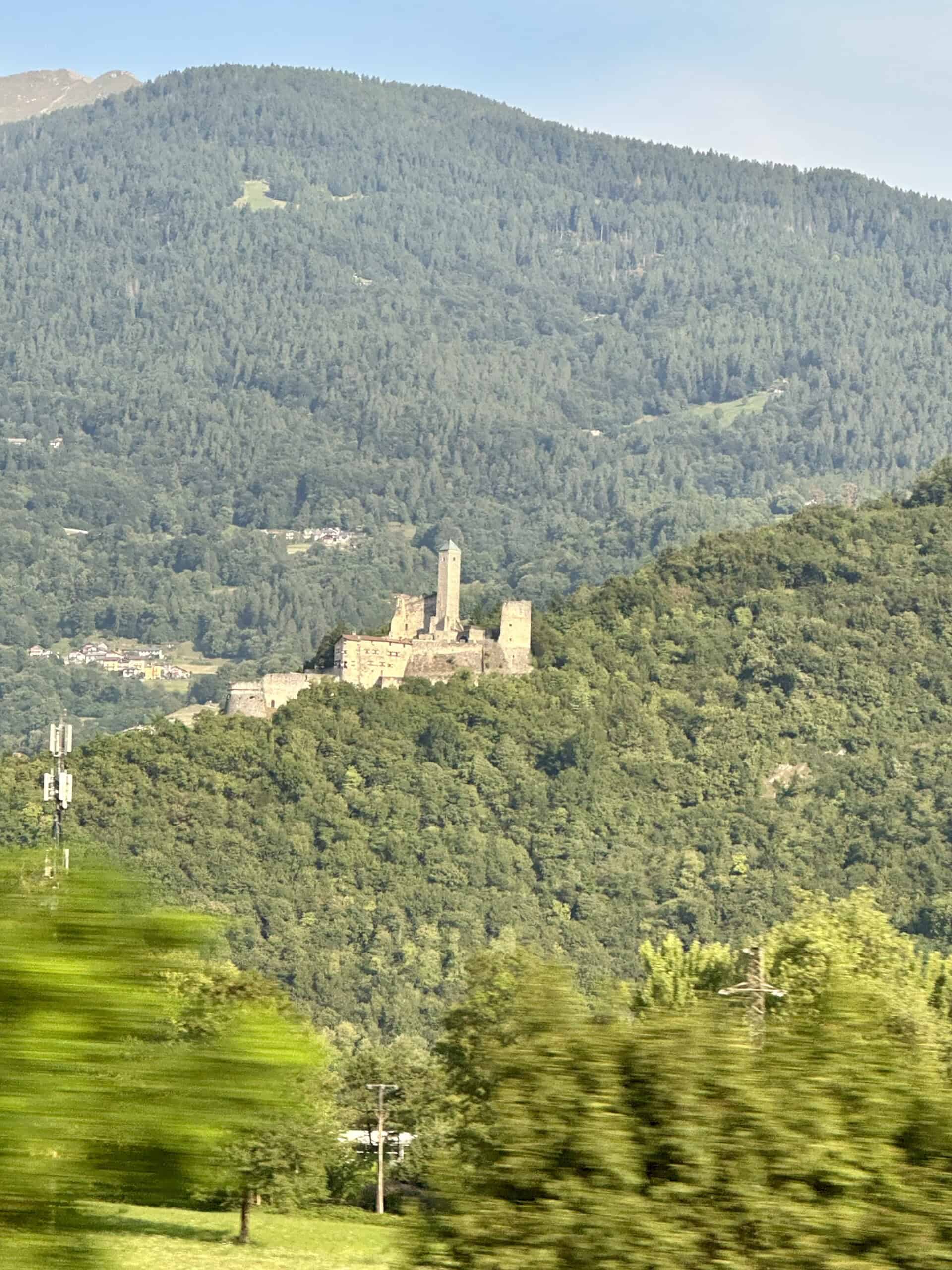
Brenta Valley 5
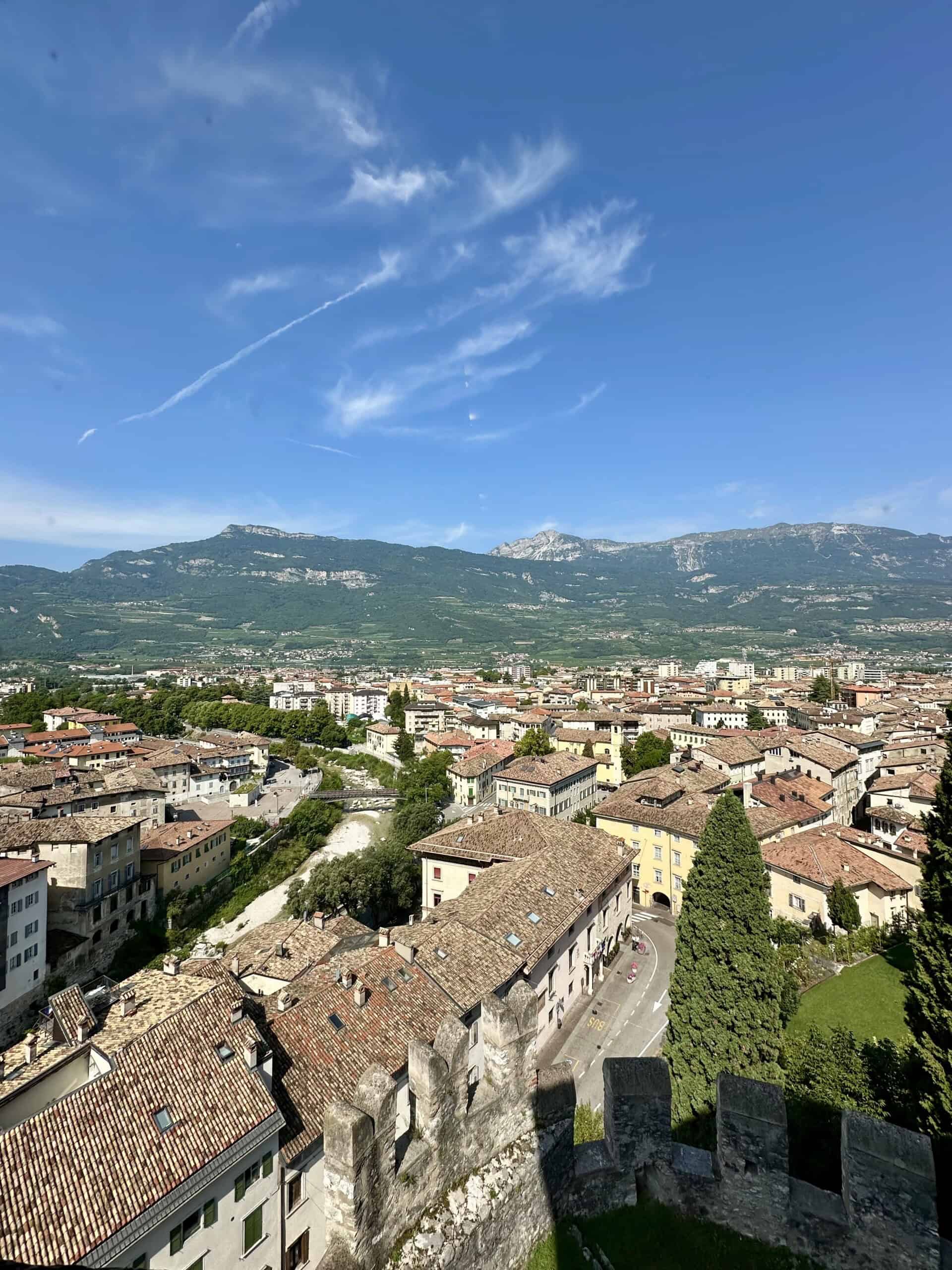
View of Rovereto from the Italian War Museum
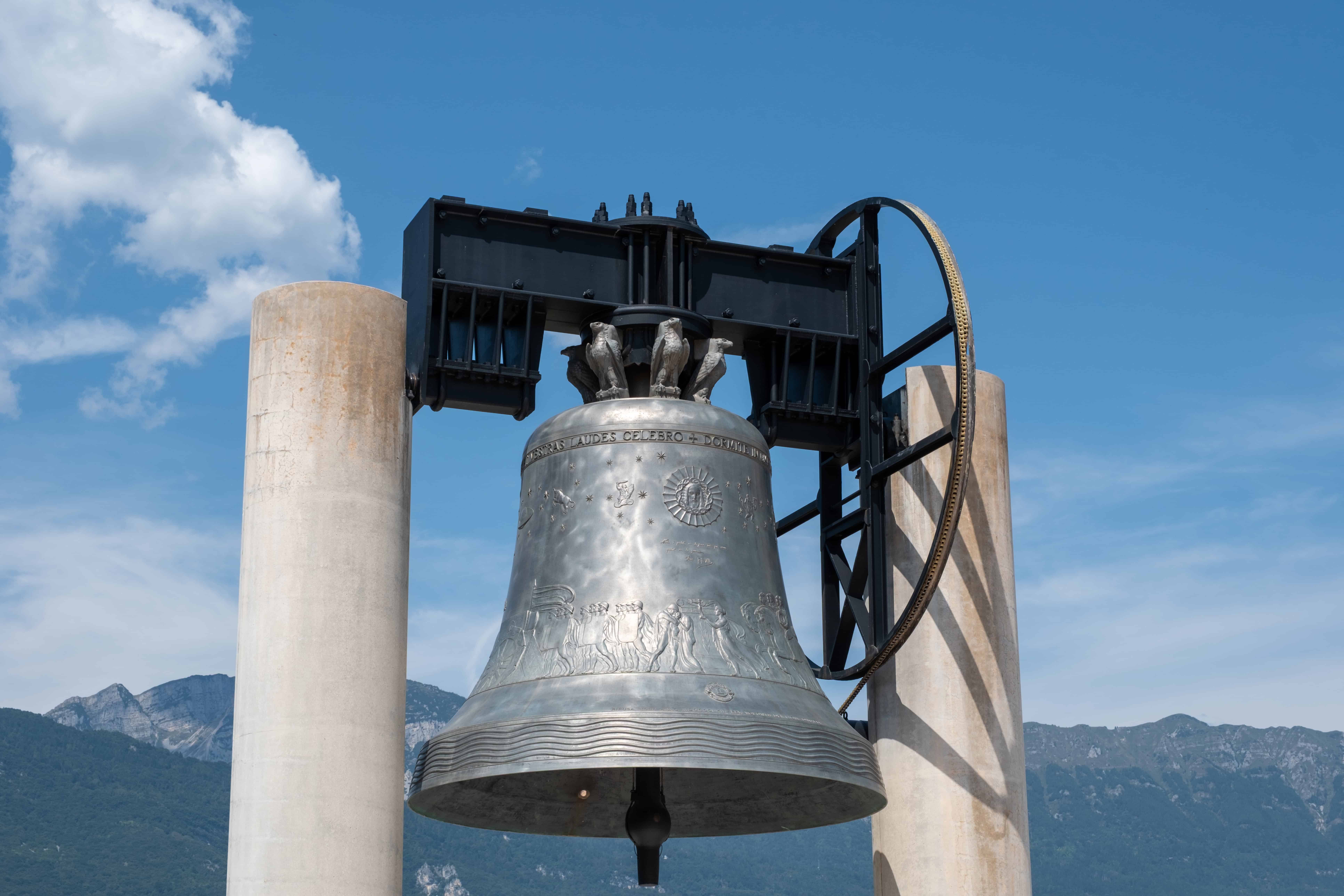
Campana dei Caduti
Lunch in Rovereto turned out to be a highlight — purely by chance, Maja and Milan sat at my table, and it was the first time I got to speak to them properly. Away from the microphone and the driver’s seat, they were relaxed and genuinely funny. That sense of connection set the tone for the rest of the trip.
That evening, back in Bassano for our final night, Maja organised dinner at Feeling Pizza — lively, casual, and precisely what we needed after a day of history and reflection. She joined us; Milan sat it out. By then, our little group was really starting to gel.
After two nights, we checked out and continued north. True to the Back-Roads philosophy, we avoided motorways and took the scenic route — winding through valleys and villages most travellers never see. It’s what makes these tours special: the roads less travelled really do offer the best surprises.
When we reached Belluno, the bus parked below the town, and we took the escalators up to the historic centre. Emerging beside the Duomo di San Martino, I immediately spotted a red Topolino parked nearby — a perfect call back to Milan earlier in the trip. At that point, it felt like the little car was stalking me across northern Italy.
Maja led a short orientation tour. Belluno was attractive but noticeably quieter than Bassano — shutters drawn, locals away for the holiday. A few of us stopped at a café on the terrace of the Suites Hotel Astor, overlooking the rooftops and the Piave River winding below. Sitting there with a hot chocolate, it was one of those small travel moments that stick with you — calm, scenic, and perfectly placed between the busyness of Italy and the promise of Slovenia ahead.
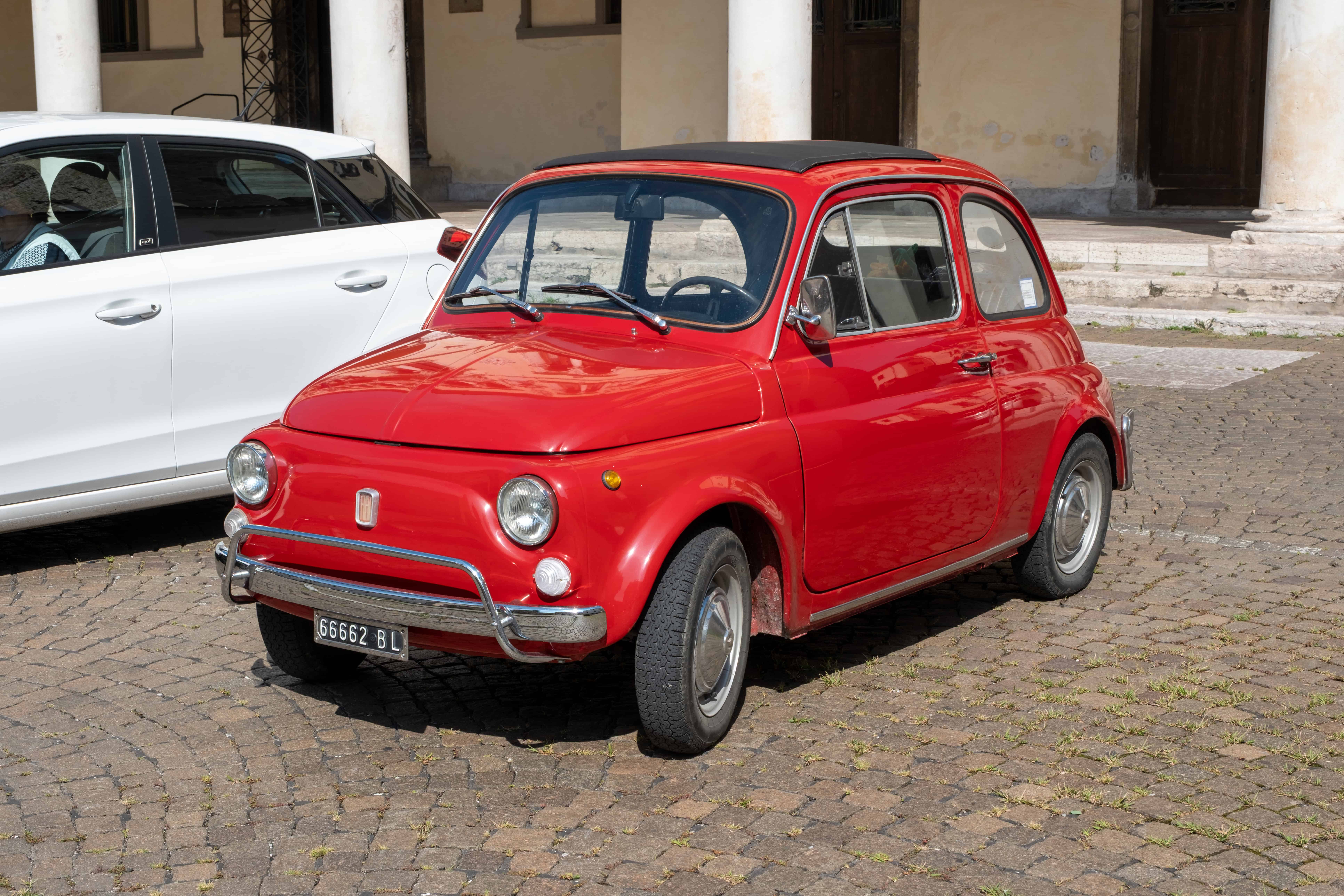
Stalkolino
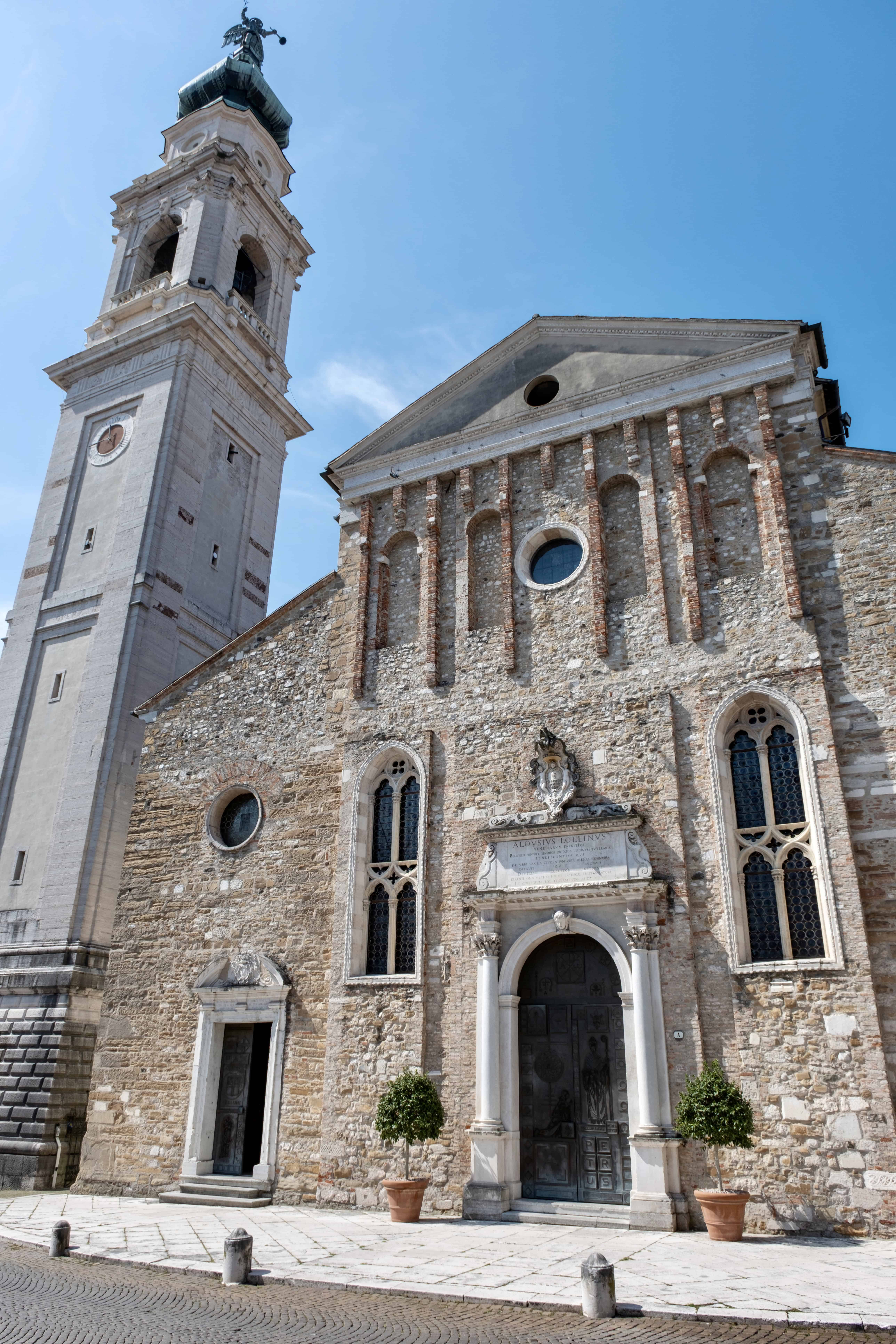
Duomo di San Martino
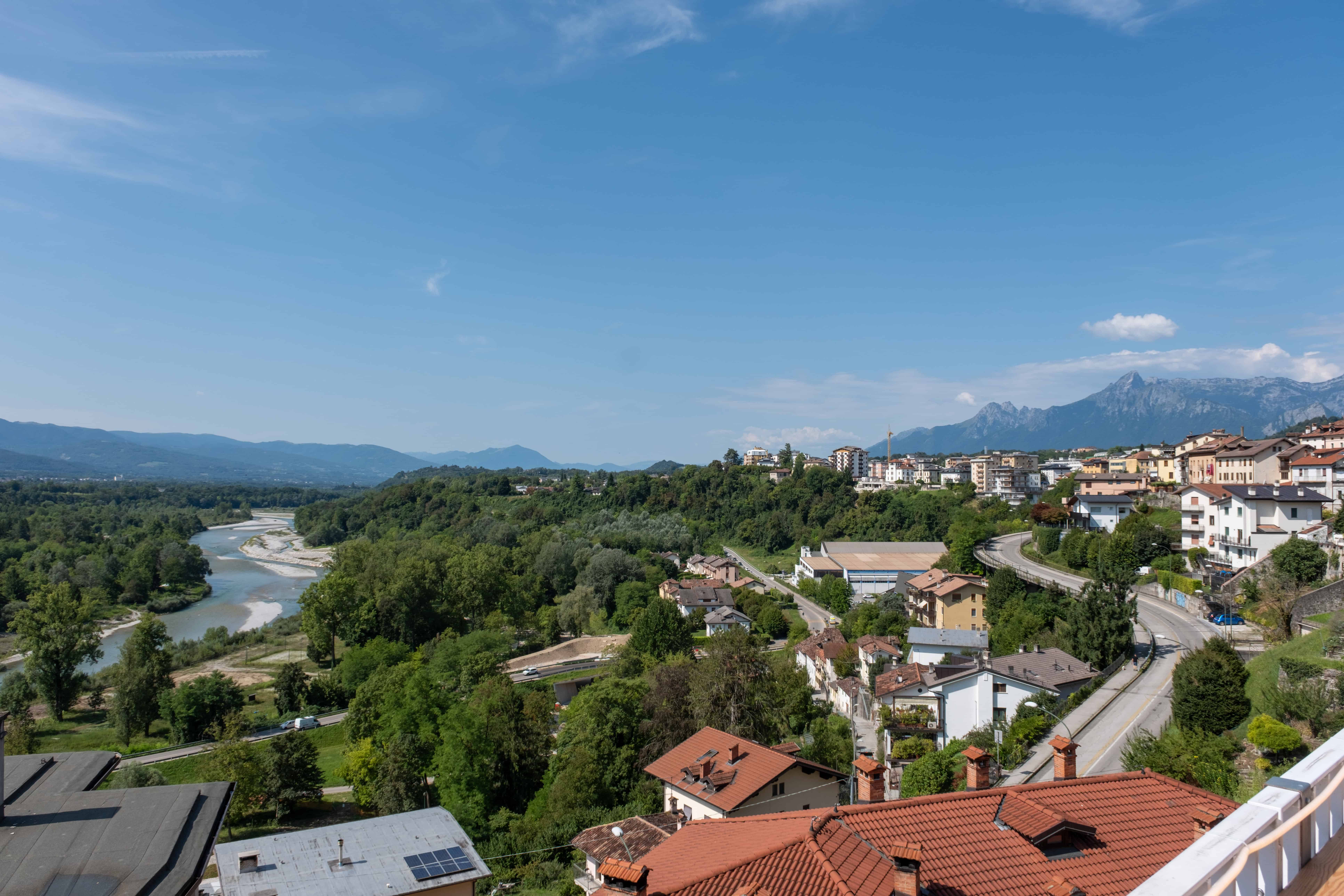
View from the cafe
Crossing the border was almost surreal in its simplicity — no checks, no queues, just a roadside sign and suddenly we were in Slovenia. That seamless transition made me appreciate just how easy it is to travel through Europe now — borders that once divided are barely noticeable.
It rained on and off as we drove through the mountains towards Bled. By the time we arrived, the skies were grey, giving the lake a moody, mysterious feel. We checked into the Bled Rose Hotel — modern, stylish, and one of the more polished stays of the trip, if a little lacking in character and warmth. A walk along the lakefront revealed a busier scene than the quiet Italian towns — tourists strolling, cafés buzzing, the lake peaceful even under clouds.
That evening, most of us gathered for dinner at Gostilna Pri Planincu, a cosy local restaurant across the road from the hotel. The place had a rustic charm and hearty food to match. I ordered Mama Ivanka’s Goulash — rich, slow-cooked, and clearly made with love. The atmosphere was lively without being over-the-top, and the prices were a refreshing change after Italy. By the end of the night, everyone was laughing easily together, the rain forgotten. It already felt like Slovenia was going to be something special.
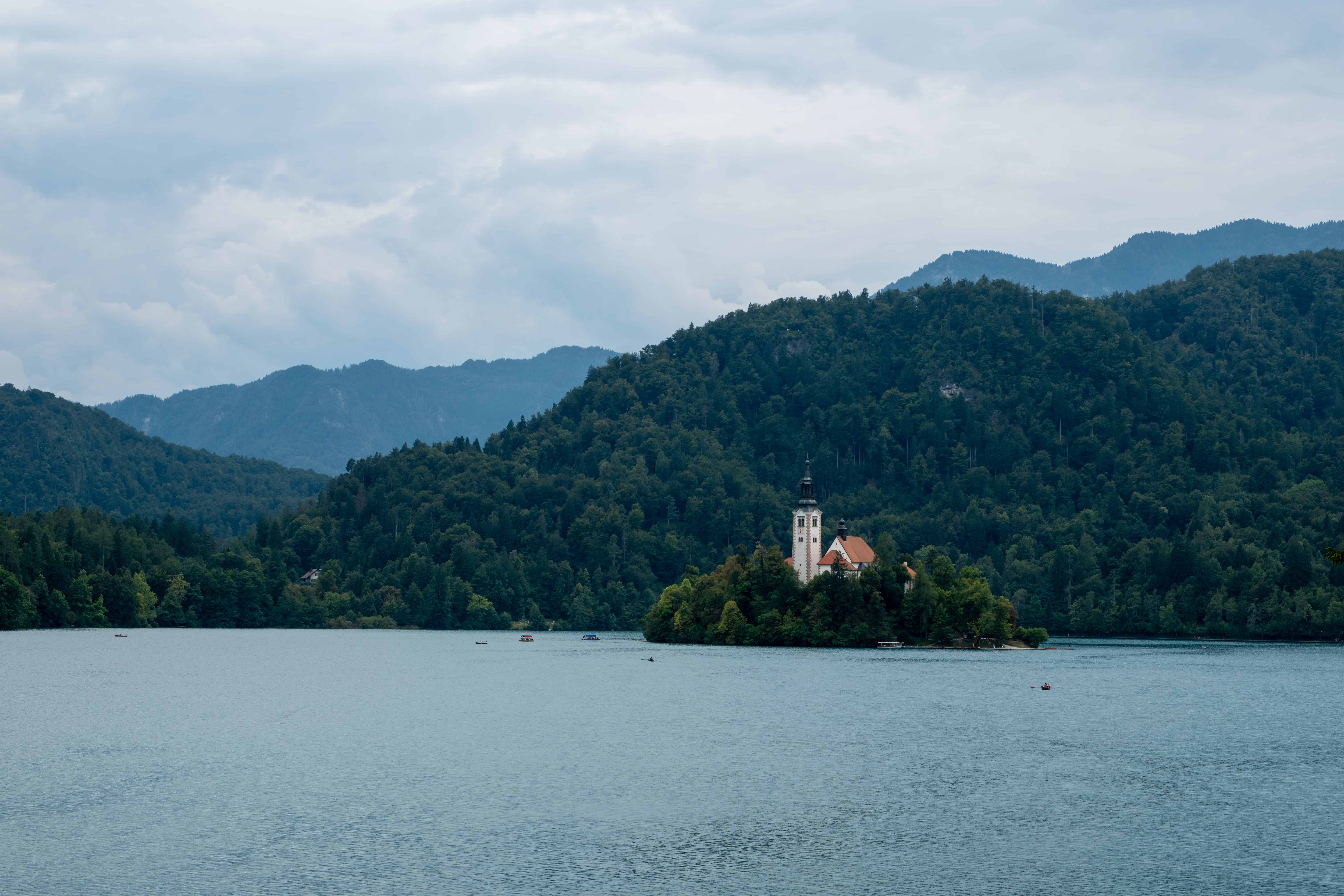
Lake Bled when cloudy.
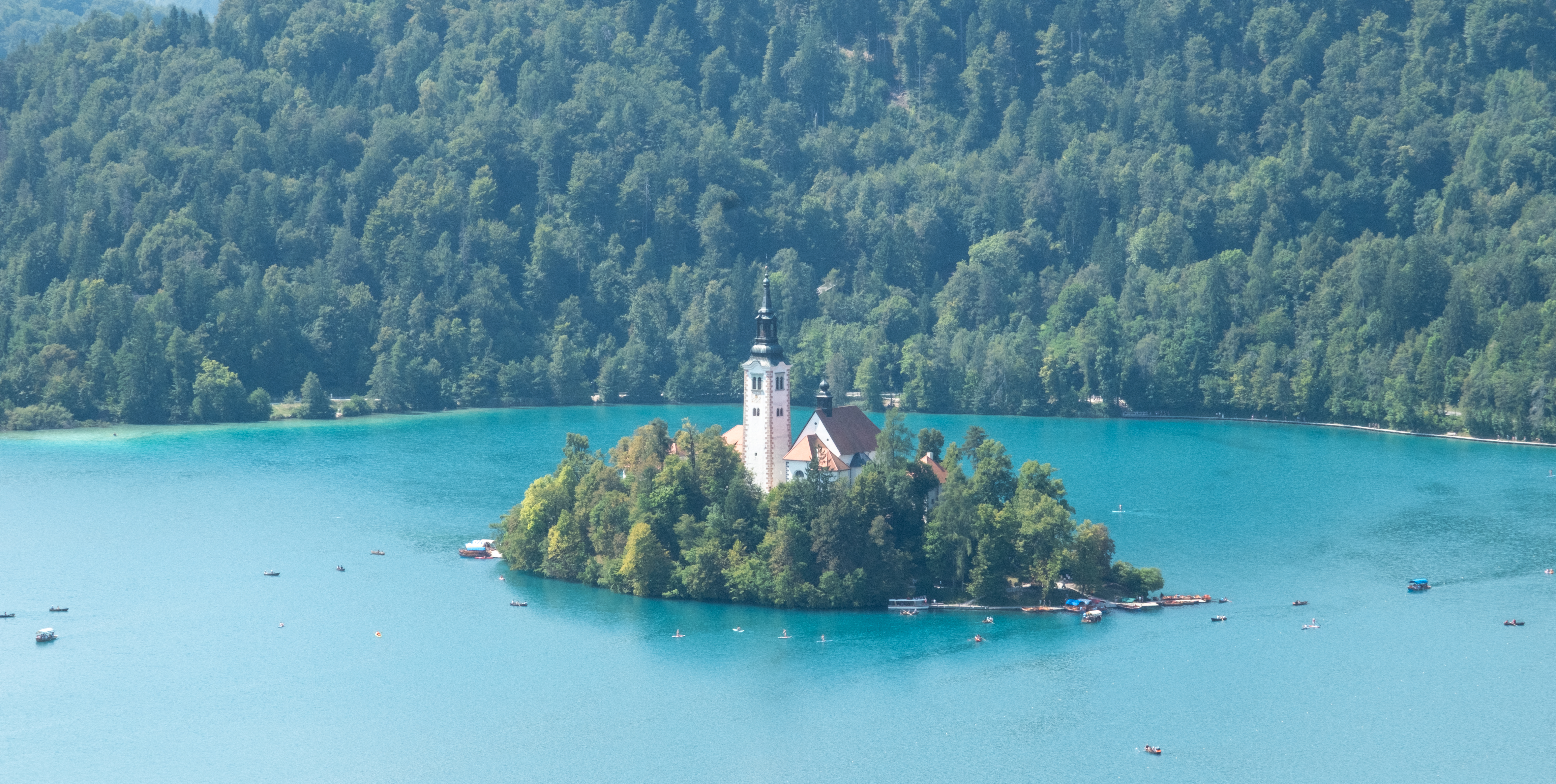
The rain cleared overnight, and the next morning, Bled looked like it had stepped out of a postcard. The lake sparkled, the island church and castle looked almost unreal in the sunshine, and the whole place had that fairy-tale quality that photos never quite capture.
We started the day with a walking tour led by a local guide. Beginning at our hotel, she shared snippets of Bled’s history as we made our way through town to the lakeshore. Waiting there were the traditional pletna boats — long wooden vessels rowed standing up, using a distinctive single-oar technique that’s been passed down through generations. Many of the rowers come from families who’ve held the right to operate these boats for centuries. That sense of tradition added something special — it wasn’t just a boat ride, it was a living piece of Bled’s story.
The glide across the lake was peaceful, broken only by the rhythm of the oars and the occasional splash. On the island, we climbed the 99 stone steps to the Church of the Assumption. Inside, visitors rang the famous wishing bell, each pull echoing softly through the chapel. I couldn’t resist climbing the church tower for unbroken views of the lake and the Julian Alps beyond. Afterwards, I walked the island — it’s small, but the uneven paths made it feel like a mini adventure. A few people slipped on the stones, a reminder that even picture-perfect places have their hazards.
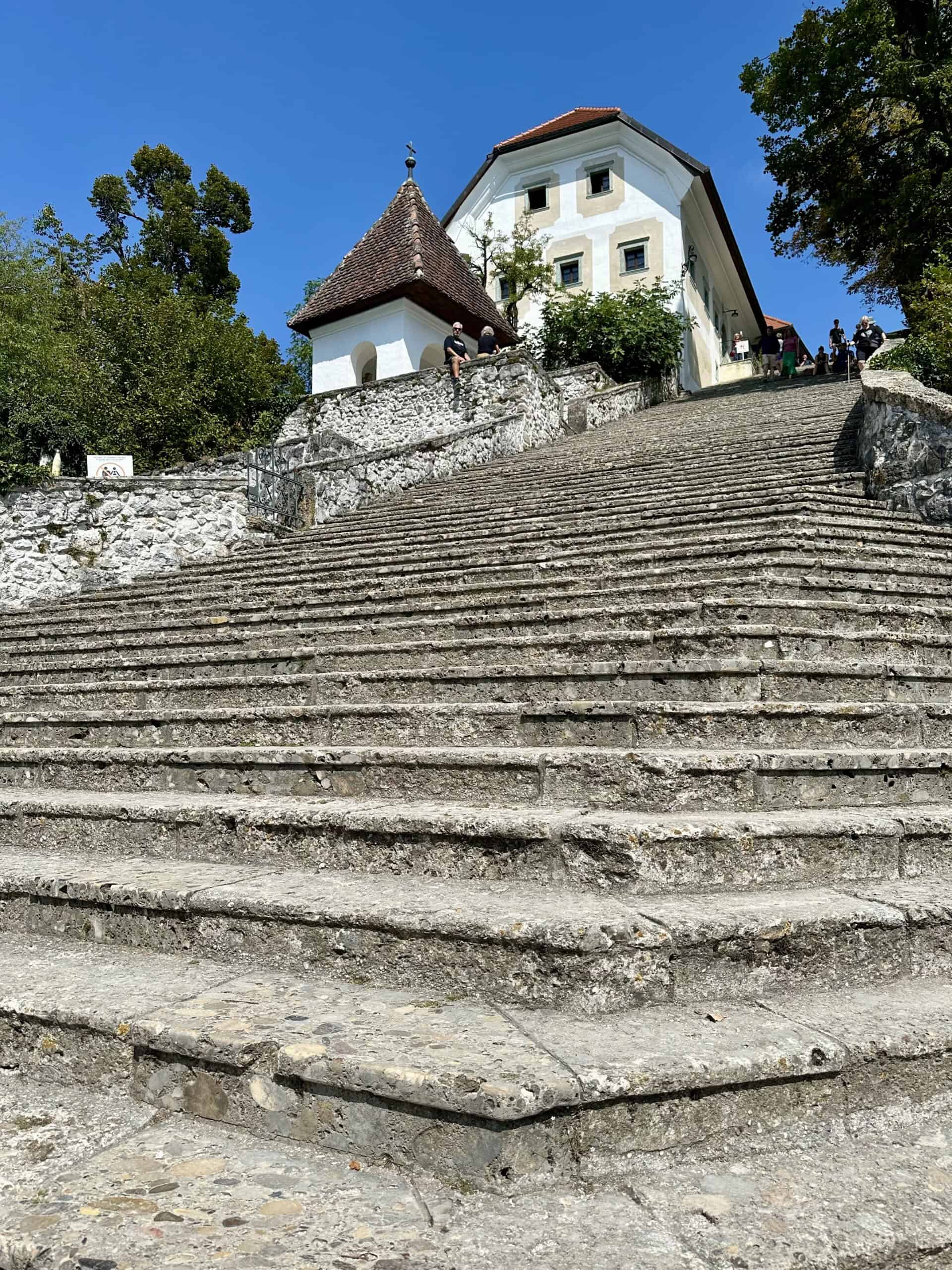
99 Steps
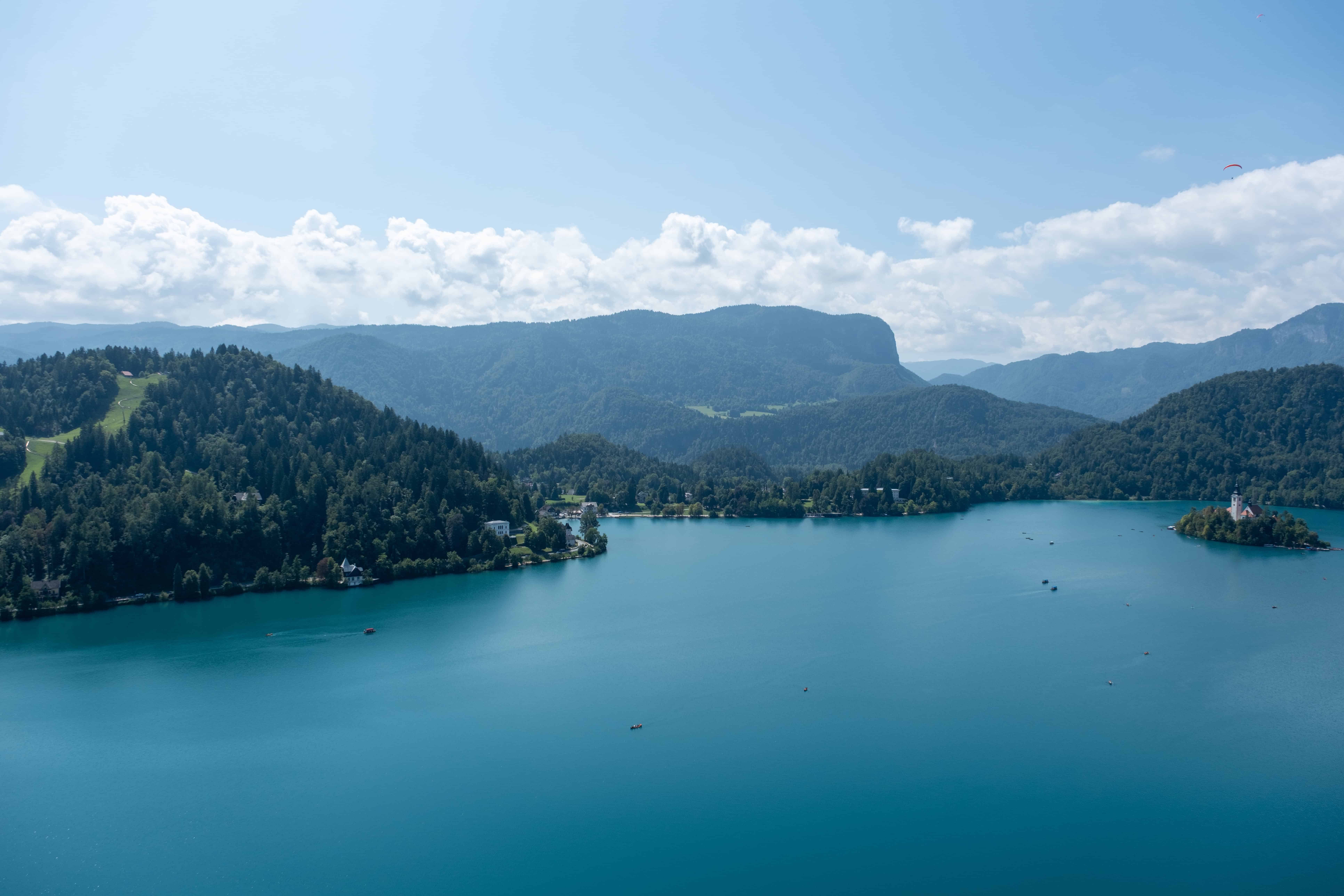
Lake Bled
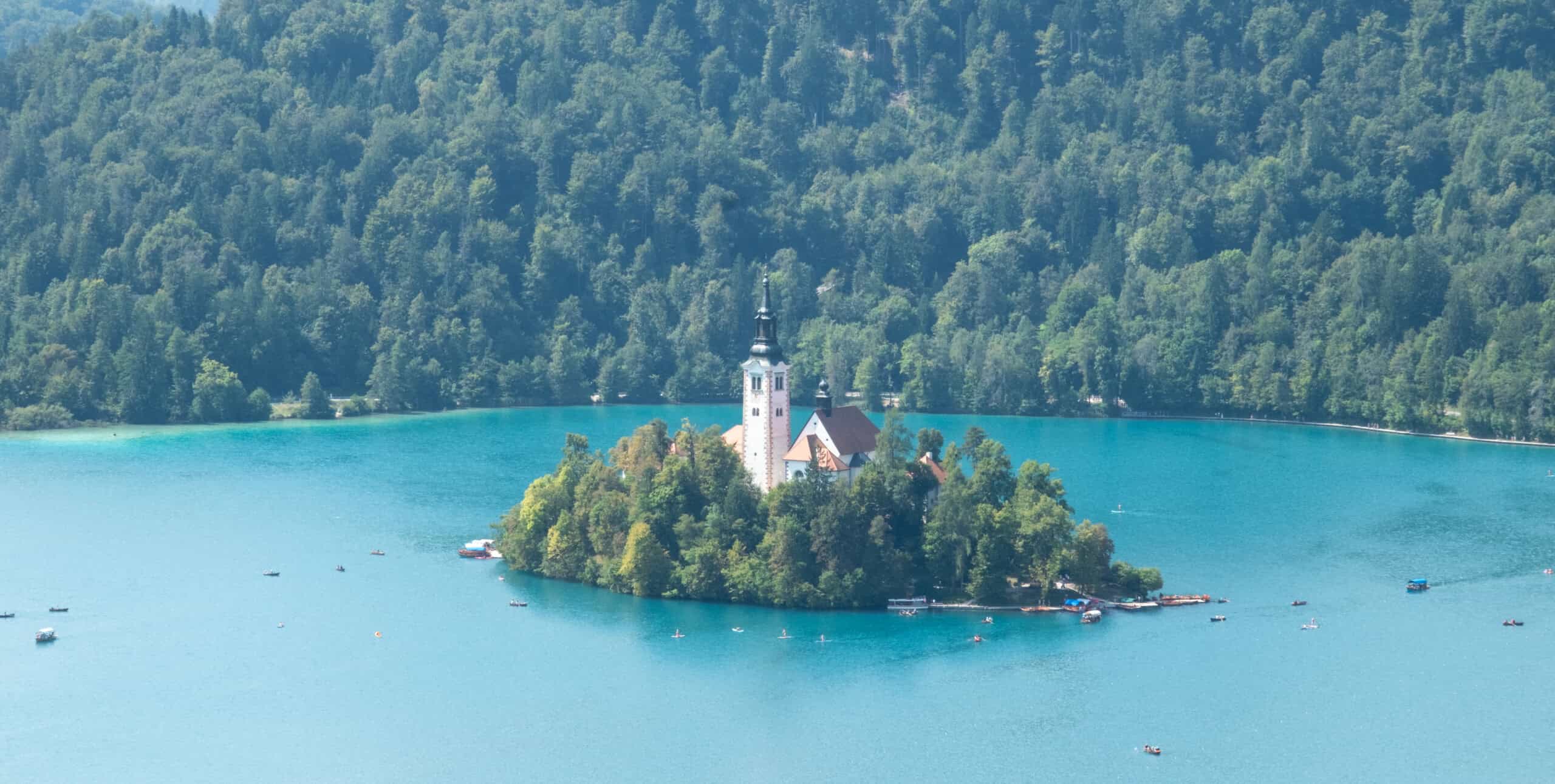
Church of the Assumption of the Blessed Virgin Mary
Back on the shore, Milan drove us up the winding road to Bled Castle. Perched dramatically on a cliff 130 metres above the lake, it’s Slovenia’s oldest castle and one of its busiest. The crowds were hard to ignore, but the setting more than made up for it — from the ramparts, the lake and island were framed perfectly below. Inside, the museum offered glimpses into the region’s history, but most of us spent our time outside soaking up the view.
Lunch was at the Jezeršek restaurant inside the castle walls. The food was excellent, but dessert completely stole the show: Bled cream cake — Blejska kremšnita. I’d never heard of it before that day, but one bite in and I was hooked. Layers of custard and cream sandwiched between crisp pastry, dusted with icing sugar — simple, perfect, and addictive. I didn’t stop at one slice (thanks, Maja, for not having yours – it was fantastic). From that point on, it became my favourite food of the trip.
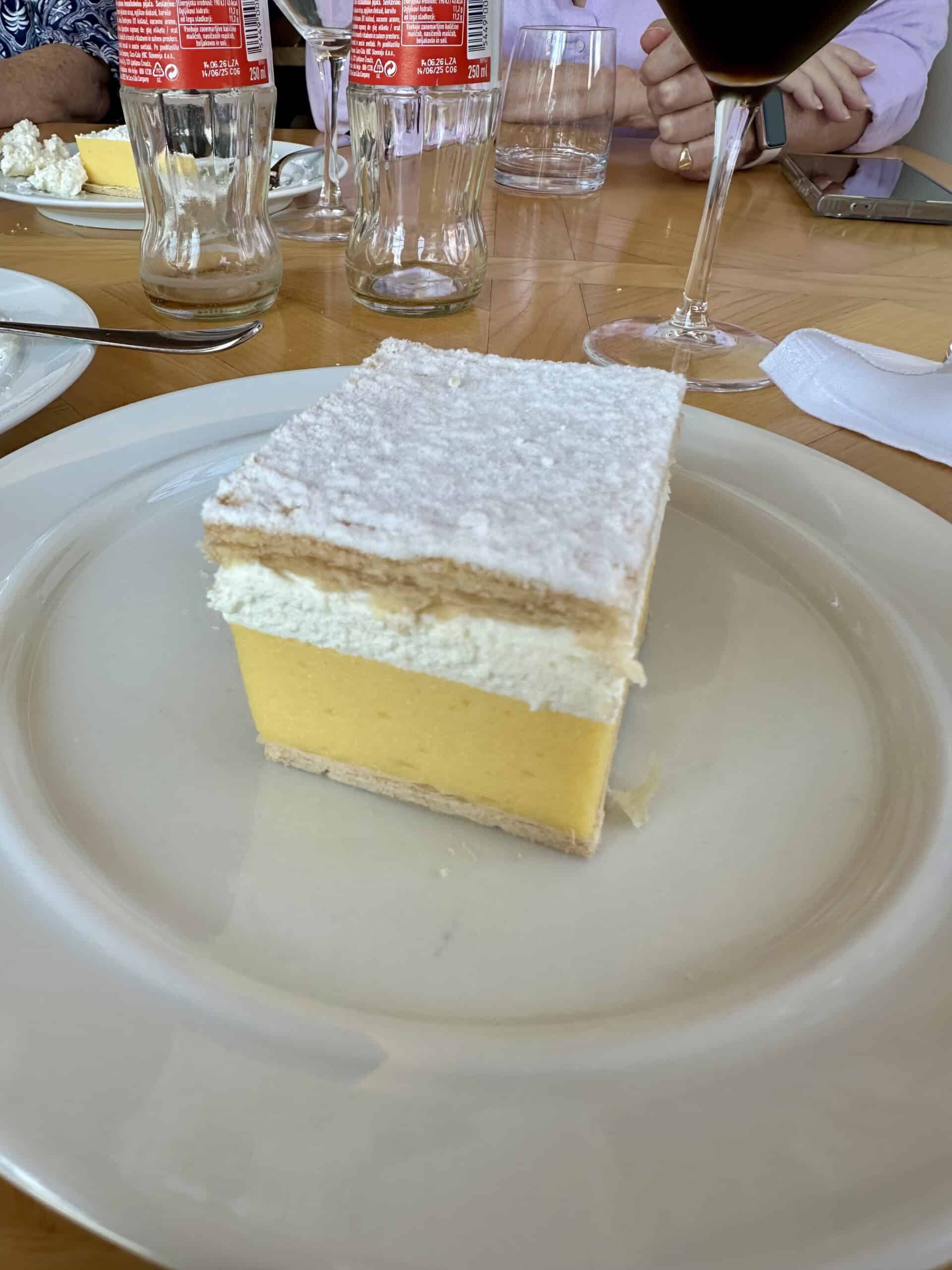
Blejska Kremsnita
As we left Bled the next morning, the lake shimmered in the sunlight, as if offering one last postcard moment. By now, our little group was well in sync — bags out, seats claimed, Maja’s commentary flowing, and Milan effortlessly steering us towards the next stop.
Our first glimpse of Ljubljana felt like a change of pace — Slovenia’s capital had a young, creative energy. Riverside cafés spilled with chatter, bridges arched gracefully across the river, and pastel façades gave the old town a cheerful air. A local guide met us for a walking tour, pointing out the Triple Bridge, the Dragon Bridge, and the market square before we took the funicular up to Ljubljana Castle. The view from the top was beautiful, but the crowds made it hard to enjoy.
After exploring the castle grounds and its tower, I decided to wander on my own. Walking along the river, crossing bridge after bridge, I realised how much I liked the city’s relaxed rhythm. I could’ve happily spent another day there, just people-watching and exploring. Naturally, I went in search of more kremšnita — Ljubljana’s version didn’t quite beat the Bled original, but it still held its own.
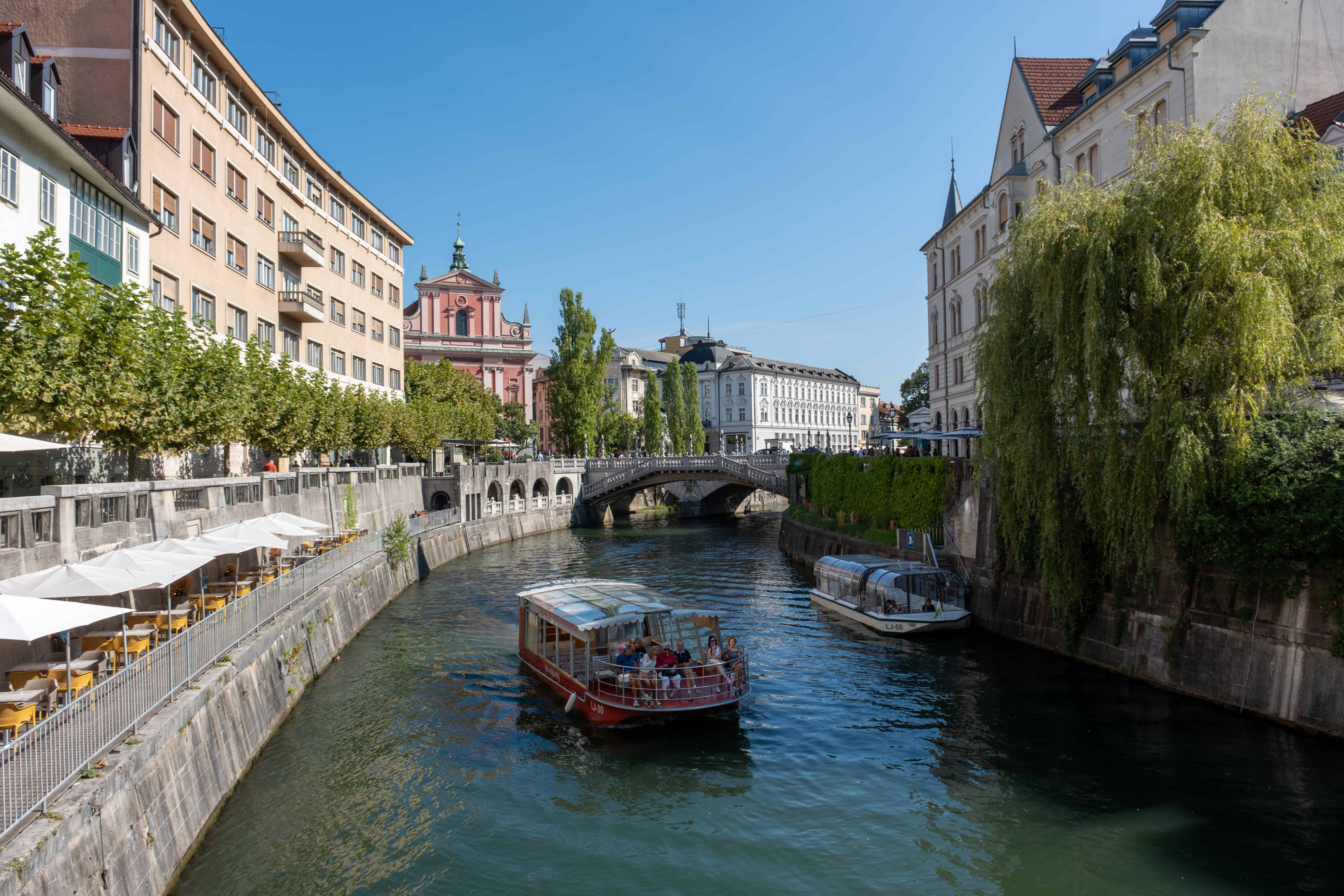
Ljubjana 1
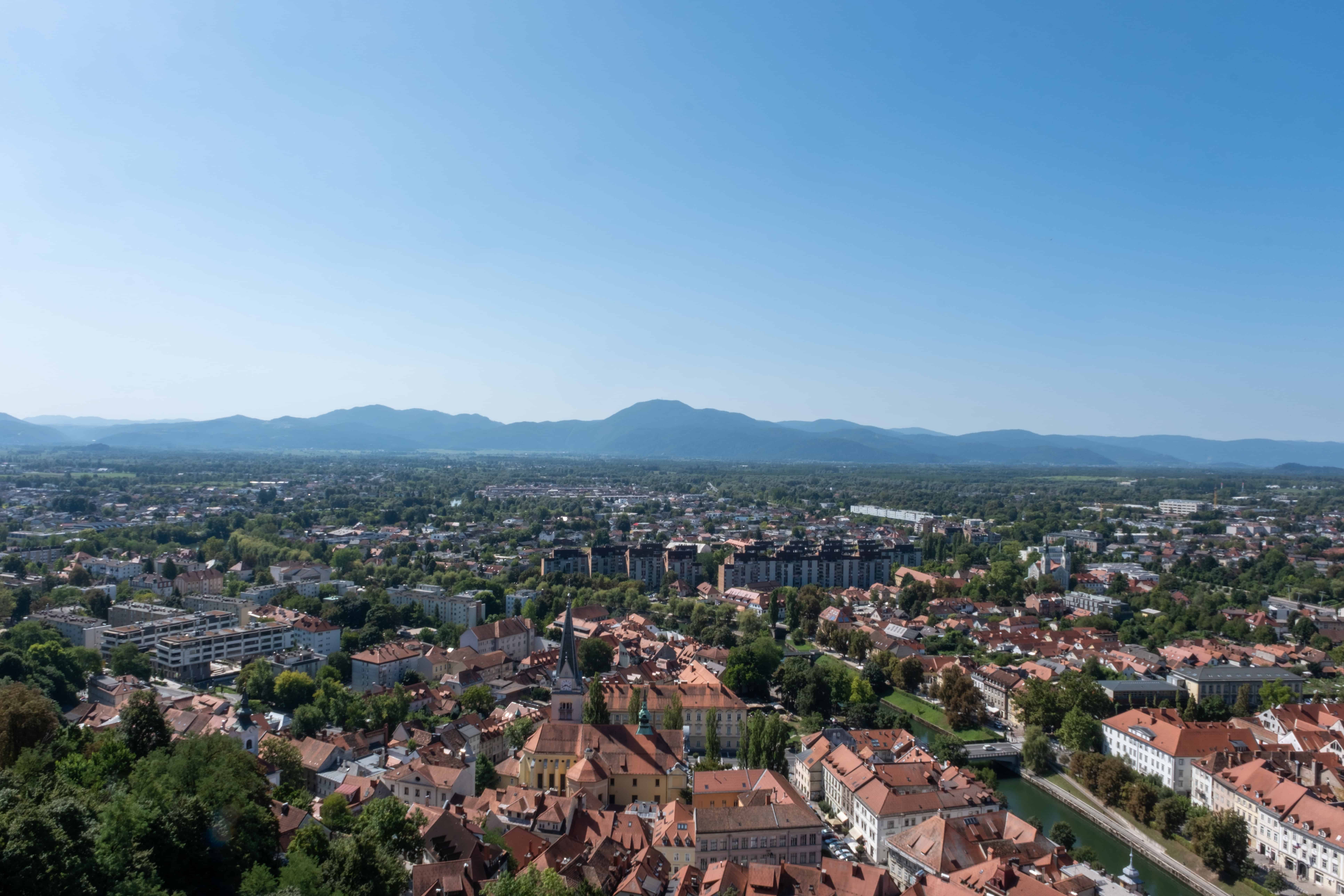
Ljubjana 2
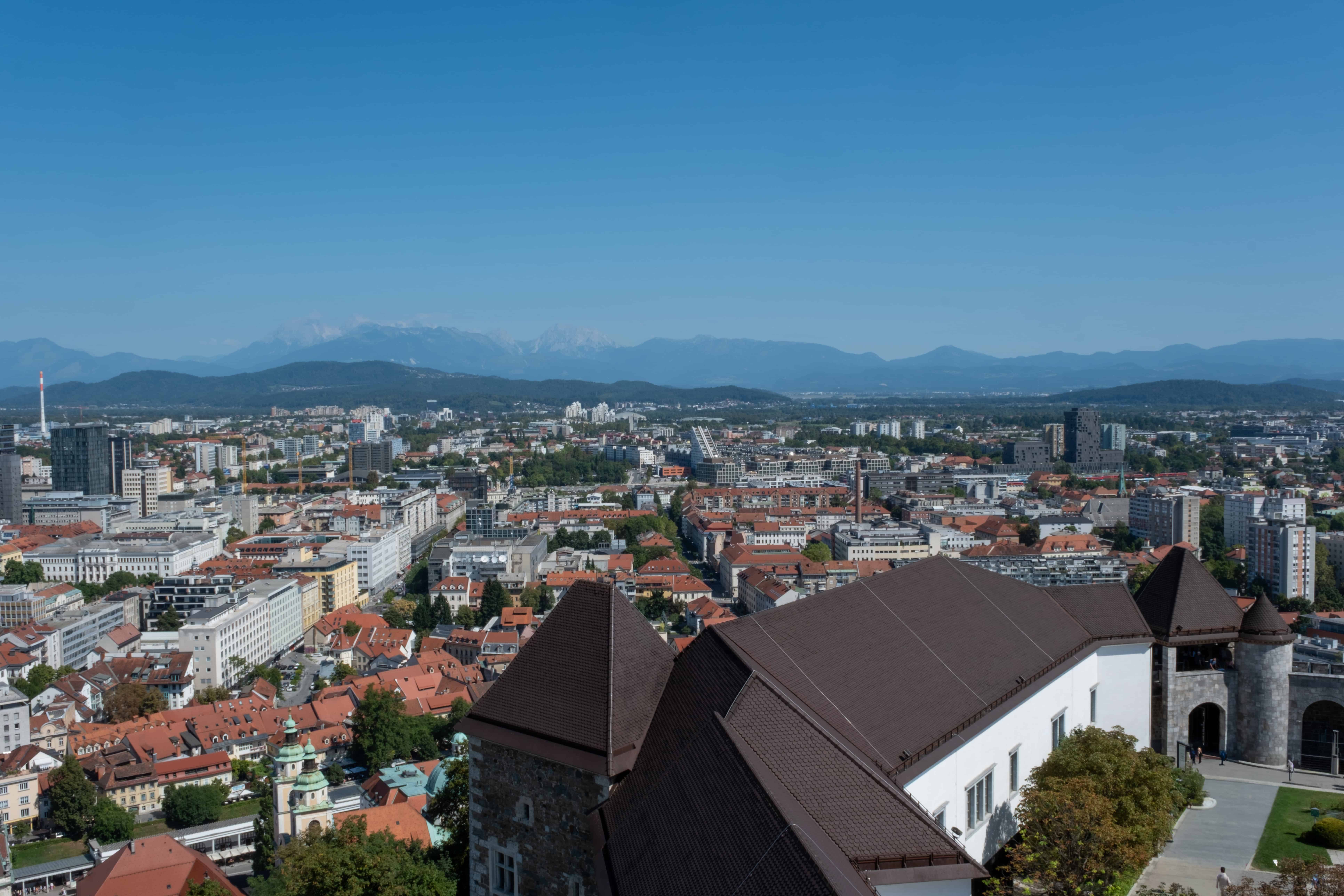
Ljubjana 3
From the capital, we drove south to Postojna Cave, one of Slovenia’s best-known attractions. The scale was extraordinary — massive chambers, cathedral-like ceilings, and formations that stretched on endlessly. The visit begins with a train ride deep into the tunnels, something I’d never experienced before. It reminded me a little of the Surprise Cave in Hạ Long Bay, only far bigger and more elaborate.
The cave itself was impressive, but the experience felt rushed (we were guided by Cave staff, not Maja) — too many people, too little time to pause and take it in. It was hard not to feel swept along. Still, a few details stood out: the underground gift shop, an actual post office, and the Concert Hall chamber, used since the 19th century for performances and events. Standing there, it was easy to imagine the sound of an orchestra echoing through the stone. Even so, I couldn’t help thinking I’d have happily traded the cave for another few hours in Ljubljana.
By late afternoon, we were back on the road with Milan at the wheel, winding south through hills and farmland. The highlight of the drive came as we crossed the Črni Kal Viaduct — a sweeping modern bridge that seemed to float above the valley. After so many medieval towns and cobbled lanes, the sleek curve of it felt almost futuristic.
Our destination was Rovinj, on Croatia’s Istrian coast — a small, picturesque town perched on the edge of the Adriatic. Because the old centre is car-free, the bus dropped us at the edge of town. Porters from our hotel, Villa Valdibora, came down to collect our bags while we walked up through the cobbled streets and lanes. It was a beautiful first impression: narrow alleys, colourful shutters, and the scent of the sea on the breeze.
Villa Valdibora was tucked right in the heart of the Old Town — a restored 17th-century building filled with antiques and art. My room was on the third floor, in a section without lifts, so I got my steps in early. When I finally reached it, I found a huge attic-style space with sloping beams — full of character, though my head and those beams became very well acquainted more than once.
That evening, a few of us opted for a quiet dinner at the hotel restaurant, followed by a stroll to the waterfront for a drink. The harbour lights shimmered on the water, and it felt like the perfect way to settle into Croatia. Unfortunately, I started feeling a bit off — probably something I’d eaten earlier — and decided to call it a night. Not quite the first evening I’d planned in Rovinj, but that’s travel for you.
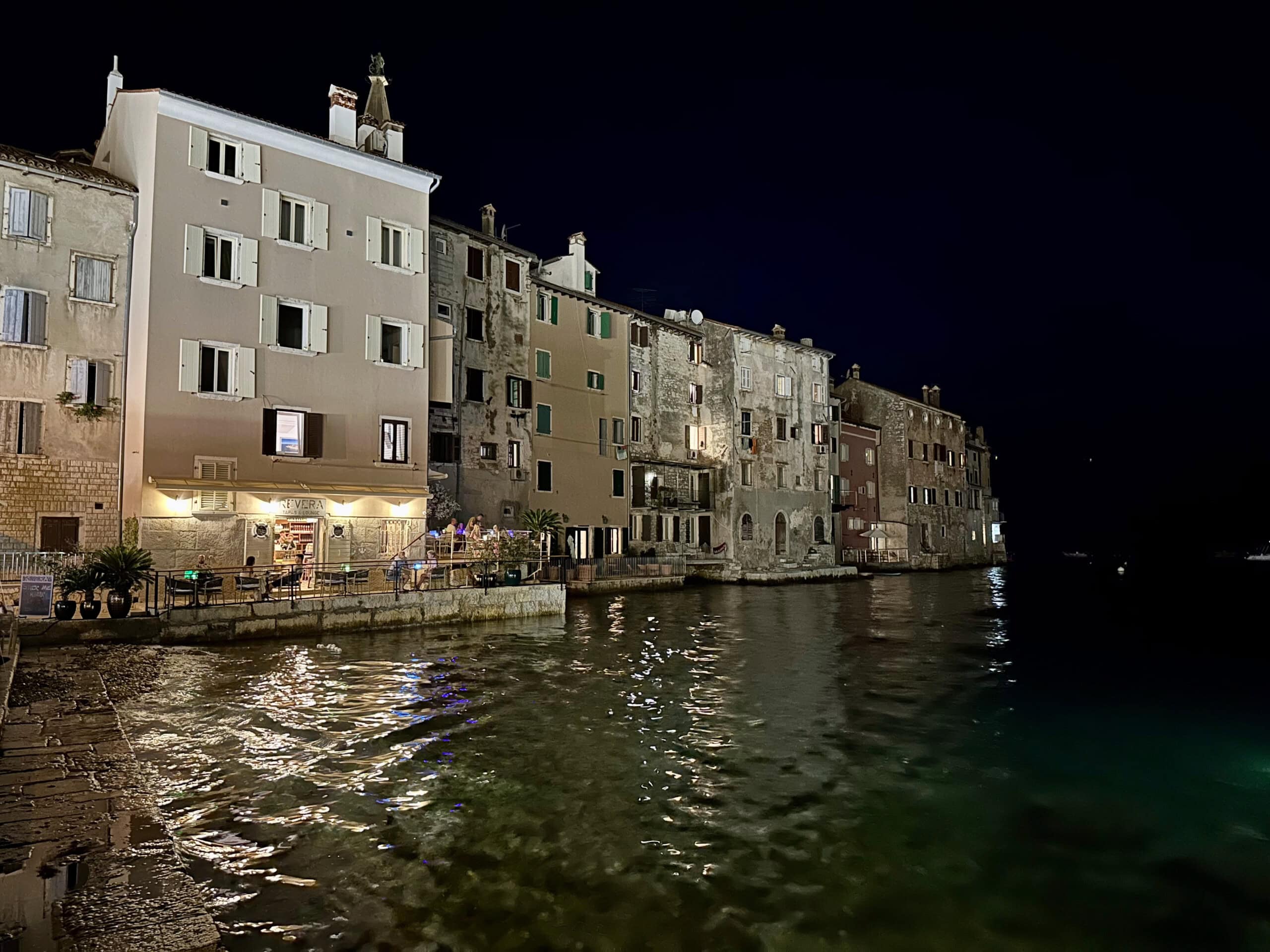
Rovinj
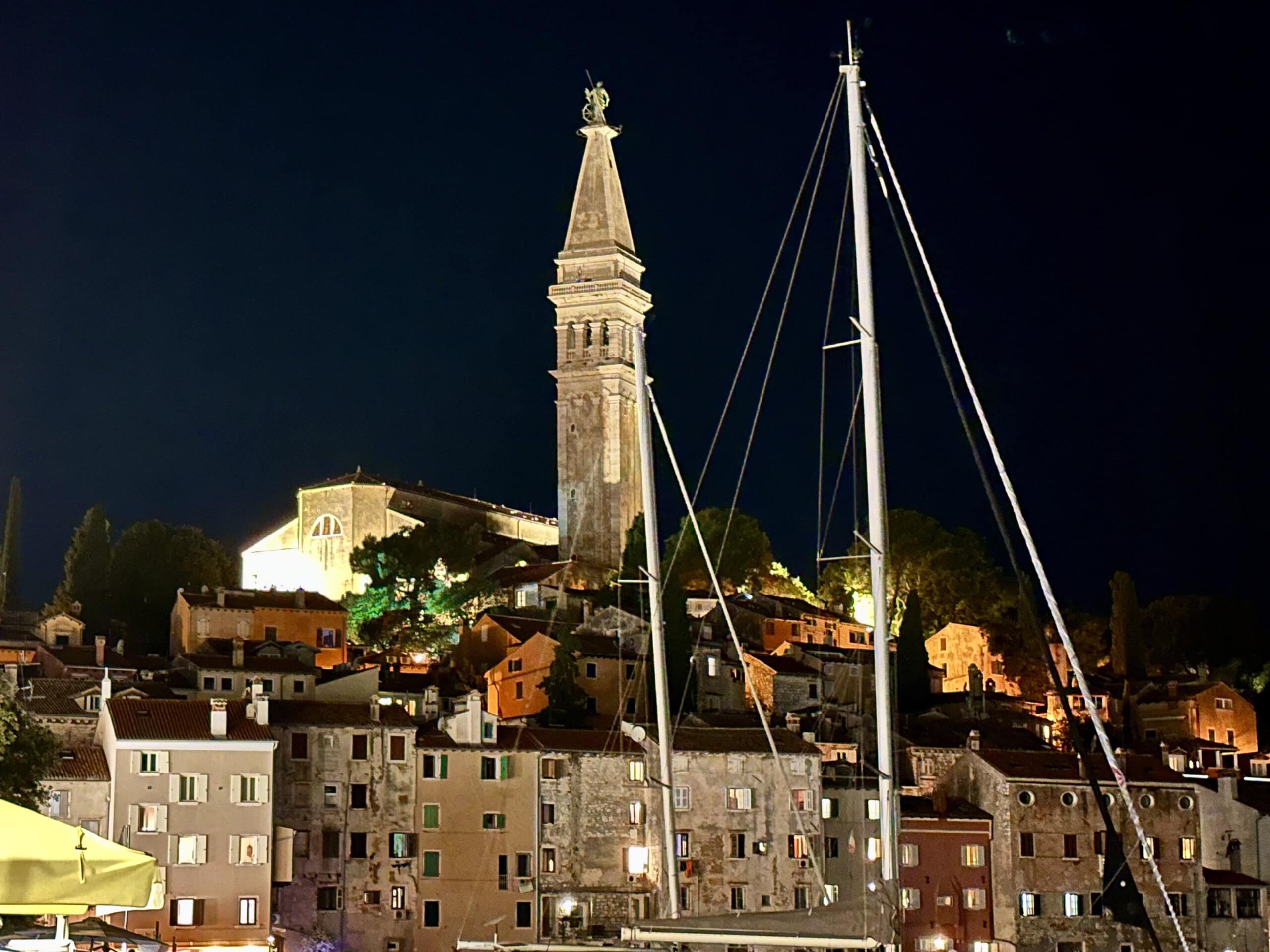
Church of St Euphemia, Rovinj
As I walked back through the narrow streets, I noticed something odd — rubber ducks. Shops were filled with them: pirates, princesses, superheroes, even politicians. They were everywhere. I couldn’t work out why, or if it was just a tourist gimmick gone wild. Whatever it was, it became a running mystery for the rest of the trip — one I wouldn’t solve until much later.





 Peace of mind