
Companions fly for free^
Embark your ship and settle into your stateroom. Vancouver is one of Canada’s most diverse cities and the influence of its multi-ethnic society is reflected in the city’s multitude of restaurants and public settings, such as the tranquil Dr. Sun Yat-Sen Classical Chinese Garden at the heart of Chinatown. The city’s cultural treasures reflect its indigenous community and embody the influence of European and Asian settlers. Its vibrant institutions run the gamut, from bustling markets to museums that chronicle the region’s anthropology and rich art heritage.
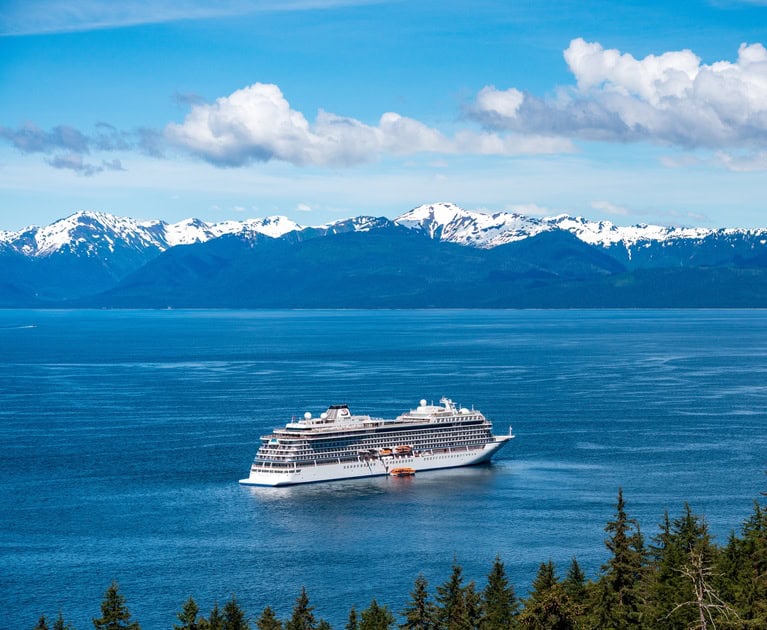
Stretching some 804 kilometres (500 miles) along the Alaska Panhandle, the Inside Passage is a pristine wilderness of fjord-like channels. It winds its way through a vast maze of islands laden with emerald-green forests and strewn with glistening glaciers. Nature is at her most magnificent here, tranquil and hushed. Unspoiled waterways weave their way past tiny coastal villages and a breathtaking array of snowcapped mountains and pine-covered hills. Sea lions and otters reside in these waters, and moose and brown bears are often spotted as they wade along the coast.
Ketchikan is set among the soaring coastal mountains and sloping woodlands of the Tongass National Forest. The gateway into America’s 49th state, it is known to travellers journeying north by ship as Alaska’s “First City” and the “Salmon Capital of the World” for its thriving fishing industry. Ketchikan also embraces its rich and enduring Tlingit heritage; it is home to the most standing totem poles anywhere in the world. The artful icons are sprinkled throughout the town as well as its parks and cultural centres.
Sitka has long been inhabited by the indigenous Tlingit people. Fur trading brought Russian settlers here in 1799 as part of a colonial merchant company. The town grew to become the capital of Russian Alaska, and remains of those days can be found in the Russian Orthodox Cathedral and the Russian Bishop’s House, the latter built by the Tlingit with guidance from Finnish carpenters in the 1840s. Today’s Sitka is a delight to explore by foot, its streets dotted with inviting art galleries displaying artwork inspired by the region’s natural beauty and rich heritage.
Juneau is the only capital of the continental US that is inaccessible by car. The dramatic fjord-like terrain of steep, rugged mountains and vast glaciers isolates the city, creating a remote setting with limited access from the rest of the mainland. Its seclusion along the scenic Gastineau Channel also makes it one of the most picturesque cities in the world. In ancient times, the Auke and Taku Tlingit tribes fished these waters. Their descendants have kept artistic and cultural traditions alive throughout a long history of European and Russian explorations.
Skagway was once the gateway to the gold-rich Canadian Yukon and is set in a stunning glacial valley. One remnant of its mining past is the narrow gauge railway that follows the original Yukon trail to the historic White Pass high in the surrounding mountains. Completed in 1900 as a means of transit for prospectors to reach goldfields during the Klondike gold rush, the route is preserved as a heritage railway. About 100 of the town’s buildings date from the gold rush era. Legend says that the town was named for a mythical woman who turned herself to stone at Skagway’s bay.
Icy Strait Point is a re-created village outside the small town of Hoonah, a thriving Tlingit community. A former canning and packing station in a coastal woodland setting, Icy Strait Point is steeped in Native American heritage. The charming island hamlet has been beautifully restored by the local Tlingit people to its original character, offering visitors unique insight into traditional life in an Alaskan fishing village. Today, the old canning station is a museum chronicling salmon and subsistence fishing.
Hubbard Glacier is one of Alaska’s most dramatic icefields. This towering wall of ice at the water’s edge began its long journey about 400 years ago, in the early 1600s. As it flows to the sea, Hubbard is met by Valerie Glacier. The combined surge pushes a wall of ice toward Bert Point, which threatens to close off Russell Fjord from the bay. The closure has happened before—in 1986 and 2002—transforming the fjord into “Russell Lake.” Each time, runoff and rainwater filled the lake, building up an enormous pressure and breaking through the ice wall with a thundering force.
Valdez enjoys a breathtaking setting at the tip of a deep-cut fjord in Prince William Sound. The glacial Chugach Mountains rise up all around the city, adding to its scenic allure. In its early days, the promise of gold attracted explorers and seekers of wealth, but the land proved barren. The town finally experienced its economic boom as North America’s northernmost ice-free port. Today, it is the southern terminus of the Trans-Alaska Pipeline that carries oil south from Prudhoe Bay on the Arctic coast.
Seward enjoys a magnificent setting between snowcapped peaks and Resurrection Bay, a pristine harbour ringed by mountains. The Alaskan city was named after Abraham Lincoln’s secretary of state who defied public opinion to pursue the purchase of Alaska from Russia. Seward is steeped in marine culture, from its busy fishing port to the excellent exhibits and preservation efforts of the Alaska SeaLife Center. It is also the famed starting point of the Iditarod Trail, the dogsled race route originally laid to link Seward to inland Alaska.
Bid farewell to your fellow guests and journey home.
Find a personal travel manager to make an enquiry
Advertised prices are per person twin share, correct at time of publication and are subject to availability and change and can be withdrawn or amended at any time without notification due to fluctuations in charges, taxes and currency. Prices are per person, in Australian Dollars, based on double occupancy, subject to availability, includes all advertised discounts, correct at time of printing, and cannot be used in conjunction with any other offer. Companion Fly Free is a return economy flight for one passenger up to the value of AU$2,500 per booking. It applies to selected 2026, 2027 and 2028 Ocean voyages and is to be used towards flights booked by Viking on Viking’s choice of airline from major gateway cities in Australia. Should the applicable airfare be higher than the value of the Companion Fly Free offer, guests are required to pay the difference. Any unused portion of the included Companion Fly Free value is forfeited and cannot be transferred towards any other portion of the booking or any other person. Companion Fly Free flight offer only valid if booked in conjunction with selected Viking Ocean cruises. Both guests must be on the same flight booking and fly together in both directions. Companion Fly Free offer excludes the Grand Australian Circumnavigation itinerary. All offers only valid on new bookings made between 31 October 2025 and 30 November 2025 at 7pm AEST and is a strictly limited offer; conditions apply and may be withdrawn at any time unless sold out prior. For full terms and conditions visit viking.com Itineraries subject to change. Change and cancellation fees may apply. Your personal travel manager may charge additional service fees. Other conditions apply. Please view the TravelManagers general terms and conditions here and contact your personal travel manager for more details.
TravelManagers respects and honours the Traditional Custodians of the land and pay our respects to their Elders past, present and future. We acknowledge the stories, traditions and culture of Aboriginal and Torres Strait Islander peoples on the lands where we work and gather, and those we visit.