
Discover highlights of Japan on this Tokyo return cruise, sailing to these destinations:
Dense and delightful, there’s nowhere else like Japan’s kinetic capital – a city where ancient traditions blend seamlessly with a relentless pursuit for the future’s sharpest edge. See the city from above, as elevators rocket you up to towering viewing platforms, from which you can survey a vast urban ocean, interspersed with sky-scraping needles. Look out as far as the distant loom of Mount Fuji’s cone on clear days. Futuristic – second-accurate – transport seamlessly links Tokyo’s 14 districts, while the glow of flashing advertisement boards, clinking of arcade machines, and waves of humanity flowing along its streets, adds to the sense of mesmerising, dizzying, and glorious sensory overload. One of Tokyo’s most iconic sights, don’t miss the flood of people scrambling to cross Shibuya’s famous intersection. Join the choreographed dance, as crowds of briefcase-carrying commuters are given the green light to cross at the same time – all bathed in the light of massive neon advertisements. The culture is immensely rich and deep, with 7th-century, lantern-decorated temples, stunning palaces, and tranquil scarlet shrines waiting below cloaks of incense and nestling between soaring skyscrapers. Restaurants serve up precisely prepared sushi, and wafer-thin seafood slivers, offering a unique taste of the country’s refined cuisine. Settle into traditional teahouses, to witness intricate ceremonies, or join the locals as they fill out karaoke bars to sing the night away. In the spring, cherry blossom paints a delicate pink sheen over the city’s innumerable parks and gardens.
One of Japan’s most southerly major cities, Kagoshima is dominated by the imposing Sakurajima volcano’s cone – a legendary active volcano that broods, churns, and puffs out ash nearby. A pretty old-time ferry chugs across the still waters to the gently sloping foothills of the volcano’s cone, and it’s easy to imagine where the comparisons with its sister city Naples materialised, as you sail the glorious sweeping Kinko Bay, below beaming sunshine, towards the immense volcanic spectacle. This is certainly no historic relic, and the volcano remains revered and feared, with the most dramatic recent eruption taking place in 1914, and spewing out a new bridge of land into the sea. Make the most of the geothermal activity in the area by indulging in a stress-simmering black sand bath. Incredibly relaxing, you’ll be submerged in the warm sand, as you feel your muscles relaxing in the heat, and rejuvenating blood pumping around your body. Enjoy a privileged view of the iconic volcano’s loom from the terraced garden of Senganen Garden. Built in 1658, this elegant, traditional garden has belonged to the Shimadzu family for 350 years. Wander the gardens – which bloom with Japan’s renowned cherry tree blossoms and feature tiny bridges looping over ponds and rock pools – before sitting back and sipping a wholesome green matcha latte. Elsewhere, museums offer Feudal Era and Satsuma Province history, as well as insights into the Kamikaze squadrons of World War II. Lake Ikeda is also close by, so be sure to keep an eye out for the legendary Issie monster.
In southern Sasebo, Uragashira Port sits among green hills, its shoreline dotted with Shinto shrines and deeply moving memorials. Within Nagasaki Prefecture, only nearby Nagasaki is larger than Sasebo, and this peaceful city is known for its scenic array of Kujuku Islands scattered nearby. Though the name suggests 99, more than 200 islands actually make up the panorama seen from elevated viewpoints. Long a naval city, the immaculate Uragashira Repatriation Memorial Peace Park remembers the hardships faced by those repatriated after World War II. The U.S. established a base here after the war ended, and in the heart of Sasebo, links with the West are everywhere — not least the legendary Sasebo burger, a local icon loaded with all the trimmings, egg included. Uragashira is also close to a famous theme park — a surreal, life-size recreation of a Dutch city complete with tulips, canals, and windmills, nodding playfully to centuries of Japanese-Dutch trading ties.
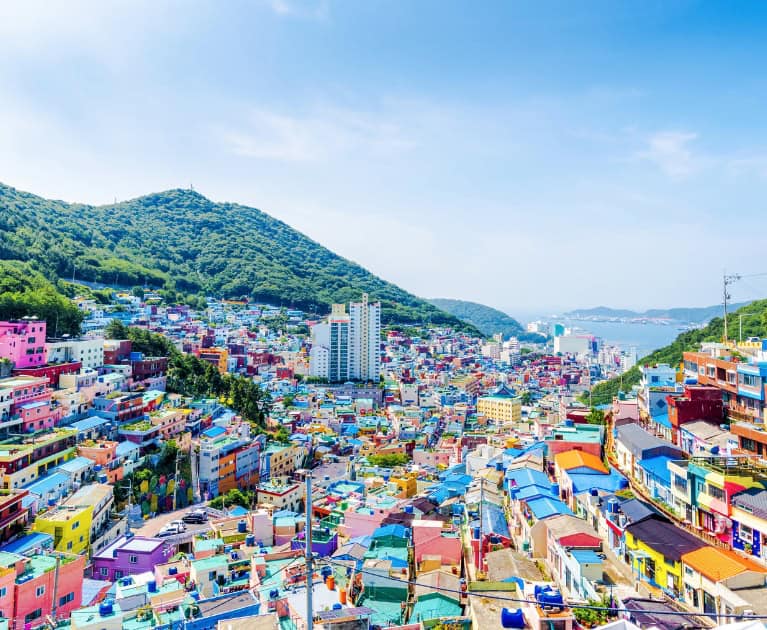
A tapestry of kaleidoscopic colors, intense seafood flavours, and urban beach bliss, Busan rolls across a glorious natural setting on the Korean Peninsula’s southeast. One of the biggest and busiest ports in the world, 3.5 million people call South Korea’s second city home, and the amiable locals help to lend the city its quirky, offbeat outlook. A spacious, playful, and cosmopolitan place, Busan is a lively, livable city, cradled by lush mountains and endless ocean scenery. Haedong Yonggung Temple nestles on a dramatic cliffside, just above the crumbling rocks and crashing waves of the East Sea. Dating back to 1376, the temple’s multi-story pagoda is adorned with lions – each representing a different emotion. Elsewhere, lanterns glitter in the night sky around Mount Geumjeongsan, freshly released from the beautiful Beomeosa Temple, which was established in AD 678. The hillside shantytown of Gamcheon Culture Village has completed an improbable transformation, blossoming from a sea of makeshift homes for Korean war refugees, into a colourful explosion of creativity and curiosity. Local artists have been let loose to create interactive installations, and the entire area is now an expansive canvas for expression. Lose yourself among vibrant alleyways of flamingo-pink, lemon-yellow, and baby-blue painted facades in this unique area. Sample bibimbap, fiery-hot beef, and rice, from street food vendors, before relaxing on one of South Korea’s best beaches – Haeundae’s banana bend of sand. Metallic skyscrapers offer an unusual backdrop to this pristine expanse of golden powder and are mirrored by elaborate sandcastles and sculptures during the annual sand festival – when spontaneous water fights and firework displays also take place. Gwangalli Beach is another urban option, laying out spectacular views of the reaching Gwangan Bridge – the country’s second largest bridge. At night, 16,000 bulbs bathe this “engineering marvel in colour”.
From original castles to layered gardens and playful manga heritage, surround yourself with Japan’s peaceful artistry. Located on the Yumigahama Peninsula in northwestern Tottori Prefecture, Sakaiminato reveals natural beauty and artistic heritage. Nearby Matsue Castle — one of Japan’s twelve surviving originals — rises with dark timbers, evoking the grace of the feudal era. The castle town is filled with artistry — from pottery and samurai-era architecture to museums and hands-on performances. On Daikon Island, Yushien Garden bursts with tree peonies and lotus ponds in season. In Sakaiminato, bronze statues celebrate manga heritage and the legendary Shigeru Mizuki’s world of spirits. The sacred Izumo Taisha Shrine is also within reach — one of Japan’s oldest and most revered.
Wild, sprawling, and 8,000 years old, the forests of Aomori are a natural treasure of Japan. The ancient beech forest of Shirakami-Sanchi, a UNESCO World Heritage Site, is an immersion in natural beauty. Known as the forest of gods, this wilderness remains gloriously untouched. Wander peaceful trails where green moss carpets the earth and birdsong fills the air, or explore soaring mountains where clear streams cascade. The reconstructed Jomon village brings Japan’s prehistoric era to life through traditional dwellings and exhibitions. In August, the city lights up with the Nebuta Matsuri festival, one of the country’s largest, a sensory spectacle of drumming, traditional music, and glowing lantern floats. A dedicated museum tells the festival’s stories throughout the year.
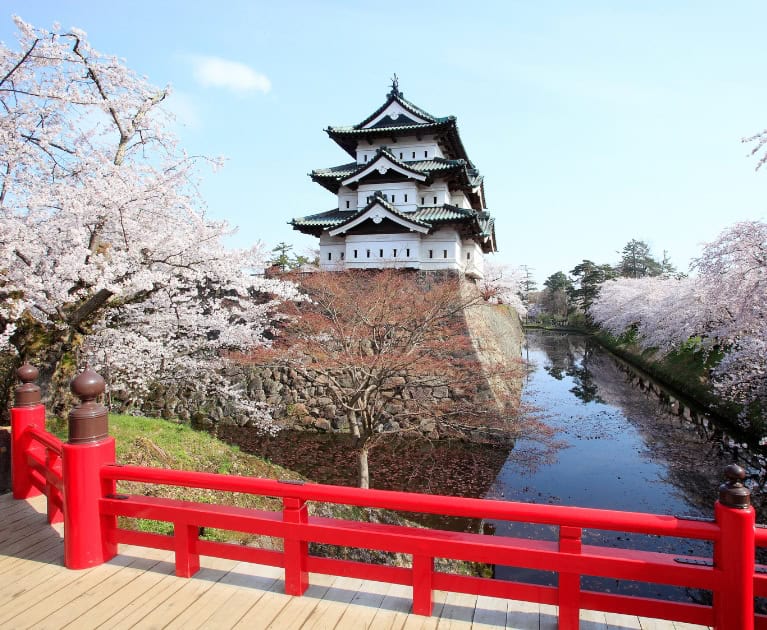
Gaze down over Hakodate, from the heights of its namesake peak – Mount Hakodate – to see the city stretching out spectacularly, with back-to-back twin bays splitting the ocean. Hakodate port was one of the first to open Japan up to the world and to international trade in 1859 – a fact reflected in the architecture, with its influences from the West and beyond. The port area is a redbrick wash of warehouses turned shopping malls, all observed by the onion domes of the city’s Russian Orthodox church. Elsewhere, the star-shaped Goryokaku fortress glows with natural colours and a beautiful haze of cherry blossoms during the season. Goryokaku Tower, which rises up beside it, offers a sweeping bird’s eye view of the green fortress and mountain backdrop. Buses trundle up the 335-metre incline to the top of Mount Hakodate, but the best way to reach the views is to jump on the ropeway, which swings high above downtown’s buildings, over a carpet of pine trees. Head up to the mountain’s heights as sunset approaches. With darkness sweeping in, and the lights flickering to life, the panorama is one of Japan’s most spectacular. Soak it all in, and look out to the horizon, dotted with the shimmering lights of ships hauling in harvests of the city’s renowned squid. The plankton-rich waters attract a delicious variety of feasting sea life to Hakodate’s coast, which is then plated up in the city’s numerous, skilled restaurants. For an eye-opening, whirring morning, see the freshest produce being doled out at Hakodate Morning Market – amid a cacophony of noise and activity.
Set on the eastern coast in Japan’s Iwate prefecture, Miyako promises stunning scenery and Jorman history in equimeasure. The coastal city of around 50,000 inhabitants is almost 600 kilometres from Tokyo, but boasts one of the finest beaches in Japan, as well as a treasure trove of succulently fresh seafood restaurants. While travellers to Miyako might arrive expecting the usual amalgam of cultural attractions and high-tech wizardry, they will leave with memories of one of the greatest garden cities they have ever experienced. During the Edo period (1603-1868) the town was once considered as Japan’s main seaport, and it is still an important port today with a thriving fishing industry. Mother Nature really does come into her own in Miyako. The city is bordered by the vast Sanriku Fukkō National Park, one of the National Parks of Japan. Sanriku Fukkō stretches for 180 kilometres along the coast and home a wonderful variety of flora and fauna, including groves of Japanese red pine, rhododendrons, and Rosa rugosa. Numerous bird species, including the black-tailed gull and shearwater, call the park home. Butterflies float gently on the breeze and hummingbirds sail like darts through the trees. What’s more, bird lovers will undoubtedly love that the nearby Hidejima Island and Sanganjima Island are the only breeding grounds in Japan for the band-rumped storm-petrel.
Sendai has got it just right. Urban and big enough to be interesting, full of cultural monuments, shopping experiences, unique foods, and festivals whilst cultivating a friendly, relaxed vibe. To appreciate the city in all its beauty, visit the AER Observation deck, situated 31 floors up of the AER building. During the day, look out beyond the high and low-rise mismatched buildings, to see a skyline of the mountains on one side and the Pacific Ocean on the other. After sunset there’s a fabulous view of the city lights to admire. Date Masamune who founded the city over 400 years ago was a legendary Japanese warrior known as “One-eyed Dragon”. Many of the beautiful historical sites around the city are connected to him. The noble statue at Sendai Castle, the Osaki Hachimangu Shrine he commissioned, and his final resting place the Zuihoden Mausoleum. Visiting these sites will allow you to understand the city in its rich, historical context. Also known as the “City of Trees”, the city celebrates the seasons with fantastic displays of cherry blossom in the spring and spectacular golden hues in the autumn. However, in August, during the largest Tanabata Festival in Japan, thousands of long, colorful streamers, made by schools and community groups, hanging in the streets and shops turn the city into a festive, coloured forest. Take away a little bit of Sendai, lacquerware, Kokeshi dolls, exquisite handmade Yanagiu Washi paper, or specialty foods, are all wonderful souvenirs of this vibrant, authentic city.
Dense and delightful, there’s nowhere else like Japan’s kinetic capital – a city where ancient traditions blend seamlessly with a relentless pursuit for the future’s sharpest edge. See the city from above, as elevators rocket you up to towering viewing platforms, from which you can survey a vast urban ocean, interspersed with sky-scraping needles. Look out as far as the distant loom of Mount Fuji’s cone on clear days. Futuristic – second-accurate – transport seamlessly links Tokyo’s 14 districts, while the glow of flashing advertisement boards, clinking of arcade machines, and waves of humanity flowing along its streets, adds to the sense of mesmerising, dizzying, and glorious sensory overload. One of Tokyo’s most iconic sights, don’t miss the flood of people scrambling to cross Shibuya’s famous intersection. Join the choreographed dance, as crowds of briefcase-carrying commuters are given the green light to cross at the same time – all bathed in the light of massive neon advertisements. The culture is immensely rich and deep, with 7th-century, lantern-decorated temples, stunning palaces, and tranquil scarlet shrines waiting below cloaks of incense and nestling between soaring skyscrapers. Restaurants serve up precisely prepared sushi, and wafer-thin seafood slivers, offering a unique taste of the country’s refined cuisine. Settle into traditional teahouses, to witness intricate ceremonies, or join the locals as they fill out karaoke bars to sing the night away. In the spring, cherry blossom paints a delicate pink sheen over the city’s innumerable parks and gardens.
Find a personal travel manager to make an enquiry
Advertised prices are per person twin share, correct at time of publication and are subject to availability and change and can be withdrawn or amended at any time without notification due to fluctuations in charges, taxes and currency. ^Indulgent Savings Offer applies to new, individual All-Inclusive Plus and All-Inclusive fare bookings, double occupancy, made March 17, 2026 to June 2, 2026 on select voyages, excluding full World Cruises, full Grand Voyages and special combination voyages, and provides cruise fare savings of AUD 5,500 per guest. Indulgent Savings Offer is combinable with Event Certificates, National Account Amenities, Referral Savings, Onboard Savings, Combination Savings (back-to-back), Kids Savings and Venetian Society Savings. Offer is not combinable with Last Minute fares. Indulgent Savings Offer is combinable with promotional group fares. Cancel and re-books do not qualify. Single occupancy guests paying 200% cruise fare are eligible for full offer; single occupancy guests paying less than 200% cruise fare are eligible for a prorated amount of the offer. Changes to the booking may result in the removal of the offer. Prices and offers are capacity controlled, subject to availability, and can be removed at any time without prior notice. Silversea reserves the right to correct any errors, inaccuracies, or omissions and to change or update fares, fees, and surcharges at any time without prior notice. Other restrictions may apply, visit Silversea.com. ©2026 Silversea Cruises LLC. Ships’ registry: Bahamas and Ecuador. Itineraries subject to change. Change and cancellation fees may apply. Your personal travel manager may charge additional service fees. Other conditions apply. Please view the TravelManagers general terms and conditions here and contact your personal travel manager for more details.
TravelManagers respects and honours the Traditional Custodians of the land and pay our respects to their Elders past, present and future. We acknowledge the stories, traditions and culture of Aboriginal and Torres Strait Islander peoples on the lands where we work and gather, and those we visit.