
From tropical paradise to the enchanting cultures of South America, on this 56-night cruise you’ll visit these destinations:
Your gateway to the warming charm of South Florida’s Gold Coast, this stretch of fort-laden land is home to a wonderfully eclectic mix of metropolitan neighbourhoods, lavish mansions, and the expansive and untamed Everglades. Fort Lauderdale is world famous for its magnificent beaches, watersports, retail, and its canals and marina. Relaxing on the golden sands is a popular pastime, but there’s no shortage of alternatives.
Forming a British Overseas Territory, this archipelago consists of around 40 low-lying islands southeast of the Bahamas. Grand Turk is the second most populated, even at scarcely seven square miles. The oldest known residents were the Arawak-speaking Taino people, and it is believed they traded salt which formed naturally when the sea water entered shallow inland ponds and evaporated in the sun. Indeed British colonists from Bermuda arrived in the late seventeenth century to collect the salt, and they modified the system. There’s still plenty of evidence of the low stone walls used to compartment off the salt pans across the islands, not least at the Salt House museum next to Town Salina.
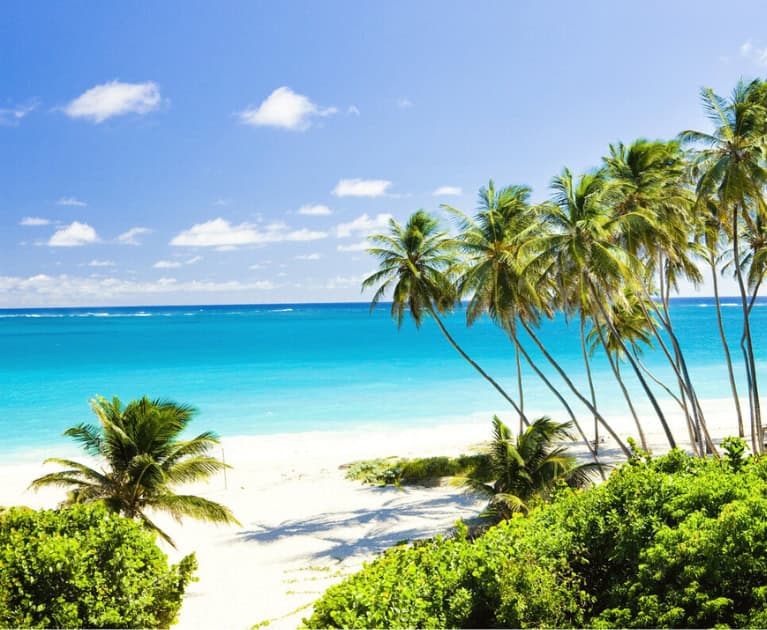
Whilst sailing on a Barbados cruise, you’ll encounter a land where relaxation and adventure go hand in hand. Sailing through the warm, blue waters of the Caribbean, when you arrive at Barbados you’ll dock at the capital city of Bridgetown – a veritable feast of breathtaking scenery, delicious cuisine, and exceptional hospitality.
On the north shore of Brazil’s ‘shoulder,’ Fortaleza is a pleasant palm-lined city and the capital of the Céara state. It looks out into the Atlantic from a long stretch of beautiful, sandy coast. The first European settlers here were Dutch, and they built the five-pointed, star-shaped Fort Shoonenborch in 1649 after defeat at the hands of local people and the Portuguese. In 1654, the Dutch left and the fort was renamed Fortaleza de Nossa Senhora da Assunção; the area around it was to grow into Brazil’s fifth largest city. The citadel itself still remains, its low-rise whitewashed walls adorned with cannons and palm-trees. Another spot worth a visit is the magnificent Teatro José de Alencar, a Victorian-classical-meets-Art-Nouveau vision of colourful glass and cast iron balconies, and much of its ironwork was actually imported from Glasgow. It’s named after a lawyer, politician and author who was born in Fortaleza and is considered one of Brazil’s most prominent writers of the Romanticism period. Iracema Beach takes its name from the eponymous, indigenous hero of one of his novels; it’s also where the English Bridge, which resembles a classic British seaside pier, juts photogenically into the ocean.
A UNESCO-listed city, perched on the north-eastern coast of Brazil, Salvador de Bahia is bursting with historical charm, traditional Brazilian flair, and Western African influences. Pastel facades. Cobbled streets. Intoxicating music. Mouth-watering cuisine. This is what awaits you in the bustling city of Salvador de Bahia. Everywhere you turn you’ll encounter echoes of the city’s colonial past, complemented by vibrant influences from African culture; most notably in the kaleidoscope of music, food, dance, and entertainment on offer.
The beachy resort of Armação dos Búzios, or simply Búzios, is set on an ocean peninsula east of Rio de Janeiro, and is famed as a premium and stylish holiday destination for beach and surf fans alike. Ferradura beach sits in a calm horseshoe bay, offering watersports, while Geribá is a popular surfing site. Among the resort’s village streets, visit cobbled Rua das Pedras for dining and nightlife.
A land bursting with natural beauty, exhilarating energy, golden beaches, and urban vibrancy, a cruise to Rio de Janeiro is certainly an unforgettable experience. The outstretched arms of the world-famous Christ the Redeemer welcome you to a city rich in culture and a kaleidoscope of sights, sounds, aromas, and tastes that invigorate the senses. From mountain peaks to lush emerald rainforests – the dramatic landscape is a postcard-perfect backdrop for the vibrant city that stretches out before it.
Nestled in a picturesque bay on the southeast coast of Brazil lies the port of Pier Maua. As you cruise into the shimmering azure waters of Guanabara Bay, be swept away by your first glances of Sugarloaf Mountain as it rises dramatically from beneath the waves. Just a short distance away lies the heart of Rio de Janeiro, where bustling Brazilian charm meets aesthetic splendour. Spend your day exploring the dramatic landscapes around Rio de Janeiro, discovering unique boutiques along the vibrant city streets, or perhaps relaxing on the iconic Ipanema beach. Sample all kinds of South American delicacies and mingle with the locals, or find a spot to dance or simply listen to the energetic sounds that provide the intoxicating heartbeat of the city.
Home to one of the world’s largest urban populations and hosting an enticing fusion of residents from over 200 different countries, São Paulo is simply a cultural extravaganza. Vibrant São Paulo, which stretches out across a vast plateau in the Brazilian Highlands, is the largest city in the southern hemisphere. It’s Brazil’s dynamic financial centre, and brimming with cultural diversity, comprising residents from over 200 different countries, it brandishes its own distinctive style of Brazilian culture. The rich heritage and colourful history of Sampa, as it’s known locally, has ensured a multitude of galleries, parks, and museums to wander and explore. There’s a vivacious art scene, the shopping district is extensive to say the least, and with no less than 12,000 restaurants lining its effervescent streets, the city is a gastronomic delight.
Montevideo is Uruguay’s historic and vibrant capital city, home to nearly half the nation’s population. With its diverse and energising metropolitan environment, Montevideo boasts an array of attractions and activities to explore.
Buenos Aires is the cosmopolitan capital city of Argentina, located on South America’s southeastern coast. Combining rich architectural and cultural heritage with contemporary attractions and exciting nightlife, in Buenos Aires you can experience both traditional and modern highlights.
Buenos Aires port is based along the Rio de la Plata estuary, and when you arrive here, you’re sailing into the heart of the city. Founded by the Spanish navy in 1580, until the 19th century Buenos Aires port was a natural harbour with little infrastructure. By 1925, however, Buenos Aires port was the largest port in the southern hemisphere. Today, Buenos Aires Port is a major seaport in Argentina that welcomes thousands of tourists each year.
As the Buenos Aires port continues to grow, so do the surrounding areas. A thriving dining scene, colonial architecture, and exciting art culture flank the impressive waterfront. Then, deeper into the city, you’ll quickly discover it’s steeped with historical points of interest, new trends, performing arts, and Latin passion. Buenos Aires is truly an energising city.
Discover a small slice of Wales in Argentina. While Puerto Madryn has roots from the British Isles, the scenery is unmistakably Patagonian, with sweeping vistas and colonies of sea lions and penguins. Somewhat unexpectedly, this Argentinean resort is named after a Welsh baron, one of a number who left their home country during the Industrial Revolution, due to the economic impact it had on rural communities.
Ushuaia in Argentina is the capital of the Tierra del Fuego archipelago. This enchanting city is surrounded by spectacular snow-capped mountains, waterways, and is widely thought of us the gateway to Antarctica. On a cruise to Ushuaia, you’re well on your way to some of the world’s most stunning sights and experiences.
Journey to the edge of the earth on a cruise past the fabled Cape Horn. At the southernmost tip of South America, Cape Horn lies off the coast of Chile on Hornos Island. Nestled amongst the dramatic landscape of the Tierra del Fuego archipelago, Cape Horn is the point at which the Atlantic and Pacific Oceans meet and has earned its place in historical tales and contemporary intrigue.
From the dramatic backdrop of the Andes Mountains to the penguin colonies of Magdalena Island, there’s no shortage of natural splendour to behold on a cruise to Punta Arenas. Located at the southern tip of Chile, this vibrant city is home to a unique blend of Chilean and European cultures. You’ll see this reflected in the picturesque blend of buildings lining the bustling city streets, as well as the museums and galleries seeded throughout town. Venturing just a short distance beyond the city immerses you in breathtaking scenery, making Punta Arenas a perfect destination for nature lovers and urban explorers alike.
Sailing the Amalia Glacier is your unique journey into Chile’s pristine wilderness of sparkling waters, snow-capped peaks, majestic forests, and spectacular blue-tinged glaciers. Peaceful and serene.
The soothing silence is interrupted only by the occasional warble of a cormorant as you glide through narrow fjords, passing towering ice-flows and snow-dusted mountaintops. Sometimes called Skua Glacier, Amalia is a tidewater glacier, meaning that it flows through a valley and ends in the ocean. Amalia Glacier is located in Bernardo O’Higgins National Park, which is the largest protected area in Chile, named after the republic’s first head of state. Cruising past the glacier will allow passengers to see it up close and take in the rugged ice’s majestic beauty.
PIO X in the Chilean fjords is the only glacier that is growing rather than shrinking. Its frontage stretches over two miles, and you may see and hear huge chunks of ice calving into the sea.
Standing almost at the halfway point of Chile’s famously long coastline, Puerto Montt is the gateway to the country’s Lake District. National parks, glacial lakes, and mountain ranges are just some of the stunning natural scenery you can explore on a voyage here. In addition, Puerto Montt boasts a rich German heritage, with notable German-style architecture and influences.
In the Chilean capital, grand colonial buildings stand proudly among glass skyscrapers and elegant parks. In the distance, the snow-dusted Andes provide a dramatic backdrop to it all. Santiago was founded in 1541 by the Spanish conquistador, Pedro de Validivia. It’s been Chile’s first city since its colonial days, and the central district is a hub of nineteenth century neoclassical architecture. An obvious starting point is Plaza des Armas, with its twin-spired Metropolitan Cathedral, the magnificent Correo Central which was the old city post office, and the National Museum of History, whose bell tower offers an elevated viewpoint. It was always intended to be a focal point, and a hive of activity still unfolds around the statues and fountains. Local chess players pit their wits against each other on many afternoons, street performers attract crowds with their routines and you may even see demonstrations of the Cueca, Chile’s national folk dance.
If you arrive in port early enough, you may have the chance to see a dash of Chilean pomp and pageantry at La Moneda palace. It’s the official residence of the president, where a lively changing of the guard ceremony takes places every morning. When you berth in San Antonio, you’re also only around 40 miles from Valparaiso. The port has won plenty of admirers for its rolling hills, where steep funiculars climb among the charming jumble of multi-coloured houses, and its historic quarter has been a UNESCO World Heritage Site since 2003.
Welcome to up-and-coming Coquimbo. Halfway down the long strip that is Chile, this working port city on the Pan American Highway is making a name for itself, especially when it comes to the nightlife. The elegant 19th-century English Quarter is beautiful by day, whereas the Aldunate area is where to be at night, full of bars and nightclubs where you can watch or partake in South American dancing. Stroll the fish market along Coquimbo bay or the fishing jetty for some delicious fresh seafood with a glass of piscola, the hand-distilled piscos spirit made from the muscatel grapes of the Elqui Valley, mixed with cola. The Cruz del Tercer Milenio religious landmark museum is a place of prayer which has become a tourist attraction thanks to its amazing view over Coquimbo from over 300 feet up. Look out across the bay to the north at the capital, La Serena, where the people of Chile take their holidays in January and February. Trekking, sport fishing, surfing and parasailing are the popular activities to try. There’s also a great choice of world-class wine, which comes from the fertile valleys between the mountains.
As well as being blessed with amazing archaeological treasures, including the oldest mummies in the world, Arica attracts international acclaim for its fine wines and truly world-class surfing waves. Known by Chileans as ‘city of the eternal spring’, Arica has been an important port since Spanish colonial rule in the 1500s, and has plenty to offer in terms of historic sites and places to visit.
To the conquistadores, this was the ‘City of Kings’ and its colonial majesty still dominates the heart of Peru’s capital. Dramatic cliffs, golden beaches and varied cuisine are among its other riches. An undoubted highlight of Lima is the Plaza Mayor in its centre. It’s filled with grand colonial buildings, some of which date from the 16th century, such as The Government Palace, which occupies almost the whole north side of the square. Other impressive landmarks include the Archbishop’s Palace and the twin-towered baroque cathedral.
For all its architectural gems, Lima’s culinary reputation is flourishing and tells its own story of the city. Ceviche is a Pacific Coast staple, the spicy lime marinated seafood, along with chupe de camarones, or shrimp soup. The influences of Spanish, Italian and Japanese cuisine are also widely evident, while Chifa is a popular Peruvian-Chinese fusion.
Manta sits almost directly on the equator, roughly halfway up Ecuador’s Pacific shoreline. The area was home to at least seven different civilisations before the Spanish conquered the region in 1534. While the Panama hat is known around the world, it is less common knowledge that they actually come from Ecuador. Montecristi is just a short hop inland from Manta, and it provides a fascinating insight into their manufacture.
The fast-growing city of Fuerte Amador lies at the Pacific end of the Panama Canal, on a peninsular jutting out from Balboa. It has a pleasing marina, with Panama City on the other side of Ancon Hill. Fuerte Amador is for relaxation and shopping, but if you need more excitement you can easily head into Panama City to explore its atmospheric old quarter, Casco Viejo.
If you are interested in maritime engineering or iconic journeys, this should be high up your list of must-sails. This legendary canal is steeped with intrigue and blessed with ever-changing scenery. As you pass through the locks at either side of Gatun Lake, you’re slowly rising to, and dropping from, 26 metres above sea level, avoiding the lengthy and treacherous alternative route via Cape Horn.
As the main passenger port of Aruba, Oranjestad is where your feet will first meet the vibrant streets of this Caribbean Island. Admire the characterful skyline upon arrival, taking in the pretty rows of candy-coloured buildings. As you explore this unique capital city, you’ll encounter an array of bustling restaurants, art galleries, museums, historical sites, and of course, white sandy beaches. Read on for our guide on everything you need to know about the colourful port city of Oranjestad.
Your cruise ends today back in Fort Lauderdale.
Find a personal travel manager to make an enquiry
Advertised prices are per person twin share, correct at time of publication and are subject to availability and change and can be withdrawn or amended at any time without notification due to fluctuations in charges, taxes and currency. Offer is not combinable with any other offer. Fares are cruise only, per person (‘PP’) in AUD in complete twin stateroom as specified, based on lead categories at publication date 14 May 2026, inclusive of discounts. Valid for new bookings only. Not combinable with other offers. Supplements apply for higher stateroom grades, categories and other fare types. Some staterooms have obstructed views. “First Come, First Serve” Offer starts 31 March 2026 at 00.00am AEDT and ends 29 June 2026 11.59pm AEST. Advertised fares are available until allocation is exhausted and may fluctuate. Comparison based on Cunard Fare available from 16 December 2025. Savings are available on selected itineraries and vary by stateroom category, fare type and itinerary. To redeem the offer, select the “First Come, First Serve” fare at the time of booking, which is the Cunard Fare inclusive of the discount; The Cunard Fare is the cruise fare packaged with onboard spending money (sailings 7 nights or more); a 10% deposit is required to secure your booking. Fare terms and conditions: https://www.cunard.com/en-au/the-cunard-experience/our-fares. All travel is subject to the Cunard Booking & Passage Conditions at https://www.cunard.com/en-au/advice-and-policies/booking-conditions-insurance-crime which guests are bound by. Cruise itineraries and onboard offerings are not guaranteed. Charges may apply for some activities, venues and menu items. Credit card surcharges (Visa/Mastercard 1.1%; AMEX 2.75%). Carnival plc trading as Cunard ABN 23 107 998 443. Itineraries subject to change. Change and cancellation fees may apply. Your personal travel manager may charge additional service fees. Other conditions apply. Please view the TravelManagers general terms and conditions here and contact your personal travel manager for more details.
TravelManagers respects and honours the Traditional Custodians of the land and pay our respects to their Elders past, present and future. We acknowledge the stories, traditions and culture of Aboriginal and Torres Strait Islander peoples on the lands where we work and gather, and those we visit.
We improve our website, content and services by using Microsoft Clarity to see how visitors use our website. By using our site, you agree that we and Microsoft can collect and use this data. View our Privacy Policy for more details.