
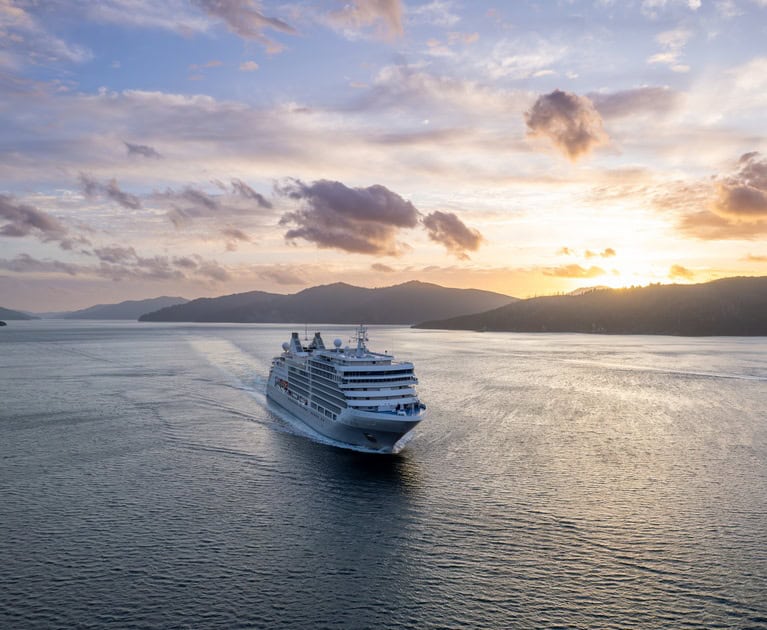
From ancient streets to seaside towns, on this 10-night cruise you’ll visit these destinations:
The infinite variety of street life, the nooks and crannies of the medieval Barri Gòtic, the ceramic tiles and stained glass of Art Nouveau facades, the art, and music, the throb of street life, the food (ah, the food!) – one way or another, Barcelona will find a way to get your full attention. The capital of Catalonia is a banquet for the senses, with its beguiling mix of ancient and modern architecture, tempting cafés and markets, and sun-drenched Mediterranean beaches. A stroll along La Rambla and through waterfront Barceloneta, as well as a tour of Gaudí’s majestic Sagrada Família and his other unique creations, are part of a visit to Spain’s second-biggest city. Modern art museums and chic shops call for attention, too. Barcelona’s vibe stays lively well into the night when you can linger over regional wine and cuisine at buzzing tapas bars.
Valencia is a proud city. During the Civil War, it was the last seat of the Republican Loyalist government (1935-36), holding out against Franco’s National forces until the country fell to 40 years of dictatorship. Today it represents the essence of contemporary Spain’s daring design and architecture along with experimental cuisine – but remains deeply conservative and proud of its traditions. Though it faces the Mediterranean, Valencia’s history and geography have been defined most significantly by the River Turia and the fertile floodplain (huerta) that surrounds it. The city has been fiercely contested ever since it was founded by the Greeks. El Cid captured Valencia from the Moors in 1094 and won his strangest victory here in 1099: he died in the battle, but his corpse was strapped into his saddle and so frightened the besieging Moors that it caused their complete defeat. In 1102 his widow, Jimena, was forced to return the city to Moorish rule; Jaume I finally drove them out in 1238. Modern Valencia was best known for its frequent disastrous floods until the River Turia was diverted to the south in the late 1950s. Since then the city has been on a steady course of urban beautification. The lovely bridges that once spanned the Turia look equally graceful spanning a wandering municipal park, and the spectacularly futuristic Ciudad de las Artes y las Ciencias (City of Arts and Sciences), most of it designed by Valencia-born architect Santiago Calatrava, has at last created an exciting architectural link between this river town and the Mediterranean. If you’re in Valencia, an excursion to Albufera Nature Park is a worthwhile day trip.
Surrounded by water, Sete is a Mediterranean fishing capital and a port with maritime heritage flowing through its salty veins. Set on a lagoon beside the Mediterranean’s waves, Sete’s streets are interspersed with canals, and the historic Canal du Midi terminates here. Canal boats joust on the river during August’s festival, in this working city of breezy nautical charm. Known as the Venice of Languedoc, house facades front up against canal banks, while leisurely cruises offer romantic trips through this colourful, maritime city. The ascent of Mount St-Clair is perhaps the best spot to appreciate this wonderful, watery setting, and you can also take in the bright frescoes of the Chapel of Notre Dame de la Salette while you’re there. Or absorb the town’s deep fishing heritage with a harbour walk among the bobbing little boats, or within the preserved La Pointe Courte fisherman’s village. Sit down to sample the incredible sea life at fine restaurants, which plate up mounds of juicy oysters and shellfish, hauled ashore from the waters. Swing golf clubs on rollercoaster coastal courses, or relax on miles of golden beaches stretching along the nearby spit. Inland, discover rich medieval history, beautifully preserved at the walled city of Aigues-Mortes. Mighty Carcassonne UNESCO World Heritage Site also stands within reach, inviting you to enter a majestic fairy-tale citadel of fantasy turrets and imposing battlements. Step across the drawbridge and brush shoulders with armed soldiers and artisans, inside this living timewarp’s immense ramparts.
France’s sunniest and oldest city may not have the glamour of some of its Cote D’Azur neighbours, but what it lacks in glitz, it certainly makes up for in authenticity and cultural depth. France’s second-biggest city, Marseille served as European Capital of Culture in 2013 and is a fantastic hub of museums, creativity, and colour. The Le Panier district is a vivid illustration of this – with its faded streets revitalised by overflowing flowerpots and pretty naturally distressed doorways. Look down to the yacht-crammed port – where fishermen still unload fresh catches – from the viewpoint at the spectacular Notre-Dame de la Garde – a true crowning glory. Standing over walled fortifications – and capped by an elegant dome – the soaring golden statue of Madonna and Child rises high into the air and is visible all over the city. The huge Marseille Cathedral is equally impressive, with its stunning zebra-striped exterior. Palais Longchamp, built in 1862, twinkles with flowing water, and its saturated gardens and splashing fountains were built to celebrate the engineering feat of successfully redirecting water to the city. You can’t leave Marseille without tucking into its famous fish stew – bouillabaisse. Flavoured with thyme, garlic, and hunks of Mediterranean fish and plump prawns, it’s a bold and delicious taste of Provence. Wash your hands clean after, with some of Marseille’s traditional soap, created using a fragrant recipe of rich olive oil. Escape the hubbub of the city, to soak in the natural glory of Calanques National Park. Hike, kayak and sail your way through a treasure trove of limestone cliffs, dropping off to hidden beaches.
Happily preserved from much redevelopment, mountains frame belle epoque villas, painted in sun-faded pastel shades, and azure sea shimmers. It’s picturesque and lush with exotic botanical delights. Just a quick skip from Monaco and the last stop on the Cote de d’Azur before Italy, Menton isn’t the celebrity haunt like some of the flashier resorts of the coast, but it’s not exactly undiscovered either. It was already a fashionable winter retreat for the travelling nobility in the 19th century, even gaining a royal seal of approval from Queen Victoria. Inspired by the subtropical microclimate, well-heeled 19th century aristocrats planted lavish gardens now open to the public, bursting with rare, tropical plants from their travels and the largest collection of citrus trees in Europe, with over a hundred different varieties. Menton has a legendary love affair with lemons culminating in the creation of a lemon festival in the 1930s that’s still held today at Mardi Gras. It’s quite a sight to see, themed floats and sculptures made of lemons and oranges.
Most famous for being the birthplace of Christopher Columbus, Genoa is one of Italy’s true unsung heroes. Stretched out along the Mediterranean coast just over 100 miles from France, the city is the capital of Liguria, or the Italian Riviera, and has the history to prove it. Once the main trading center for Italy, Genoa has a fine legacy of wealth behind it. The area once had complete control over the Tyrrhenian Sea, and its vast reach stretched as far as Nice to the west, Sardinia in the south, and into the Piedmont mountains in the north. Exports were many, but perhaps the most lucrative of these was the rough denim cloth that sailors would wear, today more popularly known under the moniker blue jean. This affluence has left its mark on the city, think ornate gates, large, leafy palazzos, lavishly decorate churches, and a Centro Storico – or Old Town – that speaks volumes. Grab your best hiking boots and wander the narrow alleys and steep hills and imbibe in the inherent Italianism of the city. No one could talk about Genoa’s history without mentioning its food. Home of both Pesto and Focaccia, Genoa is considered by many to be one of the cornerstones of Italian gastronomy. The city’s cuisine is very much a product of its terrain: The Mediterranean yields freshly caught fish and seafood found on almost every menu, while the mountains supply the meat, cheese, and above all herbs that flavour the dishes. It may not be fancy, but if you like good, simple Italian food, you have come to the right place.
There are few more elegant places to salute the sunset than Terrazza Mascagni, Livorno’s refined chessboard piazza. A historic port, and a beachy gateway to Tuscany, Livorno welcomes you ashore to explore this enchanted Italian region’s sun-soaked beauty, rich flavours, and world-renowned fine art. Stay in Livorno to explore ‘Piccolo Venezia’, or – Little Venice – a quarter of the town that’s laced with canals, little marble bridges, and plenty of tempting eateries. With its bustling market, fortresses, and iconic waterfront, there is plenty to keep you busy here, but most will be tempted to venture inland to explore more of Tuscany’s many charms and artistic wonders. Test your nose, as you breathe in the subtleties of Tuscany’s vineyard-draped scenery and visit wineries showcasing the best of the renowned flavours of the Bolgheri wine-growing area. Or head out to Prato, where you’ll find tightly woven textile history.
Pisa’s showpiece tower is within reach, as is Florence’s city of immense and imaginative Renaissance beauty. Admire the delicate carving of Michelangelo’s masterpiece, the David statue, and note the provocative stance as he casts a dismissive glance towards Rome. Stand before the city’s majestic black and white cathedral – the Cathedral of Santa Maria del Fiore – with its colossal brick dome. The view down over Florence’s river and grand dome from Piazzale Michelangelo, meanwhile, is one of Italy’s finest. However you choose to spend your time in Tuscany, you’ll discover an artistic region, filled with beauty designed to appeal to every sense.
A summer escape for Rome’s historic elite, the stacked waterfront of Porto Santo Stefano is a secluded taste of idyllic southern Tuscany. Physically closer to Rome than Florence, the city is strung to Italy’s western coast by two sandy harnesses and sits on the unique peninsula of Monte Argentario – which was once an island. Flamboyant pink flamingos and herons stroll through the encased lagoon, while Porto Santo Stefano’s waterfront hums with clinking cafes and strolling visitors. The luxury yachts in the harbour show that Porto Santo Stefano has lost none of its luxury appeals, and with beaches, wild hikes, and waterfront beauty, it continues to lure visitors to this secluded escape. Known for its fishing and cuisine – which is based on heavy use of the Tyrrhenian Sea’s juicy bounty. Stroll to Piazza dei Rioni for a dripping lemon gelato, or wander the streets noticing the lingering World War II damage – the city was heavily bombed during the conflict. Fortunately, the historic, star-shaped, Spanish fort was spared, and it still watches out resolutely over the waters. Built during the Napoleonic Wars, it fortified the exposed town against pirate raids and offers beautiful views over the old town’s terracotta roofs. Rugged coastline falls to secluded beaches, with a wilder, unkempt charm. Sail the coves – seeing cascading olive groves – or island hop to Giglio and Giannuti, which lie 12 miles from shore, and can be seen from the monastery-topped Argentario Mountain. On the other side of the promontory, you’ll find Porto Ercole – where the lifeless body of the Old Master, Caravaggio, was discovered.
All roads lead to Rome, and with good reason – this city is one of the world’s most thrilling, offering unmatched history along every street. An evocative, inspiring, and utterly artistic capital of unrivaled cultural impact, Rome is a city of back-to-back landmarks, which will take you on an exhilarating journey through the ages. This may be one of the world’s oldest cities, but it’s well and truly lived in. The ruins are punctuated with murmuring cafes, and the outdoor seating of restaurants sprawls out across piazzas, enticing you to sample tangles of creamy pasta and crispy pizzas. Rome’s incredible Roman Forum is littered with the ruins of its ancient administrations, which have stood firm for 2,000 years, since the times when the area was the centre of the Western world. Few sites are more simultaneously beautiful and haunting than that of the storied Colosseum, which looms deep into Rome’s rich blue sky. Take a tour to learn details of the grisly goings-on within. The best way to experience Rome is to wander its streets, gelato in hand. There is a lot to see here – whether it’s the domed spectacle of the Pantheon, or the elaborate flowing waters and artistry of the Trevi Fountain. Vatican City is an astonishing, colossal display of Catholic grandeur, while the Spanish Steps – crowned by the Trinità dei Monti church – offer a beautiful spot to gather and soak up the lively atmosphere of this humming city. With so much on the to-do list, you’ll relish the breaks you take, enjoying simple pleasures like a strong espresso, or fresh pasta with tomato sauce and ripped basil.
Find a personal travel manager to make an enquiry
Advertised prices are per person twin share, correct at time of publication and are subject to availability and change and can be withdrawn or amended at any time without notification due to fluctuations in charges, taxes and currency. Offer is not combinable with any other offer. #Offer valid on new, individual bookings made between July 14, 2025 and September 1, 2025 on select voyages, limited to two guests per suite. Offer applicable to guests 1 and 2 in suite. Guests booking with this offer will receive a savings of AUD 2,000 per guest or AUD 4,000 per guest, on select cruises. Offer not valid on World Cruises and Grand Voyages. Offer valid on door-to-door and port-to-port all-inclusive fares. Offer not valid on essential fares. For a full list of voyages and current fares available within this offer, visit Silversea.com. Offer valid on all suite categories. Offer subject to suite availability. Offer combinable with promotional groups. Offer combinable with Venetian Society Savings, Event Certificates, National Account Sailings, Referral Savings, Onboard Savings, Combination Savings (back-to-back voyages) and Kids Savings. Exclusions apply. The promotion is capacity controlled and can be removed at any time without prior notice. Single supplements apply and vary by voyage. Pricing for door-to-door and port-to-port bookings are secured under Silversea’s Fare Guarantee. Cancel and re-books do not qualify. Other restrictions may apply. Ships’ registry: Bahamas and Ecuador. Itineraries subject to change. Change and cancellation fees may apply. Your personal travel manager may charge additional service fees. Other conditions apply. Please view the TravelManagers general terms and conditions here and contact your personal travel manager for more details.
TravelManagers respects and honours the Traditional Custodians of the land and pay our respects to their Elders past, present and future. We acknowledge the stories, traditions and culture of Aboriginal and Torres Strait Islander peoples on the lands where we work and gather, and those we visit.