

Of all the travel trends that people are talking about in 2026, there’s one in particular that’s keeping us up at night. That’s because, by definition, you need to come prepared for staying up into the wee small hours to explore destinations, landscapes and experiences under the cover of darkness.
From star-gazing and aurora-hunting to night markets and safaris, this is our guide to the world’s best noctourism holidays.
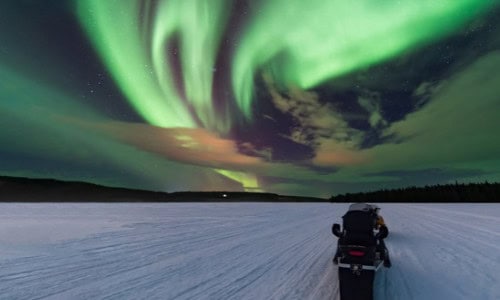
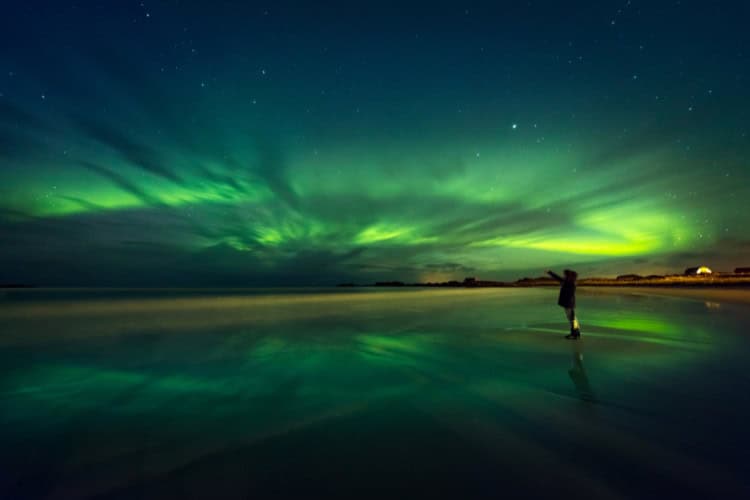
The ultimate cosmic light show, the Aurora Borealis occurs when streams of charged particles from the Sun collide with gases within the Earth’s upper atmosphere. The result is a glowing spectacle of green, red, blue and even purple lights that dance across the night sky. With the best viewing found in the high latitudes of the Northern Hemisphere, the city of Tromsø is a popular choice for a holiday that combines aurora-chasing with memorable winter experiences like husky sledding, snowmobiling and indigenous Sami cultural encounters.
The aurora is famously capricious, so don’t expect the lights to perform on demand. Some people see them on their first night out, others return year after year in the hopes of finally witnessing the phenomenon. Be patient, wrap up warm, and take in the frozen beauty of your surroundings.
When: during long, dark nights of the northern winter. The peak viewing season is October to March, with most activity occurring between 10 pm and 2 am. Nights when there is little or no moonlight offer the best visibility.
With its exceptionally dark skies and vast, desert landscapes, the Red Centre is a dream destination if you’ve always dreamed of falling asleep beneath an immense curtain of stars. Far from the light pollution of major cities, you can expect an extraordinary view of the Milky Way, constellations and countless stars stretching across the horizon.
The Creation stories and celestial knowledge of the indigenous Anungu people provide additional layers of wonder and understanding to what already promises to be a truly stellar experience. Overnight camping is not permitted within UNESCO World Heritage-listed Uluṟu-Kata Tjuṯa National Park, but there are plenty of options just outside the park, from luxury glamping stays to authentic Aussie swags around a campfire.
When: peak stargazing season is June to August, when the winter skies are clear, humidity is low, and the nights are longest. However, it can get very cold in the desert at night, so spring and autumn may be a more comfortable choice.
Bioluminescence only occurs when nature provides the perfect combination of ingredients. The islands of the Maldives offer dark nights with very little light pollution, protected coral atoll environments, mild temperatures year-round, and the presence of a microscopic marine plankton (dinoflagellate). When waves, wind or current disturb the water, a chemical reaction in the plankton causes an ethereal blue-green glow. The result is a night-swimming experience like no other.
Vaadhoo Island (in the Raa Atoll) and Milaidhoo Island (in the Baa Atoll) are renowned as popular locations for experiencing the phenomenon first-hand. Although you can witness this spectacular light show from the beach, it’s even more magical when viewed from the water.
When: although bioluminescent displays can happen year-round in the Maldives, they most commonly occur between June and September, when the monsoon season brings nutrient-rich currents and large populations of plankton.
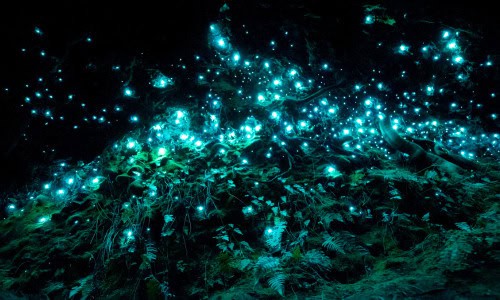
You might be surprised to learn that thousands of tiny, cave-dwelling grubs are responsible for one of the world’s great galactic experiences, but Arachnocampa luminosa is not your typical creepy-crawly. The larvae of this small, flying insect cling to the damp walls of caves and forest gullies, generating a blue-green light in their abdomen to lure their prey, which they catch on sticky strands of fishing line.
More commonly known as glow worms, these creatures are unique to parts of New Zealand and Australia. In general, you’d be lucky to see more than a handful of tiny glowing specks in areas of pristine forest, but there are a few places where they appear more numerous than stars in the night sky. One of these is Waitomo, a two-hour drive from Auckland. After descending through a network of limestone caves filled with immense stalagmites and stalactites, you board a small boat and drift silently on inky waters, gazing up at a space illuminated by innumerable points of light.
When: the summer months (December to February) are the busiest, and advance reservations are strongly recommended. However, the subterranean caves stay at a consistent temperature of 12 to 14 degrees year-round, and the glow worms are visible year-round, so there really isn’t a bad time to visit.
The Namib Desert is one of the world’s most extraordinary landscapes: a land of towering, apricot sand dunes set against a cobalt sky, home to a surprisingly diverse collection of wildlife. Exploring this unique environment by day is a bucket-list experience on its own, but a night safari is a chance to see it in a whole new light.
As the dunes fall into deep shadow and the temperature dips, you’ll find an entirely new landscape teeming with wildlife that’s perfectly adapted for the night-time conditions. Whether you’re based in the NamibRand Nature Reserve or the private reserves near Sossusvlei, a guided nocturnal walk or game drive is our favourite way to meet these fascinating desert specialists, from geckos, beetles and spiders to small mammals such as Bat-Eared Foxes and Aardwolves.
When: the Namib-Naukluft National Park in Namibia’s southern Namib Desert is a landscape of extremes: by day, summer temperatures can reach over 40 degrees C, while winter nights are frequently in single digits or even lower. May to October (winter) is generally considered the best time of year for a night safari due to the milder daytime conditions and breathtakingly clear night skies.
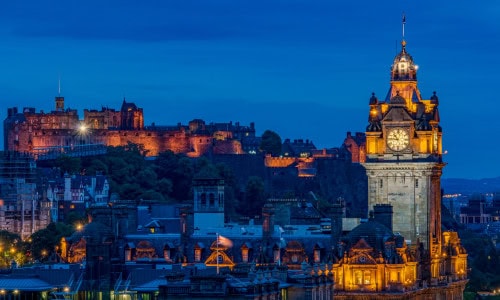
Scotland’s capital is steeped in centuries of history, folklore and more than a few tales to raise the hairs on the back of your neck, especially when you’re hearing them after dark, deep in the shadows of the Old Town’s cobbled maze of hidden lanes, stairs and closes.
You’ll hear stories of plague and public execution, body snatching and haunting, treason and betrayal, all told with an enthusiastic degree of detail and, more often than not, a generous serving of gallows humour. But the experience is more than just ghost stories; it’s a rare opportunity to step back in time and look beyond the modern city’s façade to see how Edinburgh’s residents once lived, worked and struggled to survive.
When: although you can join a guided night tour of the city at any time of year, you’ll find an extra touch of drama if you visit in late October when the city marks Halloween and Samhuinn with festivals of fire, music and storytelling.
Firefly viewing (hotaru-gari), is a longstanding summer tradition in Japan, where the ethereal insects are considered symbolic of the fleeting beauty of life. It’s a deeply peaceful experience to follow a tranquil forest path or riverbank, listening to the sounds of the evening as you wait for the first pinpricks of light to appear.
Japan is home to more than a dozen species of glowing fireflies, and you are spoiled for choice when it comes to locations to watch them put on a show. Tsukiyono Firefly Village is easiest places to experience hotaru-gari without venturing too far off the beaten track. You can travel by shinkansen from Tokyo to Jōmō-Kōgen station in less than two hours, and then you’re only a stone’s throw from a winding, 1.9-kilometre hiking trail, where several firefly species illuminate the summer night.
When: the season typically runs from mid-June to mid-July, with peak firefly activity occurring shortly after sunset – around 8 to 9 pm. Warm, humid, still evenings, with little or no rain, offer the best viewing conditions.
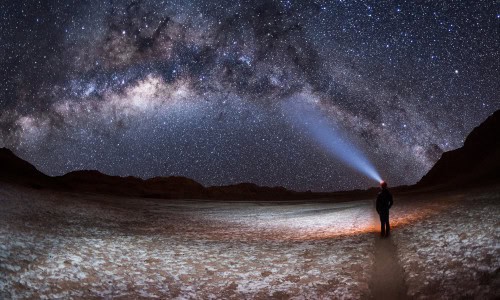
If you’re searching for somewhere on Earth where you can feel as though you can see the entire Universe laid out before you, Chile’s vast Atacama Desert is a great place to start. The tiny adobe town of San Pedro de Atacama is set in one of the driest places on the planet, and its combination of high altitude, clear night skies and minimal light pollution make it an ideal base for an astronomic adventure.
Unless you’re already an expert on galactic sight-seeing, your best option is to join a guided star-gazing tours. Along with with high-powered telescopes to maximise your viewing power, many also provide hot drinks and warm blankets to counter the desert’s chilly night-time temperatures. Some tours even specialise in astrophotography, and can help you to capture the magic of the night sky in photographic form.
When: June to August offer sublime conditions for astronomy, but the chilly winter temperatures are not to everyone’s liking. The autumn and spring months (April-May and September-October) offer clear skies, more manageable temperatures and fewer visitors. A new moon offers the most vivid star-gazing conditions, so be sure to factor the lunar calendar into your travel plans.
Whether you’re chasing the Northern Lights, drifting beneath a canopy of glow worms or discovering a universe of stars above the desert, noctourism offers a fresh perspective on some of the world’s most remarkable destinations.
If you’re ready to plan a holiday that swaps out early nights for unforgettable after-dark adventures, get in touch with one of our personal travel managers.
TravelManagers respects and honours the Traditional Custodians of the land and pay our respects to their Elders past, present and future. We acknowledge the stories, traditions and culture of Aboriginal and Torres Strait Islander peoples on the lands where we work and gather, and those we visit.
We improve our website, content and services by using Microsoft Clarity to see how visitors use our website. By using our site, you agree that we and Microsoft can collect and use this data. View our Privacy Policy for more details.