

The Inca Trail to Machu Picchu is one of the world’s most iconic trekking adventures. This historic route winds through the Andes Mountains of Peru, following ancient stone paths built by the Inca civilisation before arriving at the breathtaking ruins of Machu Picchu. The multi-day trek combines spectacular mountain scenery, archaeological sites and an unforgettable sunrise arrival at the Lost City of the Incas.
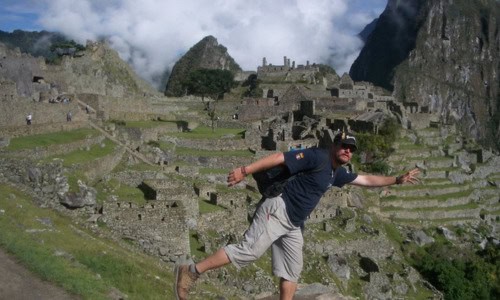
One of our Personal Travel Managers, Ed Bradford, has been lucky enough to complete the Inca Trail trek a couple of times while based in South America. He noted, to follow the steps of the Incas was quite special, the arrival at Machu Picchu is something else. Here is a glimpse into his amazing journey along the Inca Trail.
Day one saw us heading out of Cusco to Ollantaytambo by bus to check out the Sacred Valley or Urubamba Valley, a beautiful region of Peru that sits a tad lower in altitude than Cusco so it was nice to take in a little bit more oxygen. The people of Ollantaytambo still live in the original Inca buildings and it was great to wander around the village and talk to the locals.
Lunch was a funny affair, I had my own tour group with me at the time and Caesar our local guide took us into a house/restaurant where guinea pigs were running around everywhere – it was a pick your own – for lunch. Yep, not kidding about that – a few of my group went along with it, the others including myself dined on other items available. I was starting to question what we would be eating on the Inca trail.
Day two saw us head to the trail head of the Inca Trail, this is known as Kilometer 82 or Piscacucho where you head across the train lines that service Machu Picchu and down this little path for the first passport check in. Once the formalities were completed we were off, just casually walking along the Urubamba River on a fairly level path. This day is a good starter for the trail as it’s not overly difficult and the highest altitude was 3000m.
The first WOW moment happened when I arrived at Llactapata. I’m not sure how you hide this sort of terracing on the side of a mountain, however you seem to be casually walking along and then BOOM! Llactapata is formed by hundreds of hand built terraces and is very impressive. We were told that it was built for growing crops and servicing the passing travellers.
Arrival into camp was quite surreal, you don’t carry anything with you on the Inca Trail other than your personal very light backpack with snacks and drinks in there. So when you see a mini tent city set up with hot drinks on offer and a full meal ready to be served, you wonder how.
You are given a waterproof dry sack that you can pack with your sleeping bag, clothes with a maximum weight of 5kg – weighed more than once prior to departure. The reason for this is that porters carry that, as well as everything else, including the kitchen sink, oven, tents, kitchen tent, communal tent, water, gas bottles and even a chemical toilet in its own tent.
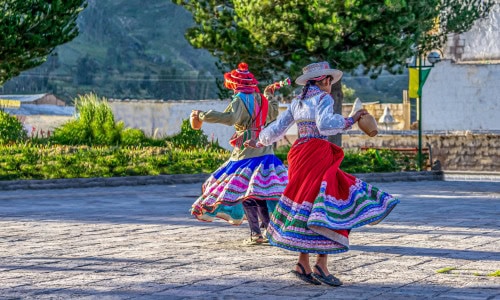
Day three is an easy walk to an early lunch which is an absolute trap, it’s misleading at the best. You arrive at a fully set up lunch, and it’s after you are fed the guide then takes you outside the lunch tent and points off to the distance, to what seems like a million miles away. You follow their finger as they point higher and higher up this mountain range to this dip in between two peaks – that is Warmiwañusca pass topping out at 4215 metres or as its more commonly known “Dead Woman’s Pass”.
Now I like to think that I’m fairly fit, and that living at altitude has given me some advantage, however after that nice delicious lunch the afternoon was very strenuous. The steps up to the top are uneven, short, high, in fact if they had a guidebook of different step heights of the World, they would tick every box. To think that the Inca King used to send boys off on errands at great speed up/down these things is just beyond belief. I’m watching the group and myself with death grips on our bamboo hiking poles, going one step at a time, see it’s not only the actual steps, it’s the lack of oxygen in the air. At that altitude the air is thin and even the fittest on this trail are gasping for some form of oxygen.
The reward though of that pain and suffering, the USD10 Gatorades randomly available at pop up shops on the side of the trail are all worth it. The view from Warmiwañusca pass is simply breathtaking. Looking out across the land of the INCAS.
From here it is quite the descent down to our next camp, all steps and the only crazy way I could descend was to run as I wasn’t locking my knees on the way down. I even managed to pass some of the porters going down from the pass, which when you are going up, they literally run past you and remember what they are carrying on their backs.
Upon arrival at camp we are greeted once again by a little tent city and an amazing dinner.
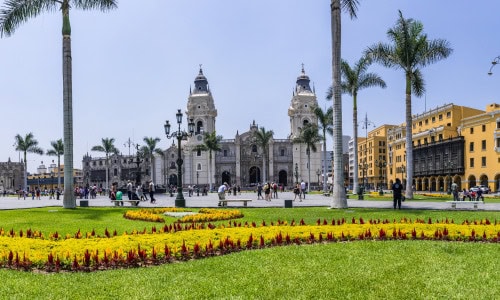
Day four is probably the highlight of the Inca Trail, it always stands out as the most beautiful walk. Nicknamed the “Walk Above The Clouds”, and it is exactly as it sounds, you are walking along this lush green trail with these beautiful white bouncy clouds next to you. There are also two amazing tunnels that have been hand carved into the mountain, one of them is 16m long and just an absolute engineering marvel. On the trail today, you get to stop off and see the ruins of Runkuracay and also Wiñaywayna both special in their own way.
Day five – the day has come to see Machu Picchu, the guide has you on the trail by 0330am, yes that is not a typo! We head to Inti Punku (the Sun Gate) to be there by sunrise as it sits above the site of Machu Picchu. There was a television ad on Peruvian TV promoting domestic tourism and the city in the clouds, where an ancient elder reveals Machu Picchu to his Grandson by blowing the clouds away.
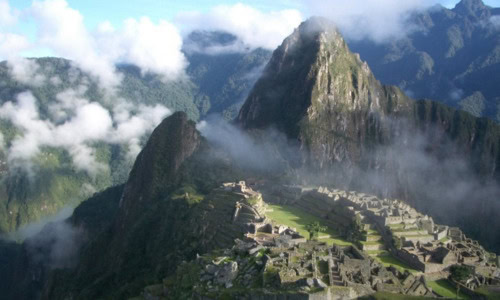
On my first visit, I remember the sting of a 3:30 AM wake-up call only to be met by a thick wall of clouds. I was crushed—until the magic happened. Just like a scene from the commercial, the sun began to crest the horizon, the mist peeled back, and the ancient Incan city slowly revealed itself in all its glory.
43kms, 4 days of walking and wow, here is this mystical place that was only rediscovered in 1911.I soon realised as we made the descent down to Machu Picchu that not many people get to experience this destination this way. It’s not the easiest, you can take the train and a bus for the easy way or make the effort and trek it.
Exploring Machu Picchu with a guide is an absolute must. It’s one thing to see the ruins, but another entirely to hear the stories of how the city was laid out. You get to see the genius of the Incan water channels and stand beside megalithic stones – some literally larger than a house – wondering how on earth they were hoisted into position. You can spend hours walking around taking it all in and you just keep wondering how and why…..
When you are done, then you jump on the bus down to Aguas Calientes for a real toilet, pizza and cold beer, although one can’t complain about the catering on the trail, it was very tasty. After a tasty late lunch/early dinner you then get to sit back and relax whilst the train takes you all the way back to Cusco.
Overall the Original Inca Trail trek is such a rewarding trip, challenging at times and rewarding in so many ways. It’s important to realise that you might think you are fit, however even the fittest people struggle due to the altitude and limited oxygen. This is not a deterrent, the guides will endevour to get you to your camp each day and everyone walks the trail at their own pace. It’s not a race!
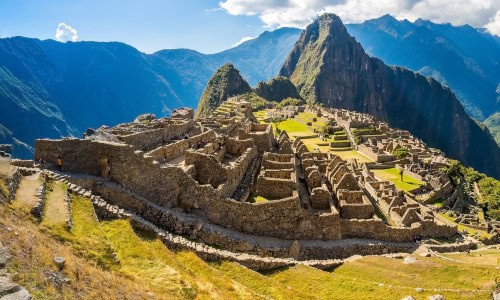
Keeping in mind that February they close the Inca Trail for annual maintenance, the best time to be walking the trail is May – September, although it can be quite cold at night. I would suggest April or October, this sits on the shoulder season and is a tad warmer, especially at night.
By Ed Bradford, Personal Travel Manager.
Ed’s journey on the Inca Trek to Machu Picchu was both challenging and rewarding and if this is on your bucket-list, talk to our Personal Travel Managers who have taken the journey, and can guide you every step of the way.
TravelManagers respects and honours the Traditional Custodians of the land and pay our respects to their Elders past, present and future. We acknowledge the stories, traditions and culture of Aboriginal and Torres Strait Islander peoples on the lands where we work and gather, and those we visit.