

Spain’s Canary Islands are renowned for their year-round warm climate, dramatic landscapes, and unique blend of Spanish and African influences. Their rich history, shaped by centuries of seafarers, traders and explorers, means you’ll find a captivating mix of cultures, cuisines and experiences
With a rich history shaped by seafarers, traders, and explorers, the Canaries offer a captivating mix of culture, cuisine, and adventure—whether you’re chasing adrenaline on the water, hiking in UNESCO-listed biosphere reserves, or simply soaking up the island lifestyle.
The Canary Islands (Las Canarias) are a sun-kissed archipelago of eight main inhabited islands and several smaller islets, located around 100 kilometres west of Morocco’s Atlantic coastline. Collectively, they comprise Spain’s southernmost region, claimed through a series of conquests that began in the fifteenth century.
You’ll find that each island has its own distinct personality, from the otherworldly lava fields of Lanzarote and La Palma to the golden, sandy beaches and charming villages of Gran Canaria and Fuerteventura. Tenerife is the largest and most populated of the islands, equally popular for its sun-drenched beaches and vibrant nightlife as its lush forests and volcanic landscapes. La Golmera and El Hierro complete the collection, renowned for their incredible natural beauty and laid-back authenticity.
Although you may think of them as a European destination because of their connection to Spain, the Canary Islands are located off the coast of northwest Africa and enjoy a year-round climate of balmy, sub-tropical warmth. From November to March, many European tourists escape the winter freeze by flocking to the islands, where temperatures typically stay in the low 20s and sunshine hours are generous.
Even during the warmest months (July to September), the weather is balmy rather than sweltering, and the long, sunny days are perfect for enjoying swimming, sunbathing and water sports. If you’re planning to venture beyond the famous beaches to explore the islands’ forests and volcanic landscapes, we recommend planning your holiday for the quieter shoulder months of May, June, September and October. Whale watching is a popular year-round activity, with different species of marine life visiting the warm, nutrient-rich waters around the islands at different times of year.
The Canary Islands are well-connected to mainland Europe, with regular direct flights to the main islands from the United Kingdom, Spain, and other major hubs. You can also travel by ferry to the islands from several ports in southern Spain – it takes around 36 hours to make the journey from Huelva to Tenerife. If you’re planning to do some island hopping, the islands are interconnected by both domestic air and ferry service. A rental car is a great way to explore the islands, especially if you want to venture into more off-the-beaten track areas, or you can take advantage of the public transport that connects the main towns and resort areas.
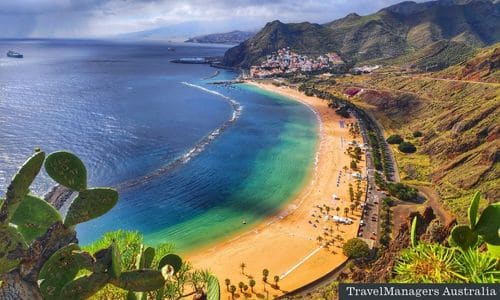
Whether you’re lounging on the golden sands of Tenerife’s loveliest beaches (Playa de las Teresitas and Playa del Duque are two of our favourites) or hiking the iconic Masca Gorge through picture-perfect mountain scenery, you’re guaranteed an endless array of photogenic scenery.
You can soak up the sweeping views from the summit of Spain’s highest peak in the UNESCO World Heritage listed Mount Teide National Park (you can ride the cable car if you don’t fancy the hike), or join a walking tour through the historic streets of Cristóbal de La Laguna. Tenerife is a fabulous destination for whale- and dolphin-watching at any time of year – you can take a boat tour from Los Cristianos or Costa Adeje. You can also catch a fast ferry to the tiny islands of La Gomera or El Hierro, whose stunning landscapes of mountains and forests are paradise for hiking.
The island gets its nickname (‘A Continent in Miniature’) from the incredible diversity of landscapes and climates that are packed into a compact space – you’ll find everything from expansive golden dunes (Maspalomas Dunes) to towering rock formations (Roque Nublo). Stunning villages like Puerto de Mogán (aka Little Venice) and Vegueta (the Old Town neighbourhood of Las Palmas) are renowned for the cobbled streets and varied architectural styles, while Barranco de Guayadeque is well worth a visit to see its ancient archaeological sites and unique cave houses.
Playa de las Canteras is one of our favourite beaches on Gran Canaria, but there are plenty of others to choose from, including Amadores (a family favourite) and Playa de Güigüí (which is only accessible on foot or by boat). Be sure to sample incredible fresh seafood and local delicacies like papas arrugadas with mojo sauce, or treat yourself to a rum tasting at the historic Arehucas Distillery.
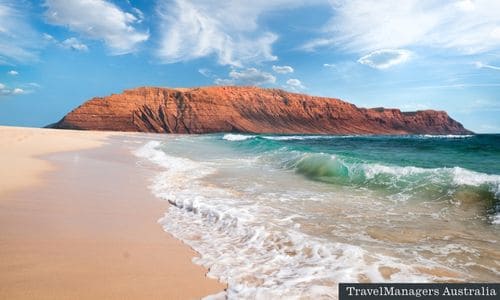
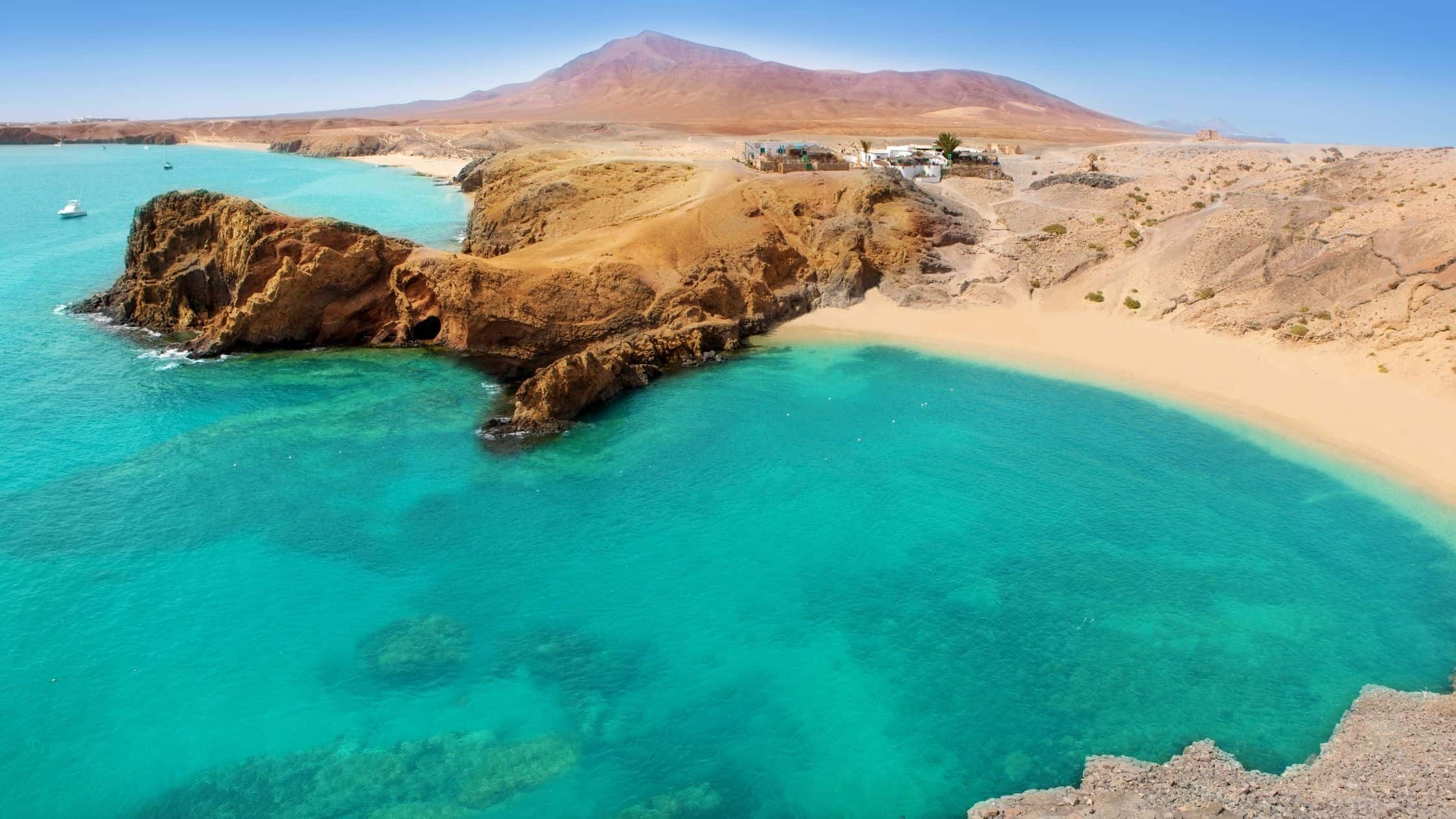
Our favourite beaches on Lanzarote include the golden sands and protected marine reserve of Playa de Papagayo, as well as the white sand and calm, turquoise waters of Caletón Blanco. However, you’ll be missing out on so much if you only explore the island’s spectacular beaches. Take a guided tour of Tinanfanya National Park to see a surreal landscape of lava fields, geysers and other volcanic formations, or explore the eight-kilometre-long lava caves of Cueva de los Verdes – there’s even a natural concert hall where you may be lucky enough to experience the otherworldly magic of a live classical music performance.
If you’re interested in art and architecture, you can visit the former studio of Lanzarote’s most famous artist, César Manrique. One of his most famous creations on the island is the Mirador del Río: a clifftop viewpoint and café that offers incredible views across the water to the island of La Graciosa.
Three spectacular interconnected beaches of white sand and turquoise water make up the Parque Natural de Corralejo: a ten-kilometre expanse of dunes and ocean that is particularly popular with kitesurfers and windsurfers, but is also perfect if you love long beach walks. It’s well worth venturing away from the coastline to explore the sweeping landscapes of the island’s interior, where you’ll find pretty, whitewashed villages like Betancuria (the island’s first capital) and La Oliva.
If you’re driving the main inland route from north to south, you can’t help but be drawn to the distinctive silhouette of Tindaya Mountain, which was considered sacred by Fuerteventura’s original, pre-colonial inhabitants, the Majos. More than 300 engravings, known as podomorphs, have been etched into the rocks at the foot of the mountain.
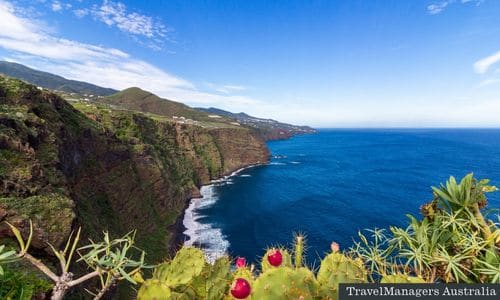
Nicknamed ‘La Isla Bonita,’ or ‘the beautiful island,’ La Palma is famous for its lush landscapes, volcanic terrain, and world-class stargazing. There are endless hiking trails to explore, from the pine forests and waterfalls of Caldera de Taburiente National Park to the UNESCO Biosphere Reserve of Los Tilos Forest: home to one of Europe’s last remaining laurel forests.
La Palma’s youngest volcano, Tajogaite, burst into life in September of 2021, and today its peak towers 200 metres above the surrounding landscape. You can take a guided tour through the newly formed lava fields and learn about the island’s history of volcanic activity. It’s located a 45-minute drive from the capital of Santa Cruz de la Palma, where you’ll find a colourful collection of colonial architecture and a pretty waterfront promenade.
Safety: the Canary Islands are considered a safe and welcoming destination to visit, although you need to take the usual sensible precautions to protect your personal belongings. Many of the islands’ most popular beaches are monitored for safety: red flags mean no swimming, while purple flags warn swimmers of marine hazards like jellyfish. If you’re planning to explore the islands’ wilderness areas, be sure to check for official alerts relating to volcanic activity and wildfires before heading out.
Time: The Canary Islands are one hour behind the Spanish mainland, operating on Western European Time (WET: UTC+0). They change to Western European Summer Time (WEST: UTC+1) between March and October.
Money: as a Spanish territory, the official currency of the Canary Islands is the Euro (€). As of August 2025, one euro is worth about AU$1.78.
Keeping in touch: There is reliable mobile coverage throughout the main islands, although you may find that service is patchy in the more remote areas and hiking trails.
Power: The islands use the same 230V supply voltage as we have in Australia, but you will need an adapter that suits C, E and F outlets.
Whether you’re chasing waves in Fuerteventura, hiking UNESCO-listed biosphere reserves in Lanzarote or soaking up the sun on a pristine beach in Gran Canaria, there’s at least one island with your name on it. To start planning your holiday in your chosen piece of Canary Islands paradise, contact your Personal Travel Manager today.
TravelManagers respects and honours the Traditional Custodians of the land and pay our respects to their Elders past, present and future. We acknowledge the stories, traditions and culture of Aboriginal and Torres Strait Islander peoples on the lands where we work and gather, and those we visit.