

If you’re considering walking the Camino de Santiago for the first time, this complete beginner’s guide covers everything you need to know – from choosing the right Camino route to what to pack, where to stay, how much it costs and how to prepare physically.
Whether you’re drawn to the spiritual tradition of the pilgrimage, the physical challenge, or simply the opportunity to explore Spain and Portugal at a slower pace, the Camino is one of the world’s most rewarding long-distance walking holidays.
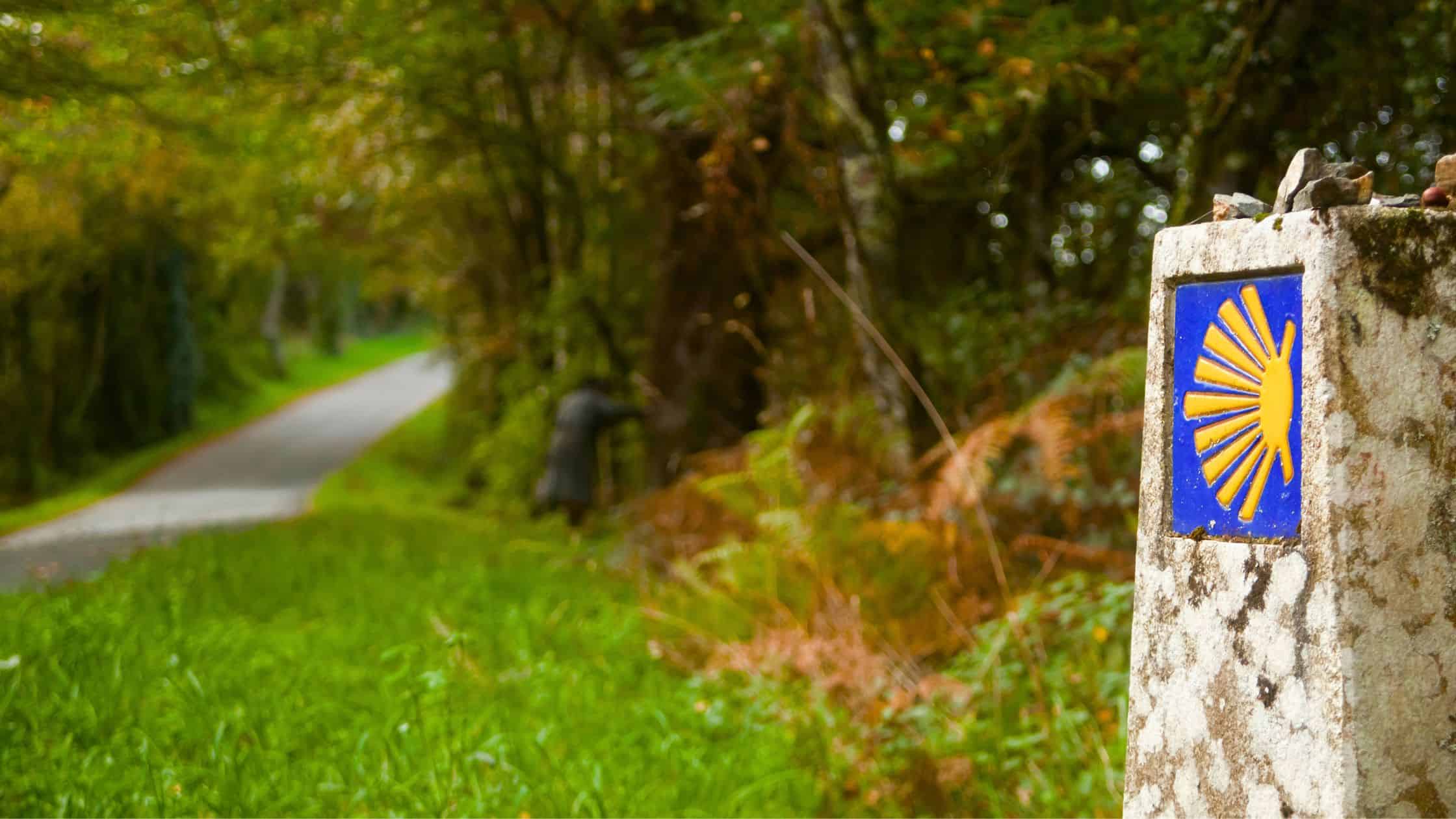
The Camino de Santiago (The Way of St James) is a network of historic pilgrimage routes across Spain, Portugal and France that all lead to the city of Santiago de Compostela in north-west Spain.
The tradition dates back to the 9th century, when pilgrims began walking to the cathedral believed to house the remains of Saint James the Apostle.
Today, more than 500,000 pilgrims complete the Camino each year — walking for spiritual, cultural, personal or adventure reasons.
There are four main pilgrimage routes, each with its own unique personality. Your choice may be influenced by factors such as terrain, climate, season and popularity. Some prefer to walk a shorter section of the route, while others extend their journey by walking beyond Santiago to Finisterre at the Atlantic coast.
Starts: Oviedo, northwest Spain
Distance: 328 kilometres
Average time: 16 days
Key highlights: although it’s one of the more challenging routes because of the steep terrain, you’ll be rewarded with plenty of spectacular scenery as you make your way through valleys, farmland and forests.
The route connects with the Camino Frances for the final fifty kilometres from Melide to Santiago, and as this is the oldest of the routes, it’s a must if you want to follow in the footsteps of the original peregrinos (pilgrims).
Starts: Saint-Jean-Pied-de-Port (southwest France)
Distance: 800 kilometres
Average time: 30+ days
Key highlights: you’ll begin your journey on the French side of the Pyrenees, starting with a dramatic mountain crossing to the Basque town of Roncesvalles. The route passes through the historic cities of Pamplona and León, taking in UNESCO World Heritage sites such as the thirteen-century cathedral of Burgos and Ponferrada’s castle of the Knights Templar.
The route’s excellent infrastructure and stunning scenery make it the most popular choice for peregrinos, which means you can expect a highly social experience.
3. Camino del Norte (Northern Way)
Starts: San Sebastian, Basque region of Spain
Distance: 466 kilometres
Average time: 23 days
Key highlights: although it’s a quieter option than the Camino Francés, the Northern route is no less spectacular. You’ll follow the scenic coastline of Galicia as you make your way westward from San Sebastian, with stops in larger cities like Bilbao and Santander as well as scenic fishing villages like Llanes and Luarca.
When you reach the town of Villaviciosa, you can choose whether to continue along the coastline on the Camino del Norte, or head inland on the Camino Primitivo.
Starts: Lisbon, Portugal
Distance: 598 kilometres
Average time: 30+ days
Key highlights: it begins in the Portuguese capital of Lisbon, which is the first of three UNESCO World Heritage listed cities on your route to Santiago. Although it’s increasing in popularity, this route is still a lot less crowded than the French route, currently accounting for around 20 percent of all pilgrimages, which means you’ll often feel like you have all that beautiful scenery to yourself.
The beautiful city of Porto is one of our favourite stops along the route, or you can start your walk here if you prefer to take a shorter route.
The full Camino Francés typically takes 30–35 days. However, many walkers complete just the final 100 kilometres — the minimum distance required to receive the official Compostela certificate in Santiago.
Shorter Camino options (7–14 days) are increasingly popular for travellers with limited time.
Packing wisely is essential for an enjoyable experience.
Well-fitted trail shoes or lightweight hiking boots
Worn in before departure
Moisture-wicking socks
Lightweight, quick-dry layers
Waterproof jacket
Thermal layer (especially for mountain crossings)
Sun hat and sunscreen
Pilgrim Passport (Credencial)
Refillable water bottle
Small first aid kit (blister care is crucial)
Lightweight sleeping bag (if staying in albergues)
Headlamp
Earplugs
Tip: Aim to carry no more than 10% of your body weight. Luggage transfer services are available on many routes if you prefer to walk with just a daypack.
Traditional dormitory-style accommodation costing €10–€25 per night. Many operate on a first-come, first-served basis.
Private rooms offering more comfort and privacy.
Luxury options in historic buildings.
Many travellers choose a mix of accommodation styles throughout their journey.
The most popular months are May to June and September to October. These months offer mild temperatures, longer daylight hours and fewer crowds than peak summer. July and August can be very hot and busy, especially on the Camino Francés. Winter walking is possible but requires careful planning due to weather and limited accommodation.
As with any physical endeavour, the better prepared you are, the more enjoyable your experience will be. We recommend building your fitness and stamina gradually, starting at least three months in advance (longer if you are starting from the couch), so that by the time you start the Camino, you can comfortably walk up to thirty kilometres in a day while carrying a loaded backpack, then be capable of doing it all again the next day… and the next.
Train in the shoes you plan to wear on the Camino, and be sure to incorporate some challenging hill climbs into your training schedule.
All that aside, remember that the Camino is not a race, and there are no prizes for finishing first each day (apart from having your pick of beds at the next albergue). Focus on setting an enjoyable pace so you can soak up the scenery and enjoy being one of the 500,000 people who make it to Santiago each year.
There is plenty of useful information available online, including the Camino’s official website. Reach out to people who have already walked the Camino – you’ll find plenty of enthusiastic support in online Camino forums on Facebook and other social media platforms.
Your Personal Travel Manager can help you plan every aspect of your Camino experience, from choosing the best route to sorting your accommodation and travel arrangements. Buen Camino!
TravelManagers respects and honours the Traditional Custodians of the land and pay our respects to their Elders past, present and future. We acknowledge the stories, traditions and culture of Aboriginal and Torres Strait Islander peoples on the lands where we work and gather, and those we visit.