


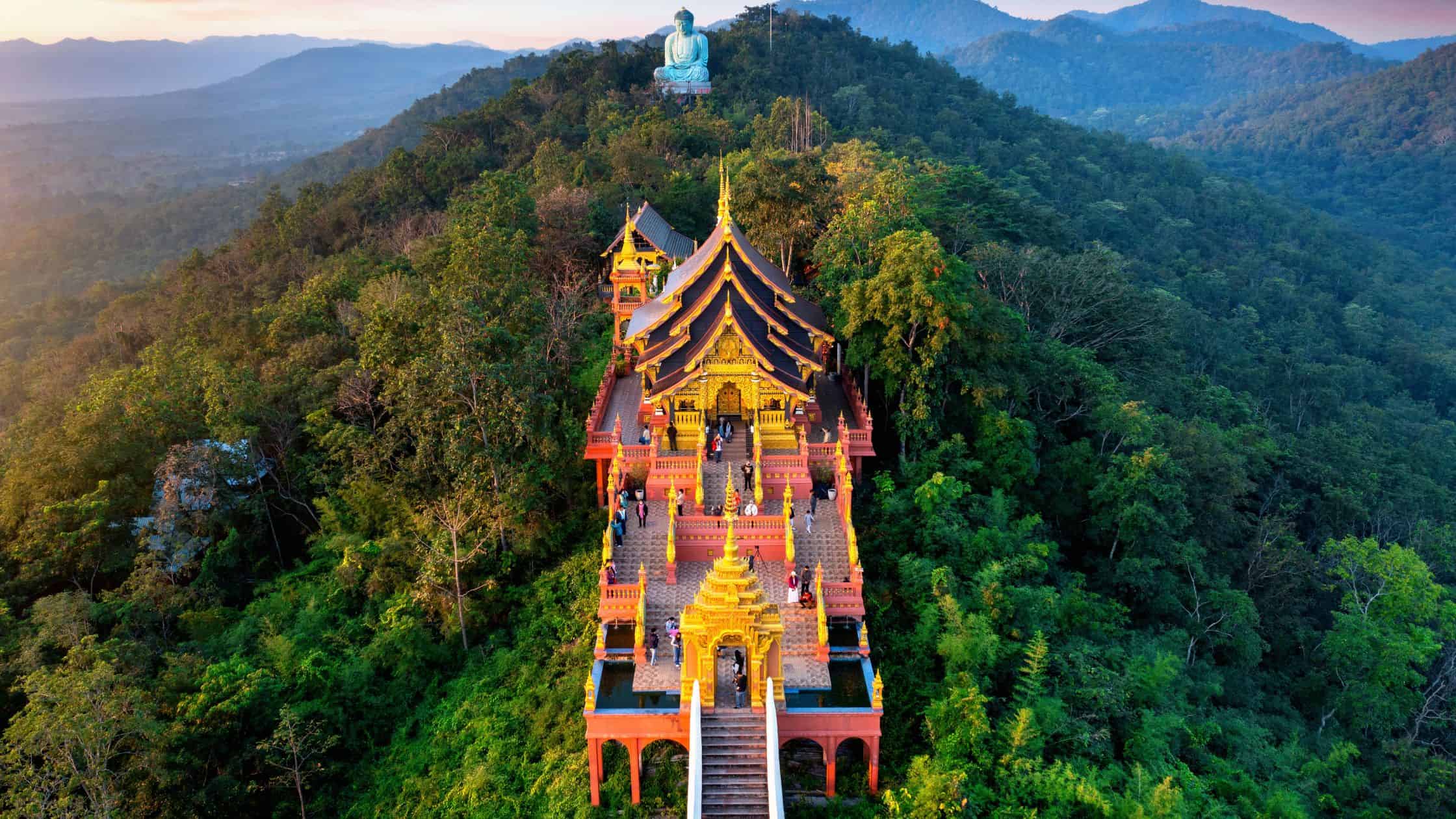

Thailand is known as the Land of Smiles, and this description is particularly appropriate when you visit northern Thailand, where locals and visitors all seem to have cracked the code on enjoying life. Maybe it’s the spectacular scenery – mist-shrouded mountains, towering waterfalls and lush, terraced rice fields – or perhaps it’s the delicious regional cuisine, heavy on flavour and always served with a friendly greeting. Whether you’re exploring the riverside markets of Chiang Mai or making new friends during a visit to a hilltribe village, be prepared to fall hopelessly in love with northern Thailand’s unique flavours, sights and cultural experiences.
Did you know that there are more than 300 temples in and around Chiang Mai, from gleaming, gilded wonders like Wat Phan Tao, to the famous elephant statues of Wat Chiang Man. Exploring the streets in search of your favourite temple is a fabulous way to work up an appetite, so that you’ll have the perfect excuse to sample the highlights of the city’s amazing food markets.
Spend time among the Hmong, Karen, Akha, and Lahu communities in the mountains of northern Thailand, and you’ll not only have the opportunity to soak up the breathtaking scenery. You’ll also be invited to learn traditional crafts, experience local life and see how they go about their daily lives, using farming methods and centuries-old customs in an authentic, hands-on way.
The laidback town of Pai is the ideal base to experience northern Thailand’s best adventures in nature. There’s a unique, slightly bohemian vibe about the town, which is surrounded by natural wonders like Pai Canyon and Mo Paeng waterfall. You can go hiking on the slopes of Thailand’s highest peak, cycle through the remote highlands or enjoy the tranquillity of a bamboo raft ride.
If you love to experience a destination through its cuisine, you’re going to love northern Thailand. Join a cooking class in Chiang Mai or Chiang Rai and you’ll get to try all sorts of regional recipes, and learn how to recreate the dishes when you return home. Favourites include Khao soi (curry noodle soup), Sai ua (a fragrant, spicy sausage), and Laab (a flavour-packed salad of minced meat, fresh herbs and spices).
The most popular time of year to visit northern Thailand is between November and February, when you can expect the weather to be warm and dry. As the rainy season (May to October) approaches, you should be prepared for temperatures to climb into the mid-30s, eased only by the heavy downpours that arrive almost like clockwork each afternoon.
The city of Chiang Mai is the gateway to exploring northern Thailand, but it’s well worth sticking around to enjoy its beautiful blend of ancient and modern cultures. There are regular domestic flights from Bangkok as well as international flights from a number of regional hubs such as Singapore, Seoul and Kuala Lumpur. Alternatively, you can travel by train or long-distance coach, enjoying the transition from coastal farmland to lush mountain scenery.
Chiang Rai is a great alternative if you’re looking for somewhere a little quieter and more off the beaten track, especially if you want to spend time exploring neighbouring Laos and Myanmar. Regular buses connect the two cities, with a journey time of three to four hours.
Once you’ve arrived, your best form of transport will depend on what you’re planning to see and do. The historic streets of Chiang Mai’s Old City are best explored on foot or by bicycle, while a motorbike rental (with or without driver) is a fun way to see more of surrounding the countryside. Songthaews are the cheap, local version of a ride-share arrangement – just hail one of the red trucks, let the driver know where you are heading, and climb in the back with your fellow passengers.
Time: Thailand operates on Indochina Time (ICT), which is UTC+7. This means that Thailand is four hours behind Sydney (three hours during our summer months), three hours behind Brisbane, and one hour behind Perth.
Money: the official currency of Thailand is the Thai Baht (THB or ฿). As of November 2025, one hundred Thai baht is worth about AU$4.73.
Keeping in touch: mobile service in the main centres is pretty good, and there are plenty of cafés and restaurants that offer wi-fi for their customers. Check with your Australian provider about international roaming availability and pricing, or purchase a pre-paid travel SIM to use during your travels. If you’re heading into more remote areas of northern Thailand, you will probably find that coverage is more patchy – you can treat this as an invitation to disconnect from technology and dial into your destination.
Power: Thailand uses 220 V / 50 Hz supply, and many outlets use Type C (and sometimes A/B) plugs, meaning visitors from Australia will likely need a plug adapter
With its delicious cuisine, warm, hospitable people and incredible landscapes, Northern Thailand is a destination that will awaken all of your senses. If you’re ready to start planning your itinerary to experience this incredible corner of Southeast Asia, contact your Personal Travel Manager today.
TravelManagers respects and honours the Traditional Custodians of the land and pay our respects to their Elders past, present and future. We acknowledge the stories, traditions and culture of Aboriginal and Torres Strait Islander peoples on the lands where we work and gather, and those we visit.